
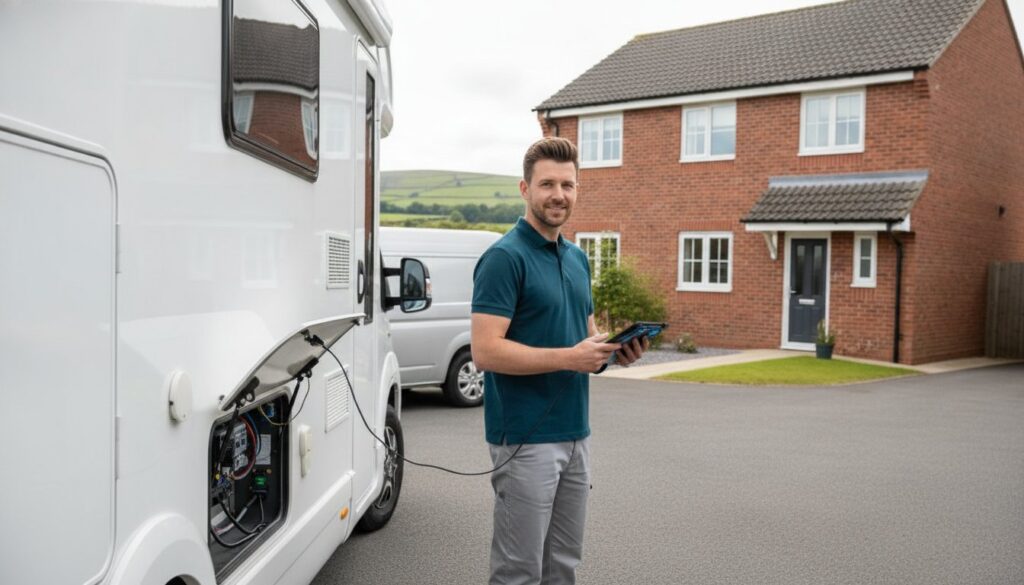
Why spend your valuable weekend navigating traffic to drop your motorhome at a distant service centre when the expert can come to you? Most owners find the logistics of annual maintenance a genuine hassle. You likely worry about hidden damp devaluing your pride and joy, or perhaps you’re concerned about the safety of your gas and electrical systems. These are vital considerations that shouldn’t be ignored, yet the traditional workshop model often adds unnecessary stress to your schedule.
Choosing a professional mobile habitation service is the most convenient way to ensure your leisure vehicle remains safe, damp-free, and road-ready. It’s a “safe pair of hands” approach that delivers technical authority directly to your driveway. You get the peace of mind that comes from a meticulous inspection without the inconvenience of moving your vehicle. This guide explains how these on-site visits provide the comprehensive safety reports and valid warranty documentation you need to protect your investment. We’ll explore the methodical process of checking for invisible damp and gas leaks, giving you total confidence for your next adventure whilst you stay comfortably at home.
Key Takeaways
- Understand why an annual “MOT for the living area” is essential for gas safety, electrical integrity, and the overall longevity of your vehicle.
- Learn how a professional damp survey using calibrated equipment can detect hidden issues before they devalue your motorhome or caravan.
- Discover how a mobile habitation service offers a more personal, convenient alternative to dealership workshops; it fully protects your manufacturer’s warranty without the need for travel.
- Identify the specific maintenance requirements for Alde heating systems and how professional solar panel installation supports off-grid independence.
- Find out how to arrange expert on-site servicing across South Yorkshire and North Derbyshire to suit your specific touring schedule.
What is a Mobile Habitation Service and Why is it Essential?
A mobile habitation service is essentially a comprehensive “MOT for the living area” of your motorhome or caravan. While a standard MOT focuses on mechanical roadworthiness and chassis integrity, this service ensures that the accommodation part of your recreational vehicle (RV) is safe, functional, and compliant with industry standards. It’s a methodical inspection designed to catch small issues before they escalate into dangerous failures or eye-watering repair bills. If you’re new to leisure vehicle ownership, understanding what is a habitation check and what the full inspection process involves is an essential first step toward protecting your family and your investment.
Think of it as a professional health check that delivers technical expertise directly to your door. For many owners, the peace of mind that comes from knowing their gas and electrical systems have been tested by a specialist is invaluable. Beyond safety, these inspections are vital for maintaining manufacturer warranties and protecting the long-term resale value of your vehicle. A documented history of expert care is the best way to prove your motorhome has been meticulously maintained, acting as a “safe pair of hands” for your investment.
The Core Components of a Habitation Check
The inspection is structured to cover every critical system within the living space. We don’t just look for obvious faults; we use specialist equipment to verify that systems are performing within safe parameters. The core areas include:
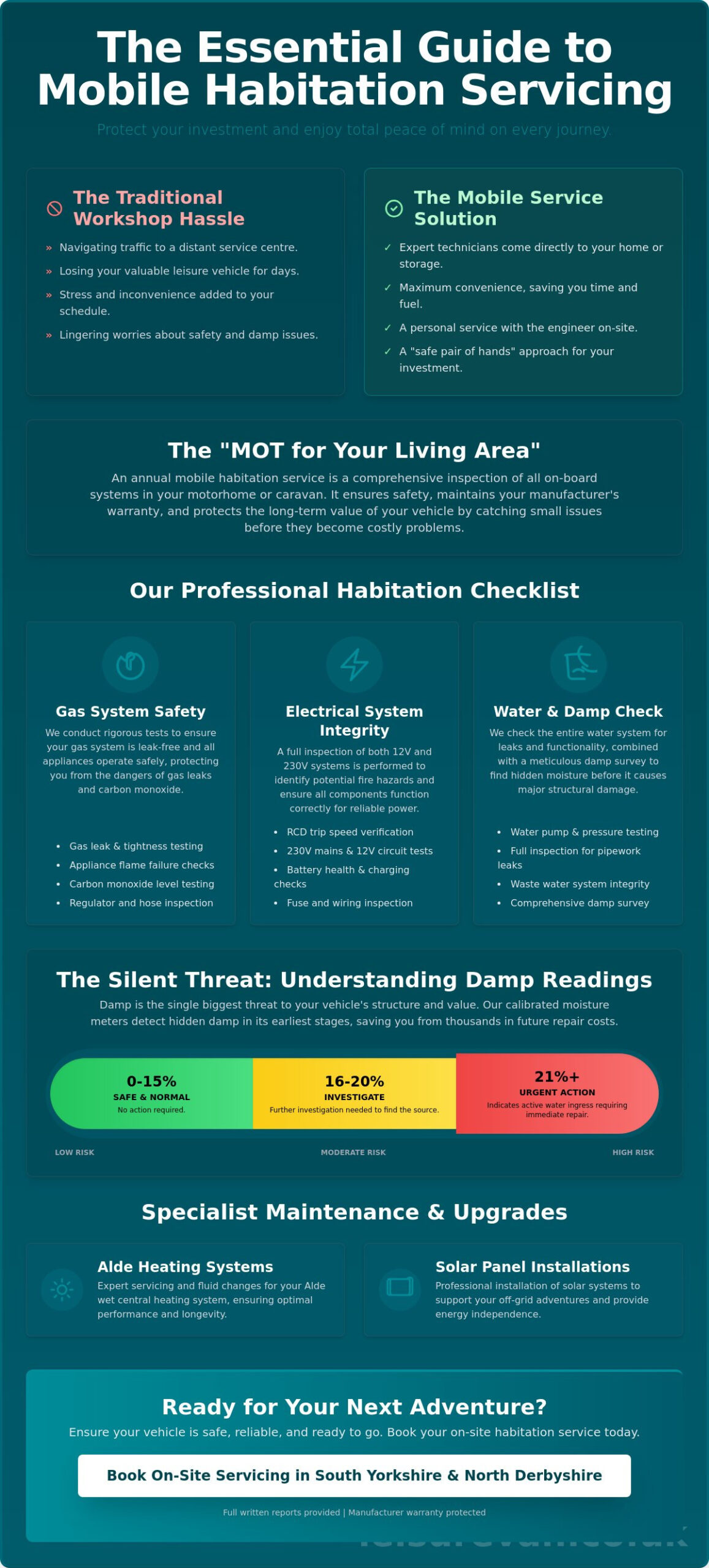
- Gas Safety: We conduct let-by and tightness testing to ensure there are no leaks in the system. We also perform carbon monoxide checks on appliances like hobs, ovens, and heaters to ensure they are burning fuel safely.
- Electrical Systems: This involves testing both the 12V leisure circuits and the 230V mains hook-up. We check RCD trip speeds, fuse ratings, and battery health to prevent electrical fires or system failures.
- Water Systems: We test the operation of the water pump, check for leaks in the pipework, and ensure the waste system remains watertight and hygienic.
Why an Annual Inspection Matters in 2026
Damp is the most common threat to the structural integrity of a leisure vehicle. By the time you notice a musty smell or see soft spots on the wall, the repair costs have usually already spiralled. A professional mobile habitation service uses calibrated moisture meters to detect “hidden” damp in its earliest stages, allowing for simple resealing rather than major bodywork. We also look for signs of floor delamination or window seal failure that might otherwise go unnoticed during your regular travels.
In 2026, insurance requirements have become increasingly specific. Most providers expect owners to follow a regular maintenance schedule to remain fully covered. Scheduling an annual inspection ensures you stay compliant whilst giving you total confidence for the upcoming touring season. It’s about being proactive rather than reactive, ensuring your vehicle is always ready for the road when you are. This methodical approach saves money in the long run and keeps your family safe while you explore.
The Professional Habitation Checklist: What to Expect
A professional mobile habitation service follows a rigorous, multi-point checklist that leaves nothing to chance. It’s a methodical process. Every component is tested against specific safety and performance benchmarks. While you might keep your van clean and tidy, a technical inspection identifies issues that are invisible to the naked eye. This thorough approach is why many owners prefer using engineers who adhere to the high standards of the Approved Workshop Scheme, ensuring the highest level of technical competence and reliability.
Your engineer will provide a detailed written report upon completion. This document is a vital piece of your vehicle’s history. It serves as proof of maintenance for insurance claims, validates your manufacturer warranty, and provides tangible evidence of care when it’s time to sell. If you’ve noticed a suspicious patch or a musty smell, it’s worth booking a damp inspection and report as a standalone check to catch problems early. Catching a leak in its first few months can save you thousands in structural repairs later on.
Damp Inspection and Water Ingress
We use calibrated moisture meters to test across all wall panels, ceilings, and around apertures like windows and rooflights. Understanding damp percentages is key to your vehicle’s longevity. Readings between 0% and 15% are generally considered normal; however, anything over 20% indicates a serious problem that requires immediate attention. Early detection of seal failure is the only way to prevent structural rot and protect the vehicle’s framework from long-term damage.
Gas and Fire Safety Protocols
Safety is our absolute priority. We perform full gas system let-by and tightness testing to ensure your system is leak-free. We also check the age and condition of gas hoses and regulators, as these components have a limited lifespan and must be replaced regularly. Testing smoke and carbon monoxide alarms for functionality is another critical step. We also inspect the flame failure devices on hobs and ovens to ensure the gas supply cuts out if the flame is accidentally extinguished.
The checklist also includes a comprehensive ventilation check. We ensure there are no blockages in flues or vents that could lead to poor air quality or dangerous gas build-up. For caravan owners, we also examine the chassis and running gear. This involves checking the hitch, over-run assembly, and corner steadies to ensure they are greased and operating correctly. This level of detail ensures your vehicle isn’t just comfortable; it’s entirely safe for you and your family.
Mobile Service vs Main Dealership: The Comparison
Choosing between a main dealership and an independent specialist often comes down to the quality of the interaction. In a high-volume workshop, your vehicle is one of dozens. You usually speak to a service advisor behind a desk, not the person actually testing your gas valves. A mobile habitation service flips this dynamic. It places the expert directly on your driveway, allowing for a transparent, one-to-one experience that dealerships simply cannot replicate. This methodical approach ensures your vehicle is treated with the care it deserves.
Eliminating the need for multiple trips to a service centre is perhaps the most immediate benefit. You don’t have to worry about fuel costs or the logistical nightmare of transporting a large vehicle through narrow town streets. Instead, you can observe the inspection process at your own home or storage centre. This gives you a firsthand look at the health of your van. It’s a “safe pair of hands” approach that prioritises your convenience and peace of mind above all else.
Convenience and Time Savings
The traditional dealership model often requires what’s known as the “two-car shuffle”. This involves driving your motorhome to the centre whilst a partner or friend follows in a car to bring you home. You then repeat the process a few days later. By booking a mobile visit, you reclaim those hours. The work is performed at your convenience. You can even work from home or manage daily chores while the engineer is busy outside. It’s an ideal solution for owners of large motorhomes that are notoriously difficult to manoeuvre in tight commercial estates.
Personalised Technical Advice
When the engineer is on your driveway, you have direct access to ask questions about your specific model. This isn’t a rushed handover; it’s a consultative process. You might want to discuss the benefits of a professional solar panel installation for off-grid freedom or explore air conditioning supply and installation for summer tours. Because the engineer isn’t juggling dozens of vehicles, the inspection is thorough and unhurried. You receive tailored recommendations based on how you actually use your vehicle. This ensures you get the most value from every service and helps maintain the longevity of your equipment.
Specialist Maintenance: Alde Heating and Solar Upgrades
Specialist maintenance goes beyond basic safety checks. A professional mobile habitation service provides the technical expertise required for complex systems like hydronic heating and advanced power generation. These systems often require specific tools and fluids that aren’t typically part of a standard DIY toolkit. Regular attention here prevents catastrophic failures, such as internal boiler corrosion or structural roof damage from poorly fitted accessories. By addressing these specialist areas, you ensure your vehicle remains a high-performance leisure environment for years to come.
If your heating system is due for a refresh, book an Alde Heating System Fluid Change to protect your boiler and maintain efficiency. This proactive approach ensures your vehicle is a true home away from home, regardless of the weather or your location.
Alde Heating System Fluid Changes
Alde systems use a glycol-based heat transfer fluid that degrades over time. Standard blue fluid typically lasts two years, whilst the long-life pink antifreeze, meeting the G13 standard, provides protection for up to five years. If left unchanged, the fluid becomes acidic. It begins to corrode the aluminium boiler casing from the inside out. We perform a full system flush, replacing the old mixture and carefully bleeding the pipework to remove air locks. This ensures even heat distribution throughout your van and prevents costly boiler replacements.
Solar and Off-Grid Power Solutions
Modern touring demands more from 12V systems than ever before. We help you calculate your specific power needs to design a bespoke solar setup that supports your lifestyle. Professional mounting is essential; we use high-quality adhesives and seals to ensure your roof remains watertight and secure. Integrating solar controllers with your existing battery bank allows for efficient charging without the risk of over-voltage. This setup provides true off-grid freedom, letting you stay in remote locations without worrying about your battery levels or finding a mains hook-up.
Summer tours can be uncomfortable without reliable climate control. We also specialise in air conditioning supply and installation, ensuring the unit is correctly positioned for optimal weight distribution and airflow. This methodical installation process guarantees that your electrical system can handle the modern demands of cooling units and solar charging alike. Taking these steps now means you won’t be left in the heat during your favourite summer adventures. It’s about building a reliable, self-sufficient vehicle that works perfectly every time you turn the key.
Booking Your Mobile Habitation Service in South Yorkshire
Arranging your annual maintenance shouldn’t be a chore. We bring our technical expertise directly to your preferred location, whether that’s your driveway at home, a local farm, or a secure storage site. This flexibility allows you to maintain your touring schedule without the disruption of multiple trips to a fixed workshop. Our mobile habitation service is designed to fit around your life, providing professional care whilst you work from home or prepare for your next trip. It’s a methodical, efficient process that respects your time and your vehicle.
Once the inspection is complete, we provide a comprehensive report that details the health of every system. We take the time to walk you through the findings, explaining any technical points with honesty and simplicity. This transparency is a core part of our service. You’ll leave the process with a clear understanding of your vehicle’s condition and the peace of mind that comes from a “safe pair of hands” looking after your investment.
Areas We Serve
We provide local expertise across a wide region, supporting the caravanning community throughout South Yorkshire and North Derbyshire. Our engineers regularly visit Sheffield, Barnsley, Doncaster, and Rotherham. We also extend our mobile service to Worksop, Chesterfield, Wakefield, and Leeds. Whether your vehicle is parked at a residential address or a rural storage facility, we ensure the same high standard of meticulous work. This local focus allows us to offer flexible scheduling that suits the specific needs of regional owners.
How to Prepare Your Vehicle
A few simple steps will help our engineer perform the most thorough inspection possible. Please ensure the vehicle is parked on level ground and is easily accessible from all sides. We require access to your gas bottles and water system to perform the pressure and integrity tests discussed in previous sections. It’s also helpful to have your leisure battery charged and a mains hook-up available if possible.
Damp testing involves checking the internal wall boards and apertures. To ensure a complete survey, please empty lockers and cupboards where they might block access to the outer walls. Finally, have your service book ready. We’ll provide the official stamp to ensure your maintenance history is fully documented and your warranty remains valid. This preparation ensures a smooth, efficient visit that maximises the value of your service.
Secure Your Peace of Mind
Spring and summer are the busiest periods for leisure vehicle maintenance. Demand for on-site inspections increases significantly as the touring season approaches. Booking your appointment early ensures you aren’t left waiting when the weather turns. It’s the most reliable way to guarantee your motorhome or caravan is safe and road-ready for your first adventure of the year. Don’t leave your safety to chance; professional care is just a phone call away.
Book your mobile habitation service with LeisureVan today and enjoy the convenience of expert care delivered straight to your door.
Ready Your Vehicle for the Next Great Adventure
Maintaining your leisure vehicle shouldn’t be a source of stress. A methodical inspection protects your family from gas leaks and guards your vehicle against the silent threat of damp. By choosing a professional mobile habitation service, you receive the technical expertise of a qualified engineer without the logistical burden of visiting a dealership. Whether it’s a routine safety check or a specialist Alde heating fluid change, proactive care ensures your motorhome or caravan remains a reliable sanctuary for years to come.
As a specialist provider serving South Yorkshire and North Derbyshire, we take pride in being a “safe pair of hands” for your equipment. Our goal is to provide total peace of mind through honest communication and meticulous work. We’re a specialist Alde heating fluid change provider, ensuring your hydronic system stays efficient and corrosion-free. Don’t wait for the seasonal rush to secure your touring plans. Book Your Expert Mobile Habitation Service Now to ensure your vehicle is safe, compliant, and ready for the open road. Your next journey deserves the best possible start.
Frequently Asked Questions
How long does a mobile habitation service take?
A standard mobile habitation service typically takes between three and four hours to complete. This duration allows for a methodical inspection of all internal systems, including the gas, water, and electrical circuits. Larger motorhomes or twin-axle caravans may take slightly longer due to the additional complexity of their systems. We ensure every check is thorough, providing you with a detailed report and peace of mind before we leave your driveway.
Will a mobile habitation check protect my manufacturer warranty?
Yes, a mobile habitation service performed by a qualified engineer will protect your manufacturer’s warranty. It’s essential to use a technician who adheres to industry-recognised standards, such as the Approved Workshop Scheme. This ensures that your service history is correctly documented and that your warranty remains valid. We provide the necessary stamps and paperwork to satisfy the requirements of major leisure vehicle manufacturers across the UK.
Does a habitation service include the engine or chassis of my motorhome?
A habitation service focuses exclusively on the living area and accommodation systems of your vehicle. It does not include a mechanical engine service or a check of the base vehicle’s roadworthiness, which are typically handled by a standard garage. For caravan owners, however, we offer a Full Caravan Service that includes the chassis and running gear to ensure the vehicle is safe to tow. Motorhome owners should book their mechanical servicing separately.
What happens if the engineer finds damp in my caravan?
If damp is detected during our inspection, we will provide a comprehensive report detailing the location and severity of the moisture. We use calibrated moisture meters to identify ingress before it causes structural damage. Once identified, we can advise on the best course of action, which often involves professional resealing of the affected apertures. Early detection is vital, as it allows for minor repairs rather than expensive, major bodywork.
Is a gas safety certificate included in the habitation service?
Yes, a full gas safety report is an integral part of our comprehensive service. We perform let-by and tightness testing on the entire gas system to ensure there are no leaks. We also check the operation of flame failure devices and carbon monoxide levels on all gas appliances. This provides you with documented evidence that your vehicle’s gas system is safe for you and your family to use.
Can you perform a habitation check at a storage site?
We can certainly perform a habitation check at your storage site, provided the facility allows mobile engineers on-site. This is a highly convenient option for owners who don’t have space at home or prefer not to move their vehicle. We only require enough room to work around the exterior and access to the internal lockers. Please ensure you have notified the site manager and that we have access to your keys on the day.
How often should I have an Alde heating fluid change?
You should have an Alde heating fluid change every two to five years, depending on the type of antifreeze currently in your system. Standard blue glycol fluid requires replacement every two years to prevent acidity and boiler corrosion. If you upgrade to the long-life pink G13 fluid, this interval extends to five years. Regular changes are essential to protect the internal aluminium components of your boiler and maintain consistent heating performance throughout the van.
Do I need to be present whilst the mobile service is being carried out?
You don’t need to be present for the entire duration of the service, although we do require access to the vehicle and its keys. Many of our customers choose to stay at home or work whilst we carry out the inspection on their driveway. However, we recommend being available at the end of the service. This allows us to walk you through the final report and answer any technical questions you may have about your vehicle’s condition.