
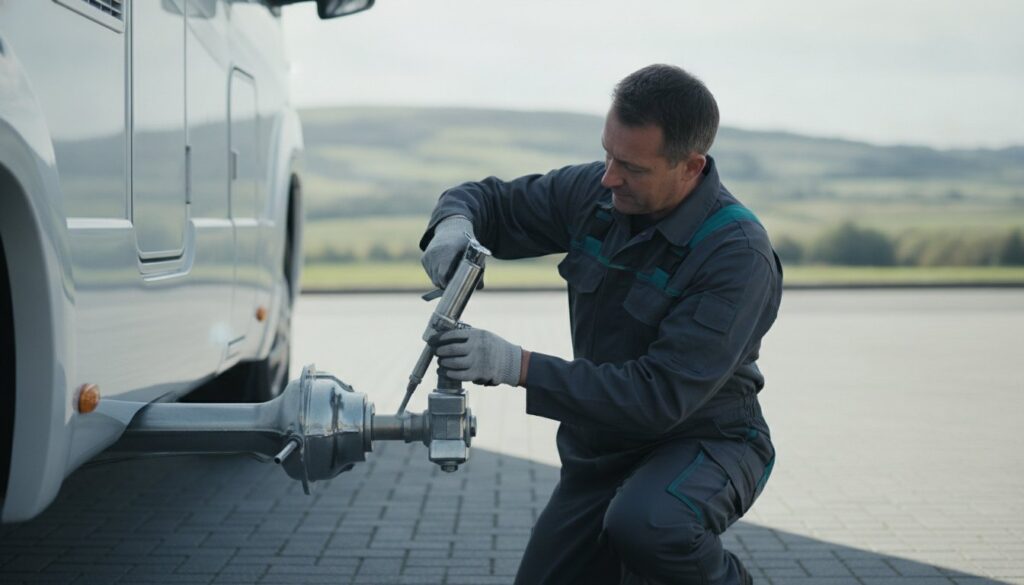
Your standard engine service and annual habitation check might be leaving your motorhome’s most expensive component completely unprotected. While these inspections are vital, they rarely include the specialist motorhome chassis lubrication service required to keep an Al-Ko axle moving freely. Neglecting this simple task is often the root cause of that worrying suspension groan and can eventually lead to a total axle failure that costs thousands of pounds to rectify.
It’s understandable if you’ve found it difficult to locate a specialist who understands these technical requirements, or if you’re worried about the inconvenience of taking your van to a fixed workshop. This guide explains why precision greasing is the secret to passing your MOT with ease and ensuring a smooth, silent ride for years to come. We’ll explore the specific maintenance schedules your chassis requires, the benefits of professional mobile servicing, and how to gain total peace of mind before your next long-distance tour.
Key Takeaways
- Understand why a standard MOT fails to protect your axle and why specialist preventative maintenance is the only way to avoid catastrophic failure.
- Discover the unique technical requirements of the Al-Ko torsion bar suspension and why regular lubrication is essential for its longevity.
- Learn what to expect during a professional motorhome chassis lubrication service, including the importance of cleanliness to protect sensitive bearings.
- Identify the critical red flags, such as suspension groans or poor handling, that indicate your chassis needs urgent expert attention.
- Explore the convenience of mobile specialist servicing that brings technical expertise directly to your home or storage plot across South Yorkshire.
Understanding Motorhome Chassis Lubrication & Why It Is Critical
A motorhome chassis lubrication service is the methodical application of high-pressure, specialist grease lubricant to the specific moving parts within your vehicle’s suspension and axle system. This procedure is vital for the mechanical health of your leisure vehicle. It ensures that the internal torsion bars and bearings remain protected from moisture, road salt, and friction. Without this regular intervention, the metal-on-metal contact within the axle housing leads to premature wear. This results in a harsh ride, poor handling, and eventually a completely seized suspension system.
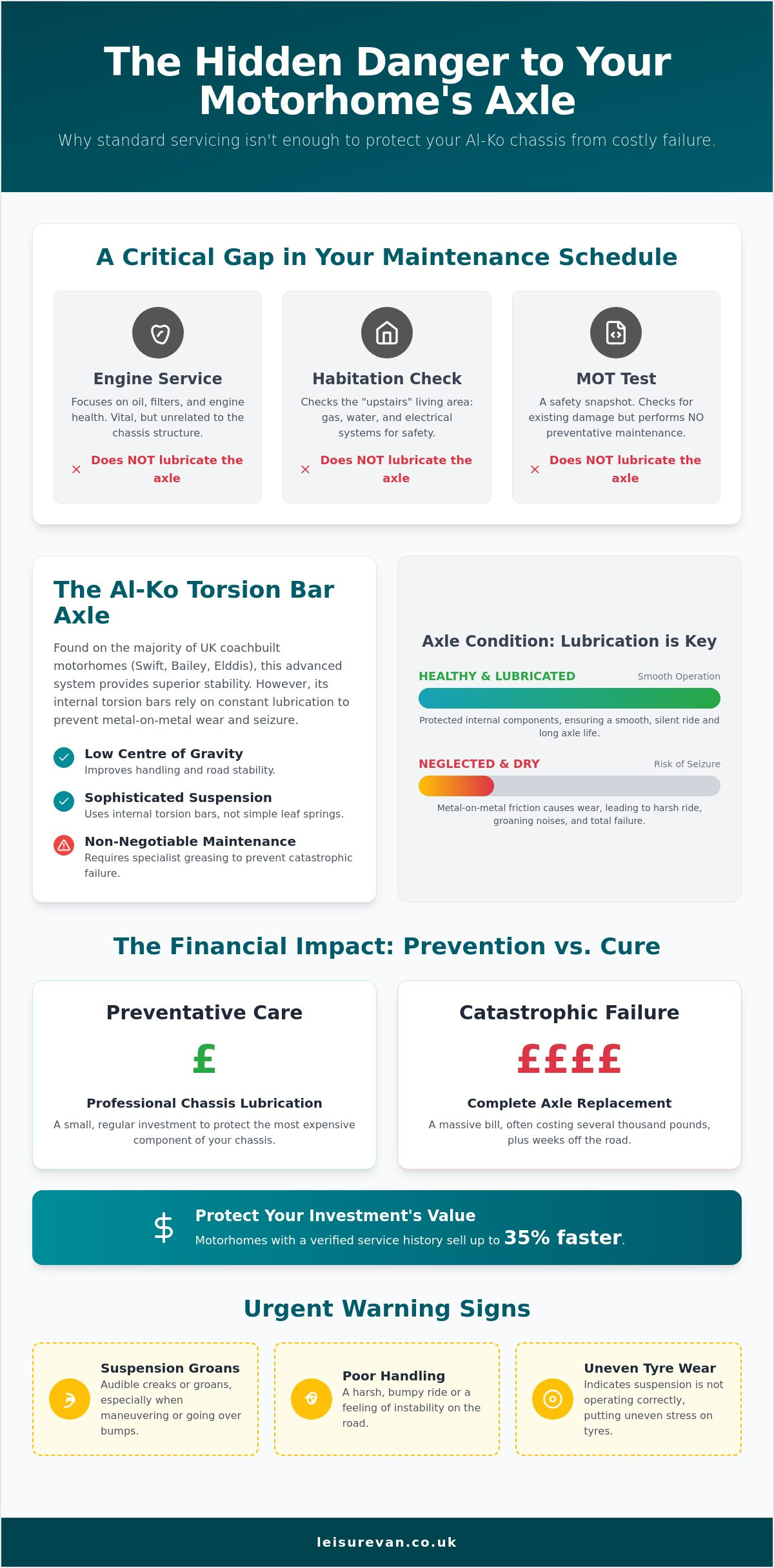
A common trap for many owners is believing that a valid MOT certificate covers this requirement. It doesn’t. An MOT is a snapshot of safety; the examiner checks for excessive play or visible damage, but they do not perform any maintenance. They won’t apply grease or inspect the internal condition of the axle tubes. Relying solely on an MOT for your chassis health is like checking your engine oil level but never actually changing it. This is why a dedicated motorhome chassis lubrication service is a non-negotiable part of a responsible owner’s maintenance calendar.
The Difference Between Habitation Checks and Chassis Servicing
It’s easy to confuse different types of maintenance. A habitation check focuses on the “upstairs” living area. It ensures your gas, water, and electrical systems are safe and functional. In contrast, chassis servicing looks at the “downstairs” mechanical components. This includes the brakes, tyres, and the axle itself. To maintain a safe and reliable vehicle, you need a maintenance regime that combines both. One keeps you comfortable at night, whilst the other keeps you safe and stable on the road.
The Financial Impact of Neglecting Your Chassis
The logic is simple: a small investment today prevents a massive bill tomorrow. Replacing a seized Al-Ko axle can easily cost several thousand pounds. This figure doesn’t include the stress of being off the road for weeks whilst specialist parts are ordered. Beyond repair costs, a documented service history is a powerful asset for your vehicle’s value. Industry data from 2026 shows that used motorhomes with a verified service history sell up to 35% faster than those without. Buyers in the current market prioritise “turn-key” readiness and mechanical proof over almost any other factor. Professional chassis lubrication is the most cost-effective preventative measure an Al-Ko owner can invest in to avoid catastrophic axle failure.
The Al-Ko Chassis & Axle: Why Specialist Greasing is Non-Negotiable
The AL-KO Kober AMC chassis is the structural foundation for the vast majority of coachbuilt motorhomes in the UK. Its low-profile, lightweight design is a marvel of engineering, providing a lower centre of gravity and significantly improved road stability. However, this performance comes with a specific maintenance trade-off. Unlike the simple leaf springs found on standard commercial vans, the Al-Ko system utilises a sophisticated torsion bar suspension. This design relies on internal bushes and bearings that must be kept under constant lubrication to function correctly.
If you skip your motorhome chassis lubrication service, these internal components quickly run dry. Standard automotive grease is often insufficient for these parts because they endure immense, concentrated loads. Choosing the correct product is vital; RV Chassis Lubricants must be capable of withstanding extreme pressure whilst actively repelling water and road salt. Without this protection, the suspension bushes suffer from metal-on-metal wear. This leads to the “seized axle” phenomenon, where the suspension becomes rigid, destroying your ride quality and eventually necessitating a complete, and very expensive, axle replacement.
Identifying Your Chassis Type
Most owners can identify an Al-Ko chassis by looking for the distinctive galvanised steel frame behind the cab. It looks like shiny, silver-grey metal rather than the painted black steel of a standard van. Major UK manufacturers like Swift, Elddis, and Bailey almost exclusively use this running gear for their coachbuilt ranges. It’s also important to recognise that even if your motorhome is based on a Fiat Ducato, Peugeot Boxer, or Citroen Relay, the front cab is often mated to an Al-Ko rear extension. If your rear wheels sit wider than the front or the floor is noticeably low, you are likely riding on Al-Ko technology.
The Specific Needs of Torsion Bar Suspension
The lubrication process for these axles is highly specific. You will find grease nipples located on the axle tube, but simply pumping grease into them whilst the van is parked is ineffective. The axle must be “unladen.” This means the wheels must be lifted completely off the ground to allow the grease to penetrate the top of the suspension bushes, where the most pressure is applied during travel. If the vehicle isn’t jacked up correctly, the grease will only coat the bottom of the bearing, leaving the most vulnerable areas dry.
Manufacturer specifications are also strict. Al-Ko recommends specific high-performance greases, such as Klüber Stabutherm, to ensure the internal rubber elements aren’t damaged by incompatible chemicals. If you aren’t comfortable safely jacking up a multi-tonne vehicle or identifying these grease points, you can request a specialist chassis service to ensure the job is done to professional standards. This precision maintenance is the only way to guarantee the long-term health of your suspension system.
What Happens During a Professional Chassis Lubrication Service?
A professional motorhome chassis lubrication service is a methodical process that requires technical precision and a clean environment. It’s far more than a quick squirt of grease into a nipple. If done incorrectly, you risk introducing contaminants into the very bearings you’re trying to protect. A qualified engineer treats this task as a detailed mechanical health check. They use the time spent under the vehicle to identify emerging issues before they become safety hazards or MOT failures.
The Professional Step-by-Step Greasing Process
The procedure follows a strict sequence to ensure the lubricant reaches every internal surface. Precision is key to a successful outcome.
- Step 1: Thorough Cleaning. The engineer begins by wiping down the grease nipples to remove road salt, grit, and old, hardened lubricant. This prevents abrasive particles from being forced into the axle tube.
- Step 2: Jacking the Vehicle. The motorhome is safely raised until the wheels are clear of the ground. This relaxes the internal torsion bars. It creates the necessary gaps for the new grease to flow around the entire circumference of the bushes.
- Step 3: Pumping Grease. Using a high-pressure grease gun, the engineer injects the manufacturer-specified lubricant. This continues until fresh, clean grease begins to purge from the seals. This purge confirms that the old, contaminated grease has been fully displaced.
Beyond Greasing: The Visual Inspection
Whilst the vehicle is raised and the engineer is positioned beneath the chassis, a comprehensive visual inspection takes place. This is an essential part of a wider motorhome-servicing-south-yorkshire programme. The engineer examines the rubber bellows and seals that protect the axle’s internal components. If these are perished or split, moisture will enter the system. This leads to rapid corrosion regardless of how much grease is present.
A professional motorhome chassis lubrication service also provides the perfect opportunity to verify the condition of the galvanised frame for any signs of stress or fatigue. The inspection covers the mechanical linkages, including the brake rods and handbrake cables, ensuring they operate smoothly and securely. The engineer also inspects the tyres for uneven wear patterns. These patterns often point to suspension misalignment or bearing wear. Finally, secondary components like the spare wheel carrier and steady legs are checked for security. This thorough approach ensures that when the wheels touch the ground again, you have total confidence in your vehicle’s structural integrity.
Warning Signs: When Your Motorhome Chassis Needs Urgent Attention
Waiting for your annual service to address suspension issues is a gamble that rarely pays off. Whilst many owners rely on their yearly check-up, your vehicle often provides subtle hints that its mechanical health is declining. Recognising these red flags early can save you from the stress of a mid-tour breakdown. Beyond the financial savings, there is a significant psychological benefit to a quiet, smooth-running motorhome. Touring becomes a far more relaxing experience when you aren’t constantly listening for the next expensive-sounding clunk or groan from the rear axle.
Chassis health is also intrinsically linked to your vehicle’s safety systems. A neglected axle doesn’t just affect comfort; it can impact braking performance. Since the brake linkages and handbrake cables are mounted directly to the chassis, a seized or stiff suspension can prevent these components from moving as freely as they should. If you’ve been experiencing unusual noises or a change in handling, it’s time to take a closer look.
Common Auditory and Physical Symptoms
The most frequent indicator that your axle requires attention is a distinct squeaking or groaning sound. This usually manifests when you’re driving over speed bumps or navigating the uneven ground of a rural campsite. These sounds are the literal cry for help from dry internal components. You might also notice a harsh or “stiff” ride quality. If the suspension feels like it has lost its usual “give” and every pothole feels like a bone-shaking impact, your torsion bars may be sticking due to lack of grease.
Physical sagging is another critical sign. If your motorhome appears to sit lower at the rear than it did previously, or if it leans noticeably to one side, the suspension may be failing. You can perform a basic visual check by measuring the distance from the ground to the wheel arch on both sides. Significant discrepancies or a general loss of height suggest that a motorhome chassis lubrication service is urgently required to prevent permanent damage.
Visual Red Flags for Owners
If you’re comfortable looking beneath your vehicle, there are several visual cues to watch for. Inspect the rubber gaiters, also known as bellows, on the axle ends. If these are cracked, perished, or split, they allow moisture and road salt to enter the axle tube, which rapidly washes away any remaining lubricant. You should also check for excessive rust or corrosion on the brake drums and mechanical linkages.
Take a close look at the grease nipples themselves. They should appear clean and slightly oily. If they are bone-dry or completely encased in years of hardened road grime, it’s a clear sign that they haven’t been serviced recently. Conversely, seeing fresh grease leaking from the seals when you haven’t had a recent service might indicate a seal failure. If you spot any of these issues, you should book a professional chassis inspection immediately to ensure your vehicle remains safe for the road.
Expert Mobile Chassis Servicing Across South Yorkshire & Beyond
Finding a specialist who truly understands the technical nuances of an Al-Ko axle often involves a long, fuel-consuming journey to a fixed workshop. LeisureVan Service Solutions removes this hurdle by bringing professional expertise directly to your doorstep. We provide a dedicated “Chassis Only Service” that ensures your suspension is maintained to the highest standards without the need for you to move your vehicle. This mobile approach is particularly beneficial for owners who keep their motorhomes in secure storage plots or have limited time between tours.
Our qualified mobile service engineer covers the entirety of South Yorkshire and the surrounding areas. Whether you are based in Sheffield, Rotherham, Doncaster, or Barnsley, we provide a “safe pair of hands” for your vehicle’s most critical mechanical components. A professional motorhome chassis lubrication service doesn’t have to be a logistical headache. By choosing a mobile specialist, you receive a focused, one-on-one service that prioritises the safety and longevity of your equipment over high-volume workshop turnover.
The Mobile Advantage for Motorhome Owners
The primary benefit of mobile servicing is the significant saving of both time and money. You won’t need to arrange a second car for a workshop drop-off or spend your day sitting in a waiting room. Instead, you can watch the service being performed on your own driveway. This transparency allows you to ask technical questions and see exactly where the grease is being applied.
We understand that preparation for a long-distance tour can be hectic. Our flexible scheduling is designed to fit around your travel plans, ensuring your suspension is silent and your ride is smooth before you hit the road. For maximum efficiency, many of our clients choose to combine their chassis maintenance with a motorhome habitation service. This comprehensive approach addresses both the living area and the running gear in a single visit, providing total peace of mind for the season ahead.
Booking Your Service with LeisureVan Service Solutions
We believe in honest communication and meticulous work. Every motorhome chassis lubrication service we perform is followed by the provision of a transparent service report. This documentation is a vital addition to your vehicle history folder. It proves to future buyers that the chassis has been maintained by a specialist, which is a key factor in maintaining the resale value of your leisure vehicle in the 2026 market.
Securing your appointment is straightforward. Our local residents can use our simple online system to request a visit at a time and location that suits them best. Don’t wait for a suspension groan to turn into a costly repair. Book your motorhome chassis lubrication service today and ensure your van is ready for its next adventure with a smooth, silent, and safe ride.
Protect Your Investment and Ensure a Smooth Journey
Maintaining your Al-Ko axle is one of the most effective ways to avoid the stress and expense of a major mechanical failure. By prioritising a professional motorhome chassis lubrication service, you ensure that your vehicle remains safe, silent, and stable for every mile of your tour. Specialist preventative care is the only way to protect vital internal torsion bars from permanent wear. It’s a simple step that preserves your ride quality and protects your vehicle’s long-term resale value.
LeisureVan Service Solutions makes this essential task effortless. Our fully qualified mobile service engineer is a specialist in motorhome chassis maintenance, bringing technical expertise directly to your home or storage plot. We proudly serve owners across Sheffield, Doncaster, Rotherham, and the wider South Yorkshire area, providing the meticulous attention to detail your leisure vehicle deserves. You’ll receive a transparent service report that offers total peace of mind before you hit the road.
Don’t let a dry axle compromise your next adventure. Take the proactive step towards a better ride and a safer vehicle today. Request a Mobile Chassis Service Quote and let us help you keep your motorhome in peak condition for years to come.
Frequently Asked Questions
How often should I grease my motorhome chassis?
Al-Ko recommends greasing the axle every 12 months or every 12,400 miles (20,000 km), whichever occurs first. This ensures the internal torsion bars remain coated in fresh lubricant to prevent friction and moisture ingress. Regular intervals are especially important if you tour in wet conditions or coastal areas where road salt can accelerate the degradation of the grease and lead to corrosion.
What type of grease is best for an Al-Ko motorhome axle?
The officially recommended lubricants for an Al-Ko chassis include Klüber Stabutherm GH 461 or Shell Retinax LX. These are high-performance greases designed to withstand extreme pressure whilst actively repelling water. Using a standard, low-grade automotive grease can lead to premature wear of the internal bushes. It is vital to use a product that meets the manufacturer’s technical specifications to ensure long-term protection.
Can I grease my motorhome chassis myself?
Whilst it’s possible to perform this task yourself, it requires specific equipment and significant safety precautions. The motorhome must be safely jacked up so the axle is unladen to allow the grease to penetrate the top of the bushes. Most owners prefer a professional motorhome chassis lubrication service to ensure the nipples are cleaned correctly and the right pressure is applied without introducing grit into the bearings.
Does a motorhome habitation check include chassis lubrication?
No, a standard motorhome habitation check focuses exclusively on the living area, including gas, water, and electrical systems. Chassis maintenance is a separate mechanical task that addresses the running gear and suspension. To ensure your vehicle is fully maintained, you should book a dedicated chassis service alongside your annual habitation inspection to cover both safety and comfort for the season ahead.
Why is my motorhome suspension squeaking?
Squeaking is usually a sign that the internal suspension bushes have run dry and are suffering from metal-on-metal friction. This often happens when the protective rubber seals perish, allowing moisture to wash away the lubricant. If you notice these auditory warning signs, it is a clear indicator that your chassis requires urgent professional attention to prevent the suspension from seizing completely and causing a harsh ride.
What happens if I never grease my motorhome axle?
Neglecting your axle will eventually lead to a seized suspension, which results in a dangerously harsh ride and potential structural damage to the motorhome body. A seized axle is a major MOT failure and often requires a total replacement costing thousands of pounds. Regular greasing is a small investment that prevents these catastrophic failures and ensures your vehicle remains safe for long-distance touring.
How much does a mobile chassis lubrication service cost in the UK?
The cost of a chassis lubrication service typically depends on whether your motorhome has a single or twin axle and your specific location. Whilst industry averages vary across the UK, choosing a mobile specialist can often save you the additional expense of fuel and the inconvenience of workshop travel. For an accurate price tailored to your vehicle and location, it’s best to request a direct quote from a qualified engineer.
Does my Fiat Ducato motorhome need its chassis greasing?
Yes, many Fiat Ducato motorhomes require chassis greasing if they are fitted with the popular Al-Ko AMC rear extension. Whilst the standard Fiat front cab handles the engine and front wheels, the rear of the coachbuilt body often sits on a specialist torsion bar axle. You can identify this by checking for the galvanised steel frame and grease nipples located on the rear axle tube.