
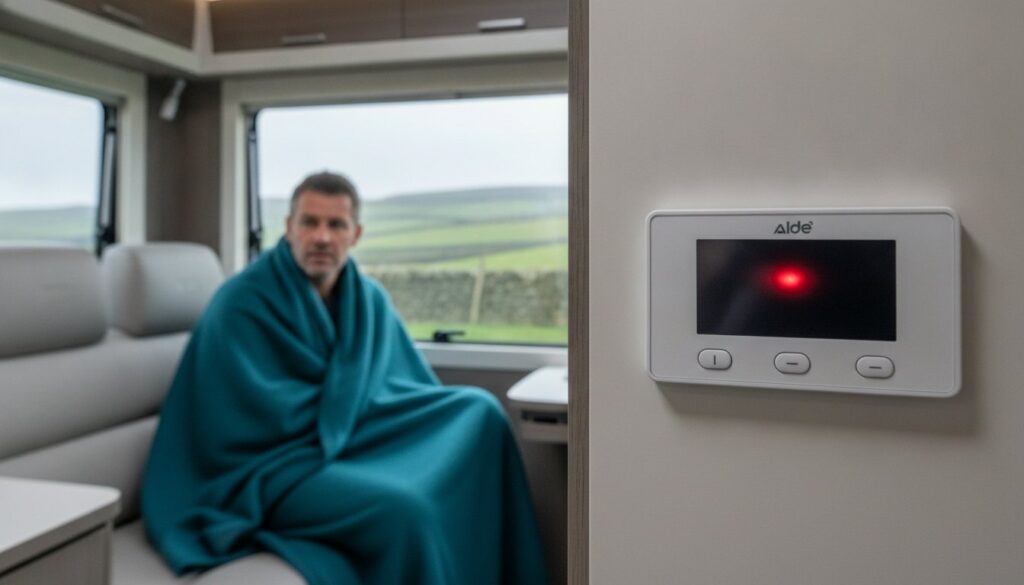
You wake up on a crisp South Yorkshire morning, but instead of the silent, radiator-style warmth your Alde system is famous for, you are met with a strange gurgling noise and a stubborn cold spot at the foot of your bed. It is a frustrating moment that many caravan and motorhome owners recognise, as these are often the first signs Alde heating needs service before a minor glitch becomes a major breakdown. You know that silence is usually a sign of a healthy system, and any change in behaviour feels like a ticking clock toward a potential boiler failure. Most owners understandably worry about the inconvenience of workshop visits or the fear of hidden corrosion eating away at their investment.
In this guide, we will help you spot these early warnings so you can prevent internal damage and avoid the staggering cost of a full boiler replacement. Protecting your system is about more than just staying warm; it is about maintaining a safe, efficient environment for your travels. We will explore why the colour of your glycol is your first line of defence in 2026, explain the “chemical battle” happening inside your pipes, and show how a mobile specialist can restore your comfort whilst your van stays exactly where it is.
Key Takeaways
- Identify physical symptoms like gurgling noises and cold spots to recognise the early signs Alde heating needs service.
- Learn why glycol is your primary defence against corrosion; it’s the key to protecting your boiler’s internal components.
- Decode common error messages like “Gas Failure” and “Overheat Red” to distinguish between simple user fixes and safety-critical issues.
- Discover the thorough process of a professional fluid change; this removes harmful sediment and restores heating efficiency.
- Experience the convenience of mobile servicing in South Yorkshire; this ensures your vehicle is winter-ready without the hassle of workshop towing.
Identifying the Early Warning Signs of Alde System Failure
The Alde system is a sophisticated piece of engineering. Unlike standard blown-air heaters, it relies on the principles of hydronic heating systems to circulate warm fluid through a network of radiators. This design creates a silent, home-like environment, but because it’s so quiet, the symptoms of failure are often subtle. Recognising the signs Alde heating needs service early can save you from a ruined holiday and a very expensive repair bill.
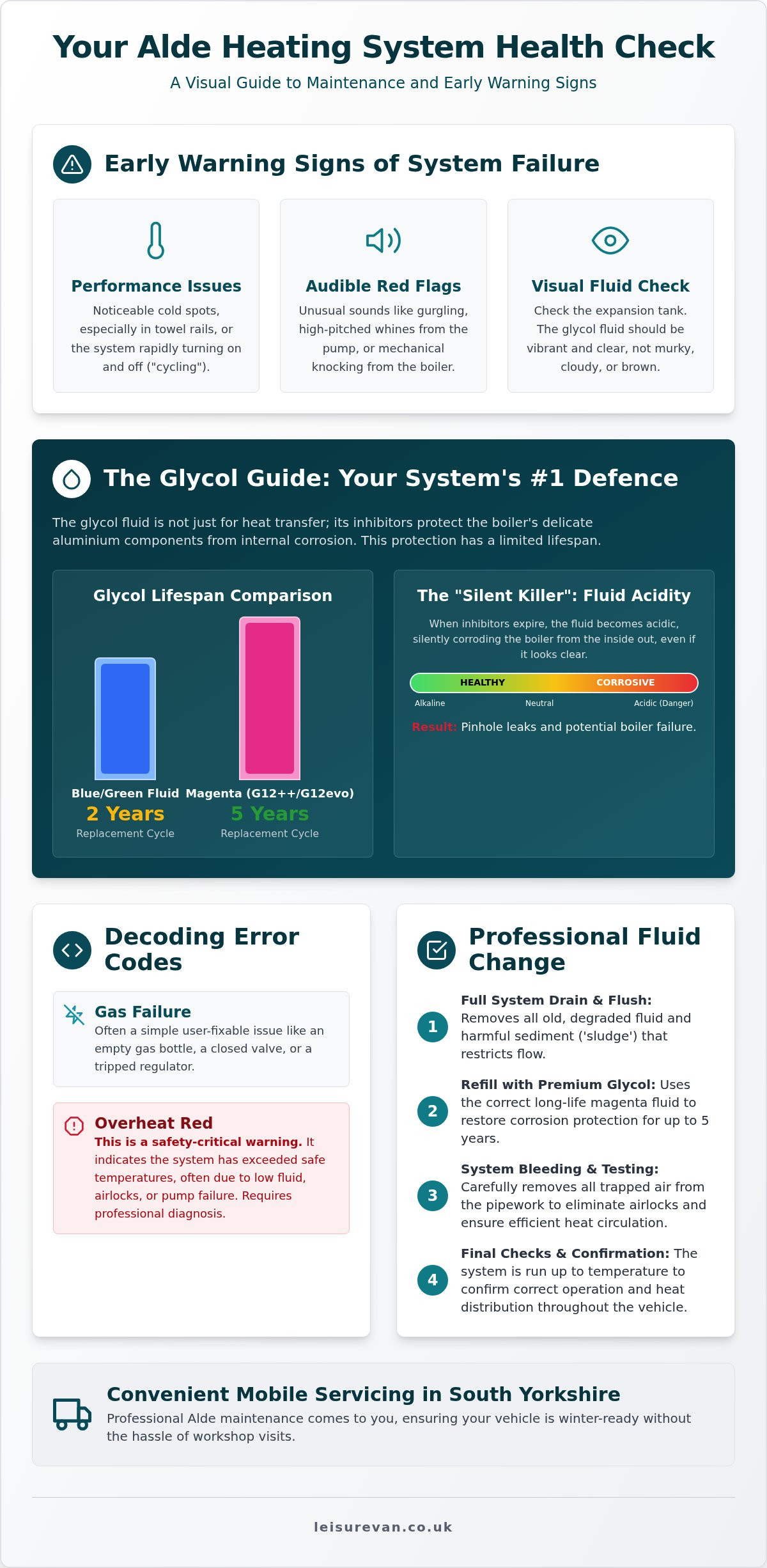
You should regularly check the expansion tank, usually tucked away in a wardrobe or locker. The glycol fluid should be clear and vibrant. If you notice it has turned a murky brown or looks cloudy, the corrosion inhibitors have likely expired. This chemical shift is a silent killer for boilers. When the fluid becomes acidic, it begins to eat the aluminium components from the inside out. Beyond the fluid, watch your control panel. If error codes appear frequently, don’t simply reset them and hope for the best. These are documented warnings that your system’s safety parameters are being pushed to their limit.
Performance Issues: When the Warmth Disappears
Have you noticed that your bathroom towel rail remains stone cold whilst the lounge radiators are piping hot? This is a classic symptom of an airlock or, more concerningly, a build-up of sediment known as “sludge”. Over time, degraded glycol allows tiny particles to settle in the narrowest parts of the pipework, restricting flow. If the system struggles to reach your desired temperature, the boiler might begin “cycling” by turning on and off rapidly. It’s working hard but achieving very little. Distinguishing between a simple airlock and a failing circulation pump is vital. While an airlock can sometimes be bled out, a pump that’s struggling usually requires a professional fault diagnosis to prevent a total shutdown.
Audible Red Flags: Gurgles, Whines, and Knocks
A healthy Alde system is almost silent. If you start hearing unusual noises, your system is effectively calling for help. These sounds are rarely “normal” and usually point to specific mechanical or fluid issues:
- Gurgling or bubbling: Usually heard near the expansion tank, this suggests air is trapped in the circuit or the fluid level has dropped too low.
- High-pitched whining: This often comes from the 12V circulation pump. It may be struggling against high pressure or suffering from failing bearings.
- Mechanical knocking: This is a significant red flag for mechanical distress within the boiler unit itself.
Ignoring these audible signs Alde heating needs service can lead to a seized pump or a cracked heat exchanger. Catching these sounds early allows for a simple fluid change or pump replacement rather than a full system overhaul. It’s about maintaining that peace of mind that your van will stay warm regardless of the British weather.
The Glycol Guide: Why Fluid Condition is the #1 Service Priority
The glycol fluid in your system does far more than just transfer heat. It contains a complex package of corrosion inhibitors designed to protect the delicate aluminium internal surfaces of your boiler. Without these, the water and glycol mix becomes a catalyst for oxidation. Understanding Alde boiler maintenance involves recognising that this chemical protection has a finite lifespan. Once the inhibitors are exhausted, the fluid turns acidic. This is when it begins “eating” the boiler from the inside, often leading to pinhole leaks that are impossible to repair.
One of the most deceptive signs Alde heating needs service is fluid that looks perfectly clear. Many owners assume that if the liquid isn’t murky, it’s still healthy. In reality, the pH level can drop into the danger zone whilst the fluid remains transparent. This acidity silently corrodes the aluminium casing. A professional service uses a refractometer and pH testing to confirm the fluid’s integrity, ensuring it hasn’t crossed the line into a corrosive state that threatens the boiler’s lifespan.
The 2-Year vs 5-Year Fluid Debate
Most modern systems use the magenta G12++ or G12evo fluid, which is rated for a five-year lifespan. Older units often contain blue or green glycol, which must be replaced every two years. However, many specialists recommend a more frequent check or a two-year cycle regardless of the fluid colour. This proactive approach acts as an insurance policy for your equipment. A professional fluid change typically costs between £200 and £260. Contrast this with the cost of a full boiler replacement, which can exceed £3,500 plus fitting. Investing in regular maintenance is the most logical way to protect your leisure vehicle’s value.
Sensory Inspection: Colour, Smell, and Debris
Magenta clarity is the gold standard for modern Alde systems. If you open the expansion tank and detect a sharp vinegar or fishy odour, the fluid is already in an advanced state of degradation. You should also look for black flakes floating in the tank. These particles often indicate the internal breakdown of rubber hoses or the circulation pump’s impeller. If you notice these symptoms, these are clear signs Alde heating needs service to prevent permanent boiler damage. You can book a professional fluid change to have the system thoroughly flushed. A specialist will use a specialised pump to ensure every drop of acidic old fluid is removed, replacing it with fresh, Alde-approved glycol that guarantees another five years of protection.
Troubleshooting Common Alde Error Codes and Performance Issues
Your Alde control panel is more than just a thermostat; it’s a sophisticated diagnostic tool that communicates directly with the boiler’s sensors. When the system detects an operational anomaly, it displays specific error codes to protect the hardware from permanent damage. Understanding these messages is vital for any owner, as they are often the most direct signs Alde heating needs service before a total system lockout occurs.
A “Gas Failure” message is one of the most frequent alerts. Whilst it often simply means you’ve run out of propane, it can also signal a blocked burner or a failing regulator. Similarly, the “Fan Speed” error usually points to an obstruction in the flue, such as debris or an insect nest, which prevents the boiler from venting safely. If you encounter a “Battery Low” warning, the heating may malfunction even if you are plugged into mains power. The Alde system requires a stable 12V supply to run the internal electronics and the circulation pump. If your leisure battery is struggling, the entire heating circuit becomes unstable.
Control Panel Warnings You Should Never Ignore
The “Overheat Red” or “Overheat Blue” warning is a safety-critical alert that should never be ignored. This occurs when the water temperature inside the boiler exceeds safe limits, often due to an airlock or a failing pump. To safely reset the system, you must allow the boiler to cool completely before clearing the code on the panel. If the error persists, it is a clear indication of a mechanical fault. In these instances, you should contact an Alde heating specialist to identify the root cause. Attempting to force a reset on a system that is genuinely overheating can lead to warped components or a cracked heat exchanger. For more technical details on maintaining the internal pressure balance, this Alde boiler maintenance guide explains how the essential air cushion prevents these pressure-related trips.
Gas vs Electric: Why One Fails Whilst the Other Works
It is common for an Alde system to work perfectly on gas but fail on electric, or vice versa. If the system won’t heat on “Electric 1” or “Electric 2” settings, the problem is usually a tripped 230V mains breaker or a blown fuse on the boiler’s circuit board. However, if the power supply is confirmed but the fluid remains cold, the immersion heater element may have failed. Conversely, if gas operation fails whilst electric works, the issue likely lies with the burner or gas valve. These components require a specialised gas safety test during your annual service to ensure the combustion process is clean and efficient. These technical discrepancies are primary signs Alde heating needs service, as they indicate that one half of your dual-fuel system is no longer contributing to the heat load, putting undue stress on the remaining power source.
The Alde Service Checklist: What a Professional Fluid Change Involves
A professional Alde service is a methodical process designed to reset your system’s chemical and mechanical health. It is far more involved than simply pouring new liquid into the expansion tank. Because degraded glycol becomes acidic, the first essential step is draining the entire circuit. A specialist will ensure every drop of the old, potentially corrosive liquid is removed from the radiators and pipework. This is followed by a thorough flush with fresh water. This flushing process is vital because it dislodges the “sludge” and sediment that naturally settle in the system over time, restoring the heat transfer efficiency mentioned earlier in this guide.
Once the system is clean, it is refilled with a precise concentration of long-life magenta fluid, typically G12++ or the newer G12evo blend. Fresh fluid is only half the battle, however. The most difficult part of the job is removing airlocks. Professionals use a specialised high-volume pump to force fluid through the circuit at pressure, which is the only reliable way to purge every air pocket. Finally, the boiler is tested at maximum load on both gas and electric. This confirms that the immersion elements and the gas burner are performing safely before the winter temperatures arrive.
Why DIY Fluid Changes Often Lead to Problems
Attempting to change the fluid yourself often leads to persistent airlocks that are impossible to clear without professional equipment. There is also a significant risk of the “jelly effect”. This occurs when incompatible glycol types are mixed, causing a chemical reaction that thickens the fluid and blocks the narrow channels in your radiators. A professional caravan servicing expert understands these chemical nuances and uses dedicated equipment to prevent contamination. If you have noticed any signs Alde heating needs service, you can request a mobile fluid change today to ensure the job is done correctly.
Beyond the Fluid: The Full System Inspection
A comprehensive service looks beyond the chemicals to ensure the hardware is sound. The expansion tank is inspected for hairline cracks that could lead to slow leaks, whilst the flue terminal is checked for integrity and safety. Automatic bleed valves and manual vents are also tested to ensure they haven’t seized. These mechanical checks are just as important as the fluid itself. They provide the peace of mind that your system is not only warm but also safe for your family to use. Recognising the physical signs Alde heating needs service is the first step, but a technical inspection ensures no hidden faults are left to develop into costly repairs.
Professional Alde Maintenance in South Yorkshire: The Mobile Advantage
Many owners put off essential maintenance because of the sheer inconvenience of traditional workshop visits. In the past, you would have to tow your caravan or drive your motorhome to a distant service centre, often leaving it there for several days. This logistical headache disappears with a mobile specialist. We come directly to you, whether your vehicle is parked on your driveway, at a secure storage site, or even on a pitch during your holiday. This “safe pair of hands” approach ensures your heating is restored whilst you carry on with your day, avoiding the stress of narrow workshop entrances and long waiting lists.
When you recognise the signs Alde heating needs service, time is of the essence to prevent internal boiler corrosion. Combining an Alde heating system fluid change with a full habitation check is the most efficient way to maintain your vehicle’s health. It provides a complete technical overview of your van in a single visit. This proactive strategy saves you money on travel costs and ensures every system, from gas safety to damp levels, is verified by a qualified engineer. It is about providing a transparent service that prioritises your safety and the longevity of your equipment.
Serving Sheffield, Rotherham, and Beyond
Our mobile coverage spans the heart of South Yorkshire, including Sheffield, Rotherham, Barnsley, and Doncaster, extending into Chesterfield. Local knowledge is surprisingly relevant here. For instance, understanding the “hard water” profile of certain South Yorkshire areas allows us to provide better advice on system longevity and scale prevention. When you’re ready to book, simply have your vehicle make, model, and the last known fluid change date ready. This helps us ensure we arrive with the correct Alde-approved glycol and specialised pumping equipment for your specific setup.
Peace of Mind for Your Next Adventure
A professional service report is a valuable document that does more than just confirm your system is safe. It acts as a detailed service history that protects your resale value. Buyers in 2026 are increasingly savvy about the costs of boiler failure, and a documented history of regular fluid changes is a significant selling point. More importantly, it prevents “holiday spoilers”. There is nothing worse than arriving at a winter campsite only to find your heating has locked out due to a neglected airlock or degraded fluid. By acting when you first see the signs Alde heating needs service, you ensure every journey is defined by comfort rather than cold spots. You can book your Alde fluid change today to secure your peace of mind for the season ahead.
Protect Your Comfort and Your Boiler with Professional Care
Maintaining your Alde system is a straightforward choice between proactive care and the risk of a costly boiler failure. The condition of your glycol is the most critical factor in preventing internal corrosion. By recognising the physical signs Alde heating needs service, such as unusual gurgling or stubborn cold spots, you can act before permanent damage occurs. A professional service restores the chemical balance of your system and ensures your radiators heat evenly once more.
As a qualified mobile service engineer, I bring specialist fluid change equipment directly to your home or storage site. Serving South Yorkshire and Derbyshire, I prioritise your convenience and the long term safety of your leisure vehicle. Don’t wait for the first frost to discover a fault that could have been prevented with a technical inspection. You can Request an Alde Heating Service Quote today to ensure your caravan or motorhome remains a warm, safe sanctuary for your next adventure.
Frequently Asked Questions
How often should I change the fluid in my Alde heating system?
The interval depends entirely on the type of glycol currently in your system. Blue or green antifreeze typically requires replacement every two years, whilst the modern magenta fluid (G12++ or G12evo) is rated for five years. If you are unsure which fluid is installed, a professional can test the pH levels and frost protection to determine if a change is necessary.
Can I top up my Alde heating system with water?
You should only top up with water in an emergency situation. Adding water dilutes the vital corrosion inhibitors and raises the freezing point of the mixture, which can leave your boiler vulnerable to internal damage. If a top up is required, it’s best to use a pre-mixed Alde-approved glycol or have the concentration professionally corrected shortly after.
Why is my Alde heating making a gurgling noise?
Gurgling or bubbling sounds usually indicate that air is trapped in the pipework or the fluid level in the expansion tank is too low. This is amongst the most common signs Alde heating needs service, as airlocks prevent the system from circulating heat silently and efficiently. If the noise persists after a manual bleed, a professional flush may be required.
How much does a professional Alde fluid change cost in the UK?
The cost of a professional fluid change varies depending on the size of your vehicle and whether you have additional features like underfloor heating. Because the process involves specialised pumping equipment and a significant volume of long-life glycol, it is a dedicated technical task. You should request a personalised quote to ensure your specific system requirements are covered.
What colour should Alde heating fluid be?
Modern Alde-approved fluid should be a vibrant, clear magenta colour. Older systems may still contain blue or green fluid from previous service standards. Regardless of the original shade, if the liquid appears murky, brown, or contains floating black particles, the inhibitors have likely failed and the fluid has become acidic.
My Alde heating works on gas but not electric, what is wrong?
This discrepancy usually indicates a fault with the 230V electrical supply or the immersion elements. You should check your mains consumer unit and the fuses on the boiler itself. If the electrical supply is healthy but the system remains cold, a failed heating element is often the culprit, requiring a technical fault diagnosis to resolve.
Do I need to bleed my Alde heating system like a house radiator?
Yes, but the process is more complex as caravans have multiple bleed points hidden in wardrobes and behind furniture. Whilst you can perform a basic bleed yourself, persistent airlocks often settle in high points of the pipework that only a high-pressure service pump can clear. This is a standard part of a professional fluid replacement service.
Is an Alde heating service included in a standard habitation check?
No, a standard habitation check only confirms that the system functions and is safe to use at that moment. It does not include the draining, flushing, or refilling of the glycol fluid. To ensure your boiler is protected against internal corrosion, you must book an Alde Heating System Fluid Change as a separate maintenance item.