

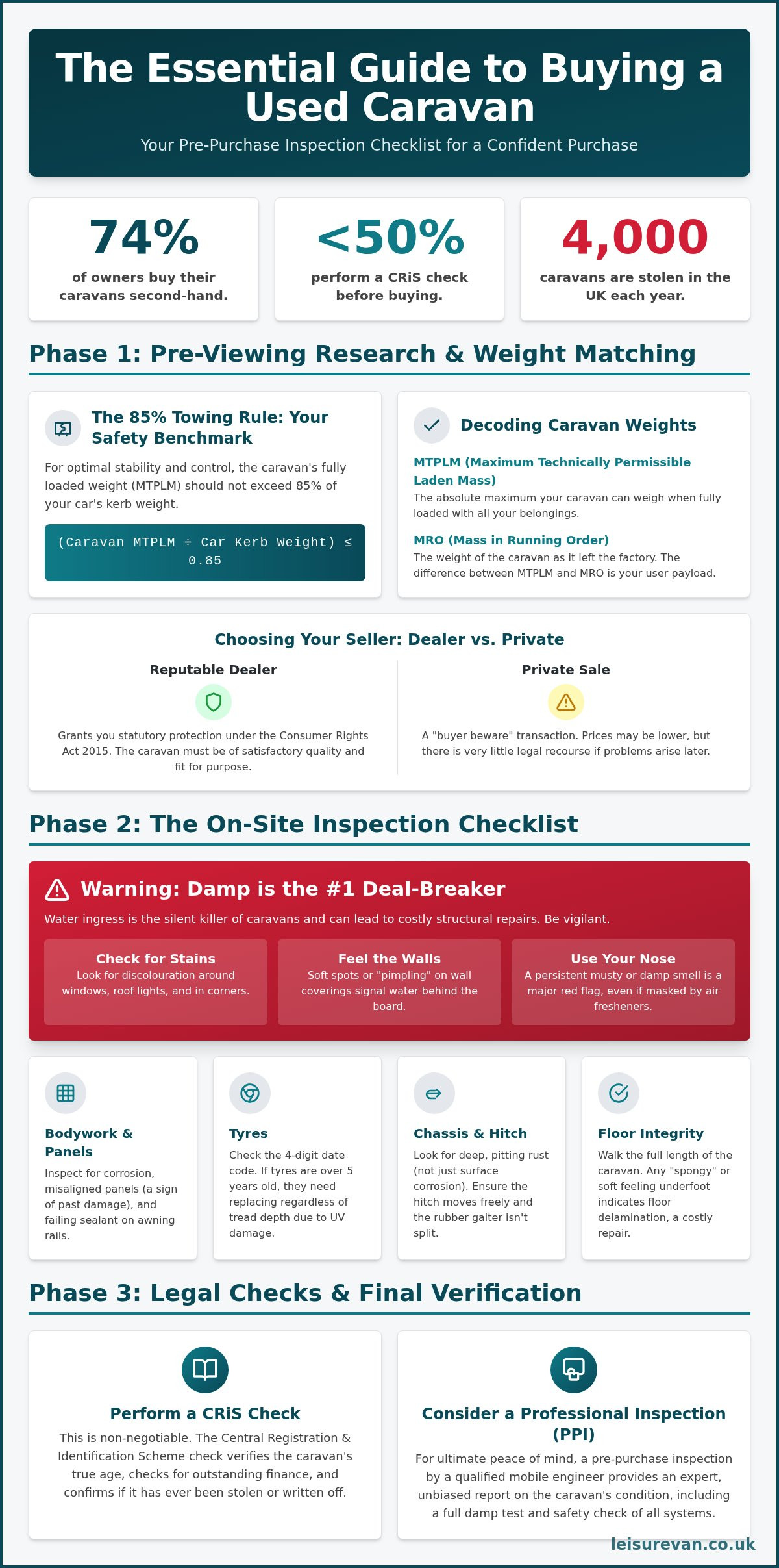
Did you know that whilst nearly 74% of caravan owners choose to buy second-hand, fewer than half actually perform a CRiS check before handing over their money? It is a startling figure when you consider that approximately 4,000 caravans are stolen in the UK every year. Understanding exactly what to look for when buying a used caravan is the only way to ensure your dream of the open road does not turn into a costly nightmare of hidden damp and mechanical failure.
We understand that the viewing process can feel overwhelming. You might worry about missing a soft spot on the wall or feel confused by technical terms like MTPLM and towing weights. It is completely normal to feel this way; you are looking for a safe haven for your family, not a DIY project. This guide provides the expert clarity you need to master the art of the inspection. We will walk you through a comprehensive checklist for your next viewing, from spotting structural issues to verifying gas and electrical safety. You will gain the confidence to walk away from a bad deal and know exactly when it is time to call in a professional for a pre-purchase inspection.
Key Takeaways
- Learn how to match your tow car to your caravan using the 85% rule to ensure a safe and stable journey from your very first trip.
- Master the technical details of what to look for when buying a used caravan, including how to identify hidden damp and structural bodywork issues.
- Gain clarity on essential safety standards for internal systems, ensuring your gas and electrical setups are both legal and fully functional.
- Understand how to perform vital legal checks via the CRiS system to verify a caravan’s history and protect yourself from fraud or hidden finance.
- Discover the benefits of a professional pre-purchase inspection and how a mobile engineer provides the ultimate peace of mind before you commit.
The Pre-Viewing Phase: Research and Weight Matching
Success starts on your driveway, not at the dealership. Before you even begin searching for what to look for when buying a used caravan, you must look at your car. Your vehicle’s towing capacity is the ultimate gatekeeper for your purchase. Whilst the 2021 law change allows standard Category B licence holders to tow up to 3,500kg Maximum Authorised Mass (MAM), safety remains a matter of physics rather than just legality. Your car must be heavy enough to maintain control over the trailer behind it.
The industry standard for safety is the 85% rule. This suggests that the weight of your loaded caravan should not exceed 85% of your car’s kerb weight. It is a benchmark that ensures stability and control, especially during high winds or emergency manoeuvres. Selecting the right Caravan (trailer) also involves researching specific model years. Some ranges are known for specific faults or historical recalls. Knowing these beforehand allows you to inspect those areas with extra scrutiny when you finally stand inside the unit. A layout that looks perfect on paper may not suit your lifestyle if it lacks sufficient storage or forces a difficult bed-making routine every evening.
Decoding Caravan Weights: MTPLM and MRO
Understanding weight terminology is vital for staying legal on the road. The Maximum Technically Permissible Laden Mass (MTPLM) is the absolute maximum the caravan can weigh when fully loaded. The Mass in Running Order (MRO) is the weight of the caravan as it left the factory, including basic equipment. The gap between these two figures is your user payload. This is the weight available for your clothes, gas bottles, and food. You can usually find these figures on a small weight plate located near the door or on the chassis A-frame. Check this plate to ensure your car can safely handle the MTPLM.
Choosing the Right Seller: Dealer vs Private
Where you buy dictates your level of protection. Buying from a reputable dealer grants you rights under the Consumer Rights Act 2015. This generally means the vehicle must be of satisfactory quality and fit for purpose. Private sales often offer lower prices, but they are “buyer beware” transactions with very little legal recourse if things go wrong. Knowing what to look for when buying a used caravan includes vetting the seller as much as the vehicle itself. Before travelling to view any unit, ask the seller about its habitation history. Ask if they have a recent damp report and if the CRiS registration is in their name. If the answers are vague, it is often better to keep looking.
Exterior and Structural Integrity: Spotting the Deal-Breakers
Once you have verified that the weights are a safe match for your car, it is time for the physical inspection. When considering what to look for when buying a used caravan, the exterior condition often tells the story of how the unit has been maintained over the years. Start with a slow 360-degree walkaround in good light. Look for “pimple” corrosion on aluminium panels, which can signal damp behind the skin, or misaligned panels that suggest previous accident damage. Check that all window panes are free from cracks and that the seals appear supple rather than brittle or gapping.
Don’t be fooled by deep tread on the tyres. Caravan tyres often perish from UV damage and age long before the rubber wears down. Check the sidewalls for cracking and look for the four-digit date code. If they are over five years old, you should factor in the cost of immediate replacement. Below the bodywork, inspect the chassis and running gear for excessive rust. Whilst surface corrosion is common, deep pitting is a major red flag. Ensure the hitch head moves freely and that the rubber gaiter is not split, as this protects the internal braking mechanism from the elements.
Detecting Damp and Water Ingress
Damp is the silent killer of leisure vehicles. Whilst your nose might detect a musty scent, many sellers use air fresheners to mask it during a viewing. Look for discolouration around window frames, roof lights, and the corners of the ceiling. If you see “pimpling” on the interior wall tape, water is likely already inside the structure. A thorough damp inspection and report is the only way to be certain of the moisture levels within the wall boards. Focus your attention on common ingress points like awning rails and window seals, as these are where sealant most frequently fails over time.
Floor Integrity and Delamination
A “spongy” feeling underfoot when walking through the gangway usually indicates delamination, where the internal layers of the floor have separated. This is amongst the most expensive structural issues to rectify. Knowing what to look for when buying a used caravan means looking beyond the eye-level aesthetics and getting down on the ground. When inspecting a used caravan, you must also check the underside for rot in the wooden floor corners. This is particularly common near the wheel arches where road spray is highest. If you are unsure about the structural health of a potential purchase, you can book a pre-purchase inspection to get a professional’s second opinion before you buy.
Internal Systems: Gas, Electrics, and Heating
While a shiny exterior is promising, the true value of a pre-owned unit lies within its complex internal systems. When deciding what to look for when buying a used caravan, you must prioritise safety and functionality over simple aesthetics. Testing both the 230V mains and 12V battery systems is essential. An Electrical Installation Condition Report (EICR) provides the best proof of safety, as it involves a deep technical check of the wiring and components. Without a recent record of a full caravan service, you are essentially buying a vehicle with an unknown history.
Gas safety is equally critical for your peace of mind. Check the date stamp on the gas hoses; these generally need replacing every five years to prevent perishing. Look for clear, unobstructed ventilation around the fridge and cooker. Water systems also require a methodical approach. Run every tap to check for consistent pressure and ensure the hot water heater fires up without hesitation or unusual noises. For a structured approach during your viewing, referring to the Caravan and Motorhome Club’s used caravan checklist can help you track these tasks accurately.
The Alde Heating System Trap
Many modern caravans feature Alde hydronic heating. This system relies on a glycol fluid that must be changed every two to five years, depending on the specific fluid type used. If the fluid in the header tank is blue, it is likely the shorter-life variety. Pink fluid often indicates a five-year lifespan. Neglecting this change leads to internal corrosion and expensive pump failures. Always check the fluid colour and clarity before agreeing to a purchase, as a system flush is a specialist job.
Kitchen and Bathroom Functionality
Kitchen appliances are expensive to replace if they fail. Ensure the fridge works on all three power sources: gas, 12V (when hitched to a car), and 230V mains. In the bathroom, hairline cracks in shower trays are common deal-breakers. These small cracks often lead to hidden floor rot that is difficult to spot. Test the toilet flush and check the cassette seal for any signs of leaks. These small details often reveal what to look for when buying a used caravan to determine how well the previous owner cared for the vehicle.
Legal Checks and Essential Documentation
Whilst the physical state of the unit is vital, the legal standing of the vehicle is equally important. Approximately 4,000 caravans are stolen in the UK every year; yet, only 47% of used buyers perform a CRiS check before purchase. This check is the industry standard for verifying that a caravan is not stolen, has no outstanding finance, and has not been written off by an insurance company. For a fee of £17.95, it provides the essential transparency you need to avoid a devastating financial loss. Knowing what to look for when buying a used caravan includes verifying that the person selling it actually has the right to do so.
You must also verify the Vehicle Identification Number (VIN). This 17-digit code should be etched into the windows and stamped onto the chassis A-frame. If these numbers do not match, or if they appear tampered with, you should walk away immediately. Ensure the seller provides all original manuals, keys for every locker, and any security accessories like hitch locks or wheel clamps. These items are expensive to replace and their presence indicates a well-organised owner.
The Value of a Habitation History
A consistent record of habitation checks is the hallmark of a responsible owner. These annual inspections track the health of the gas, water, and electrical systems, providing a clear timeline of maintenance. Gaps in this history are a major red flag; they often suggest that problems like damp were ignored rather than rectified. A professional habitation report serves as a comprehensive health certificate for the van, proving its safety and structural integrity to future buyers.
Avoiding Scams and Fraud
The used market can unfortunately attract fraudulent listings. Be wary of online adverts with “too good to be true” pricing. If a high-spec model is listed significantly below its market value, it is likely a scam designed to harvest deposits. Always view the caravan at the seller’s home address rather than a motorway service station or a remote car park. This allows you to verify the seller’s environment and ensures the caravan hasn’t been moved specifically to hide a lack of storage or security. For high-value purchases, use secure bank transfers rather than cash, and never send a deposit before seeing the vehicle in person.
If you have found a caravan you love but want to be certain of its history and health, we provide the expert eyes you need. Book a professional pre-purchase inspection to ensure your investment is protected before you sign on the dotted line.
The Final Inspection: Why a Professional PPI is Vital
A personal viewing is a vital first step, but even the most diligent buyer has limitations. Whilst you now know what to look for when buying a used caravan regarding aesthetics and basic functionality, many critical faults remain invisible to the naked eye. A DIY inspection cannot replicate the precision of professional moisture meters or gas pressure testing equipment. Relying on a friend’s advice or a cursory glance can lead to expensive oversights. A professional Pre-Purchase Inspection (PPI) bridges this gap, providing a technical deep dive into the vehicle’s true condition before you commit your hard-earned savings.
The beauty of a mobile inspection is its sheer convenience. A qualified engineer visits the caravan at the seller’s location, whether that is a private driveway or a dealership forecourt. This independent assessment removes the emotional pressure from the sale. You receive an objective, evidence-based report that details the health of the structure and internal systems. This document is a powerful negotiation tool. If the inspection reveals a required repair, such as a failing seal or an aged gas hose, you can use the findings to justify a fair reduction in the asking price.
The Professional Inspection Checklist
A structured professional inspection follows a methodical path to ensure nothing is missed. This process provides the ultimate peace of mind for first-time buyers and seasoned caravanners alike:
- Step 1: Book a qualified mobile engineer to visit the caravan at a time that suits the seller.
- Step 2: Receive a comprehensive written report covering damp percentages, gas tightness, and electrical safety.
- Step 3: Review the technical findings to decide if the caravan is a sound investment or a potential money pit.
- Step 4: Finalise the deal with total confidence, knowing exactly what to look for when buying a used caravan has been professionally verified.
Local Expertise in South Yorkshire
For buyers across Sheffield and the wider region, local knowledge is invaluable. Choosing a specialist familiar with the specific challenges of different manufacturers and model years ensures a more accurate fault diagnosis. At LeisureVan Service Solutions, we support buyers throughout Barnsley, Doncaster, and Chesterfield, providing a “safe pair of hands” during the most stressful part of the purchase. We believe in transparency and integrity, ensuring you start your touring journey with equipment that is safe, legal, and built to last.
Ready to secure your next adventure with total confidence? Book your pre-purchase inspection with LeisureVan today.
Secure Your Touring Future Today
Buying a pre-owned caravan is an exciting milestone, but it requires a methodical approach to avoid hidden costs. By prioritising weight safety, checking for structural damp, and verifying the legal history through a CRiS check, you can find a unit that offers years of reliable service. Understanding what to look for when buying a used caravan is your best defence against a poor investment and ensures your family’s safety on the road.
You don’t have to manage the technical inspection alone. Our qualified mobile service engineer provides the ultimate peace of mind by visiting the seller’s location to perform a thorough assessment. We provide detailed damp and safety reports to ensure every system is in top condition, serving clients across Sheffield and South Yorkshire. This professional oversight allows you to negotiate with confidence or walk away from a bad deal without regret.
Book Your Expert Pre-Purchase Inspection with LeisureVan Service Solutions today. Let us help you start your next adventure with total confidence and equipment you can trust for years to come. Happy touring!
Frequently Asked Questions
Is a damp meter worth buying for a caravan inspection?
A basic damp meter is a useful tool for your initial viewing to identify obvious issues before you pay for a professional report. It allows you to check high-risk areas like window seals and corners for surface moisture. However, DIY meters often lack the sensitivity of professional equipment and can give false readings if they cannot penetrate the wall board effectively.
What is the maximum age I should consider for a used caravan?
There is no strict limit, but many buyers find that caravans under 15 years old offer the best balance of modern safety features and reliable parts availability. Older units often require more frequent maintenance, especially regarding rubber seals and obsolete appliances. Focus on the service history and structural condition rather than just the manufacture date.
Can I tow a used caravan immediately after buying it?
You can only tow a caravan immediately if you have valid insurance, a legal number plate matching your tow car, and a fully functional light system. It is vital to check that the tyres are inflated to the correct pressure and that the hitch mechanism is secure. Never tow a unit that has been stationary for years without a professional chassis and brake check.
What happens if a caravan doesn’t have a CRiS document?
A missing CRiS document is a significant red flag that suggests the caravan might be stolen, written off, or have outstanding finance. Whilst you can apply for a replacement, the process requires proof of ownership and can be time-consuming. Most insurers and future buyers will insist on seeing this document before proceeding with any transaction.
How much does a professional pre-purchase inspection cost?
The cost of a professional pre-purchase inspection depends on the size of the caravan and the depth of the technical checks required. Whilst it is an additional expense, it often pays for itself by identifying hidden faults that would cost thousands to repair later. Think of it as a safety investment that provides a powerful tool for price negotiation.
What are the most common hidden faults in used caravans?
Damp remains the most common hidden fault, but floor delamination and gas system leaks are also frequent issues. These problems are often invisible during a casual walkaround and require technical expertise to identify. Knowing what to look for when buying a used caravan involves checking beyond the upholstery to find these structural and safety-critical failures.
Should I buy a used caravan that has had previous damp repairs?
You can safely buy a caravan with previous damp repairs if the work was completed by a qualified engineer and backed by a guarantee. Ask to see the original damp reports and the subsequent invoices for the repair work. Be cautious if the repair was a DIY job, as poor-quality sealant application can lead to recurring water ingress.
How do I check the age of caravan tyres?
You check the age of caravan tyres by looking for the four-digit DOT code on the sidewall. The first two digits represent the week of manufacture, whilst the last two represent the year. For example, a code of “1224” means the tyre was made in the 12th week of 2024. Tyres should generally be replaced every five to seven years regardless of tread depth.