

What if the very sunshine you’ve been waiting for is actually the biggest threat to your motorhome’s health this season? Whilst most owners focus on winterising, getting a motorhome ready for summer storage is just as vital for preventing technical decay. High temperatures can accelerate battery discharge. They can also create the perfect environment for mould to thrive in humid, enclosed spaces. We understand the anxiety of discovering a flat battery or a musty interior just as you’re meant to be heading off on a holiday.
This guide shares the essential professional steps to protect your vehicle from heat, damp, and system stagnation during the 2026 summer months. You’ll gain the confidence that your systems will function perfectly for your next trip whilst avoiding the need for costly, avoidable repairs. We’ll provide a clear checklist covering everything from gas safety to electrical maintenance. Peace of mind through professional preparation. This ensures your motorhome remains a safe pair of hands for your next adventure.
Key Takeaways
- Understand why summer heat is just as damaging as winter frost, particularly regarding rubber seals and tyre degradation.
- Discover why draining down your water system and positioning fridge vents correctly is vital to prevent mould and odours in a warm cabin.
- Learn the technical steps for getting a motorhome ready for summer storage, including how to manage solar panels to avoid leisure battery overcharging.
- Identify the critical role of professional damp inspections in spotting seal failures before they lead to costly repairs.
- Explore the convenience of using a mobile service engineer to ensure your vehicle is safe and trip-ready for your next holiday.
Why Summer Storage Requires a Different Approach to Winterisation
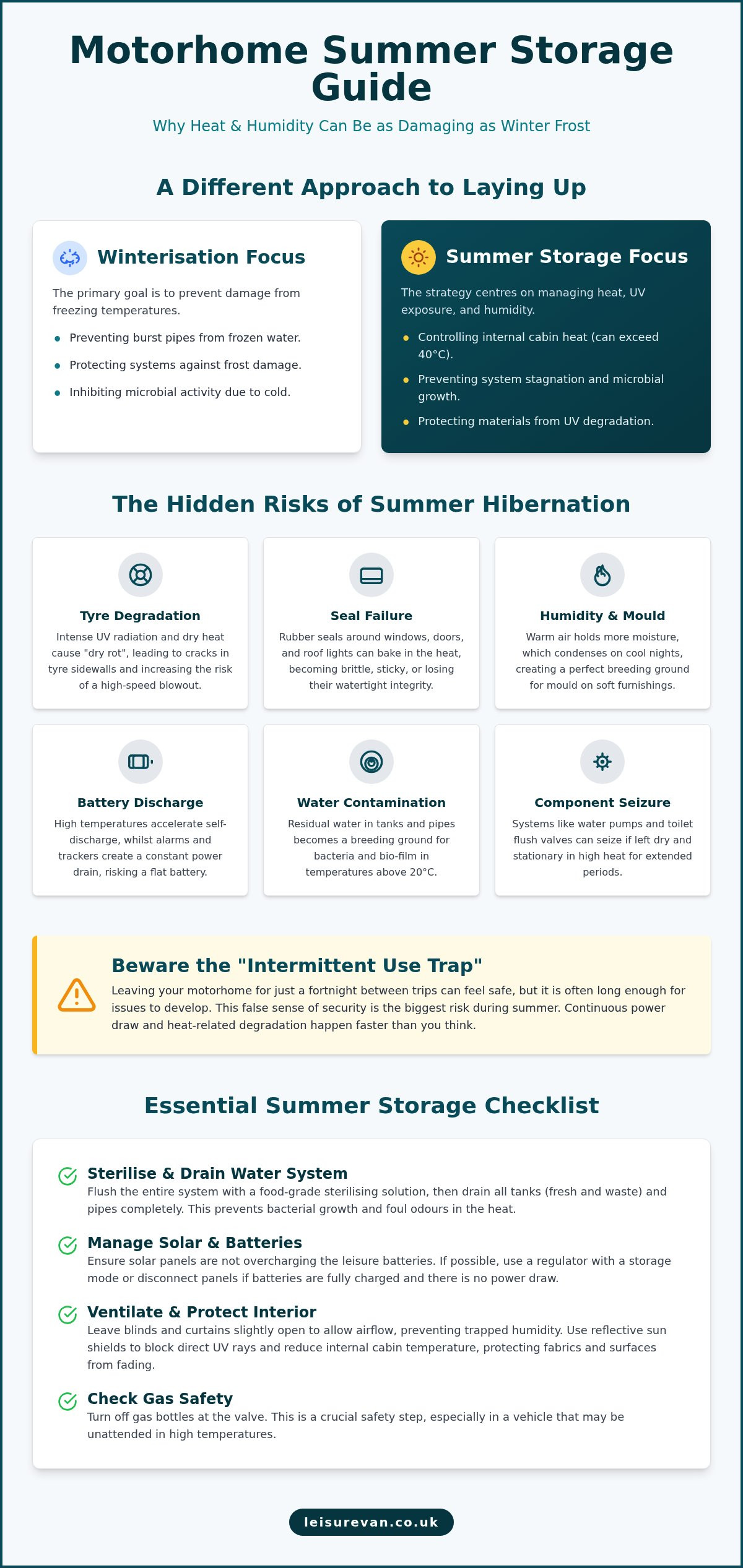
Many owners associate “laying up” a vehicle with the onset of winter frost, yet the British summer poses its own set of technical challenges. Whilst winterisation focuses on preventing frost damage and burst pipes, getting a motorhome ready for summer storage requires a strategy centred on heat management and system stagnation. High temperatures and prolonged UV exposure can be just as destructive as sub-zero conditions if the vehicle is left unattended for several weeks.
A recreational vehicle is a complex assembly of mechanical and living systems that rely on regular movement. When parked up in a storage compound during July or August, the internal cabin temperature can easily exceed 40°C. This intense heat affects everything from the elasticity of window seals to the chemical stability of your leisure battery. Unlike the total shutdown of winter, summer storage is often intermittent, which creates a false sense of security for many owners.
Heat vs. Cold: The Hidden Risks of Summer Hibitation
High temperatures significantly accelerate the growth of bacteria within your fresh and waste water systems. In winter, cold temperatures naturally inhibit microbial activity; in summer, even a small amount of residual water in the pipes can lead to bio-film build-up or unpleasant odours. It’s a common mistake to assume that draining down is only for the “big freeze”.
- Tyre Health: Intense UV radiation and dry heat lead to “dry rot”, where the rubber sidewalls begin to crack. This is particularly dangerous as it often goes unnoticed until a high-speed blowout occurs.
- Seal Integrity: Rubber seals around doors, windows, and roof lights can bake and stick in the heat. Regular lubrication or professional inspection ensures they remain watertight.
- Humidity Management: Warm summer air holds more moisture. Without proper ventilation, this moisture settles as condensation during cooler nights, creating an ideal breeding ground for mould on soft furnishings.
The Intermittent Use Trap
The biggest risk during the summer months is the “intermittent use trap”. Owners often leave their vehicle for a fortnight between trips, assuming it’s too short a period for issues to develop. However, modern trackers and alarm systems continue to draw power. Without a charging source, your leisure battery can drop to a critical voltage faster than you might expect. Getting a motorhome ready for summer storage involves ensuring these electrical systems remain stable during these gaps.
Systems like water pumps and toilet valves can also seize if left dry and stationary in high heat. Keeping these components active or properly treated is essential for a stress-free start to your next holiday. Booking a professional motorhome habitation service before your busiest season helps identify these vulnerabilities. This proactive approach prevents the frustration of technical failures when you should be enjoying the sun.
Internal Habitation Checklist: Preventing Stagnation and Mould
Whilst the exterior of your vehicle faces the brunt of UV radiation, the internal cabin experiences a different set of challenges during a summer lay-up. Heat builds up quickly behind glass windows, often turning a stationary vehicle into a greenhouse. Without the right preparation, this environment encourages microbial growth and degrades delicate components. Getting a motorhome ready for summer storage requires a methodical approach to the living area to ensure you don’t return to unpleasant odours or failed systems.
One often overlooked aspect is the care of soft furnishings and surfaces. High temperatures can cause adhesives to soften and fabrics to fade. If you leave your blinds fully closed to block the sun, you might inadvertently trap humid air, which leads to mould on mattresses and curtains. Instead, leave blinds slightly open to allow airflow, or use breathable reflective covers. This balance protects your interior from sun-bleaching whilst maintaining the necessary ventilation to keep the air fresh.
Fresh and Waste Water Hygiene
In the peak of a British summer, bacteria in standing water can multiply at an alarming rate. Draining down your system is not just a winter requirement; it’s a hygiene necessity for summer storage. Residual water in the bottom of a tank or in the “low points” of pipework becomes a breeding ground for bio-film in temperatures above 20°C.
- Sterilise the System: Before parking up, flush the fresh water tank with a food-grade sterilising solution. This neutralises any existing bacteria.
- Open the Taps: Once drained, leave your taps in the “open” position (with the pump switched off). This prevents pressure build-up and allows air to circulate through the pipes.
- Grey Waste Care: Empty the waste tank completely and flush it with a dedicated tank cleaner. Warm weather intensifies the smell of decomposing food particles or soap scum left in the grey tank.
- Fridge Ventilation: Always leave the fridge and freezer doors in the “ventilation position”. Closing them tightly in a hot motorhome will result in heavy mould growth on the internal seals within days.
Gas and Electrical Safety Checks
Safety is paramount when leaving a vehicle unattended. Isolate your gas supply at the cylinder valve rather than just relying on the internal manifold taps. This is a non-negotiable step for secure storage. Over time, rubber gas hoses can perish, especially when exposed to extreme temperature fluctuations. A quick visual check for cracking is essential, but for total confidence, many owners opt for professional gas safety checks in South Yorkshire before a long period of inactivity.
On the electrical side, ensure the 12V master switch is off to prevent “phantom” battery drain from control panels or interior lights. However, keep in mind that security systems like trackers must remain powered. If you’re concerned about your system’s ability to cope with a summer lay-up, you can request a professional inspection to verify your battery health and gas integrity before you park up.
Maintaining Batteries and Solar Systems in the Summer Sun
Getting a motorhome ready for summer storage requires a shift in how we think about power. Whilst winter storage is a battle against discharge caused by cold, summer storage presents the paradox of solar over-supply. Many owners assume that the abundant UK sunshine will simply keep their batteries topped up. However, without a correctly configured charge controller, constant high-voltage charging in peak heat can stress lead-acid and AGM batteries, potentially shortening their lifespan through electrolyte loss or internal plating.
Before you park up, check the rested voltage of your leisure battery. A healthy, fully charged lead-acid battery should show approximately 12.7V after being disconnected from all loads for several hours. If your reading is significantly lower, the battery may have a high self-discharge rate that the summer sun cannot compensate for. Ensuring your electrical system is in peak condition is a core part of getting a motorhome ready for summer storage. It provides the peace of mind that your security systems will remain active whilst the vehicle is stationary.
Solar Panel Health and Efficiency
Bird droppings and dust on solar panels can create ‘hot spots’ and reduce the lifespan of the photovoltaic cells by causing localised overheating. These small obstructions don’t just reduce efficiency; they can lead to permanent cell damage over a long, hot summer. Before storage, clean the panels with plenty of water and a soft brush to ensure they can provide the steady trickle charge required to maintain your alarm and tracker. If you are considering an upgrade to handle modern power demands, a professional motorhome solar panel installation ensures your charge controller is properly matched to your battery type, protecting your equipment from the risks of overcharging.
The Importance of Alde Fluid Maintenance
It is a common misconception that the Alde heating system only needs attention when the weather turns cold. The glycol-based fluid within the system contains essential corrosion inhibitors that degrade over time, regardless of whether the heating is switched on. A specialist Alde heating system fluid change is required every two years to prevent the fluid from becoming acidic and corroding the internal boiler components.
When fluid sits stagnant during a hot summer, any existing sediment can settle and potentially seize the circulation pump. Check your fluid levels whilst the system is completely cold; the level should be approximately 1cm above the minimum mark in the header tank. Maintaining this fluid condition during the summer ensures that when autumn arrives, your system is ready to provide reliable heat without the need for expensive emergency repairs.
Exterior Protection and Damp Prevention Strategies
Whilst the internal cabin requires careful ventilation, the external shell of your vehicle faces the direct impact of the sun’s peak temperatures. Getting a motorhome ready for summer storage involves a rigorous inspection of all external seals. Many owners mistakenly believe that damp is only a winter concern; however, heat-induced seal failure is a common precursor to autumn leaks. When the outer skin of the vehicle expands in the sun, any compromised sealant can pull away from the bodywork, creating invisible entry points for the next rainstorm.
The debate over using a full vehicle cover during a UK summer is ongoing amongst enthusiasts. Whilst a cover protects against UV-induced paint fading and bird lime, it can also trap heat and moisture if it isn’t high-quality and breathable. If you choose not to use a cover, regular washing and the application of a high-quality UV-protective wax are essential. Security is also a vital consideration. Ensure all physical locks are engaged and that your storage location meets the security standards required by your insurance policy, especially if you’re using a remote storage centre.
Identifying Vulnerable Seals and Ingress Points
Start with a visual check of all roof lights, window surrounds, and aerial mounting points. Intense heat can cause traditional sealants to shrink or become brittle, leading to cracks that are difficult to spot from the ground. Pay close attention to the joints between the roof and side panels, as these are under the most stress during thermal expansion. For a deeper understanding of how to protect your investment, read our guide on preventing damp in a motorhome to help you spot early warning signs before they become expensive problems.
Chassis and Tyre Maintenance
Tyre maintenance is a critical factor during a summer lay-up. UV radiation causes the rubber to perish, whilst the weight of the vehicle can lead to flat-spotting. Taking these steps whilst getting a motorhome ready for summer storage ensures your chassis remains in peak condition:
- Adjust Tyre Pressure: Increase your tyre pressures slightly (within the manufacturer’s safe limits) to provide better support and reduce the risk of flat spots.
- Rotate the Tyres: If possible, move the vehicle by half a metre every few weeks. This changes the contact patch and prevents permanent deformation of the tyre carcass.
- Handbrake Care: Avoid leaving the handbrake fully engaged for long periods. Instead, use wheel chocks and leave the vehicle in gear (or ‘P’ for automatics) to prevent the brake shoes from seizing to the drums in the heat.
Identifying these issues early is the key to avoiding a cancelled holiday. To ensure your vehicle is completely watertight and safe, you can book a comprehensive damp inspection and report with our mobile engineer before you park up for the season.
Ensuring a Hassle-Free First Trip with Professional Maintenance
The process of getting a motorhome ready for summer storage isn’t just about protection whilst the vehicle is stationary; it’s about ensuring your next departure is seamless. There is nothing more frustrating than a holiday cut short by a faulty water pump or a failed electrical circuit. By viewing the storage period as a maintenance window rather than just downtime, you can address potential issues before they escalate into expensive repairs. This proactive approach ensures that when you finally set off, your vehicle functions exactly as it should.
A well-maintained motorhome is a safe motorhome. Whether you are planning a weekend in the Peak District or a longer journey across the coast, the reliability of your systems is paramount. Professional oversight during the “lay-up” period provides the technical assurance that your gas, water, and electrical systems have not succumbed to heat-induced stagnation or component failure.
The Value of a Professional Habitation Check
A professional habitation check provides a comprehensive overview of your vehicle’s health. This service covers everything from rigorous electrical system testing to detailed damp reports, which are vital for identifying the seal shrinkage caused by intense summer heat. Professional documentation acts as a verified service history for the living area, which significantly protects your motorhome’s resale value. Prospective buyers in 2026 prioritise vehicles with a clear, documented record of a motorhome habitation service, as it proves the equipment has been cared for by a specialist.
Local Mobile Service in South Yorkshire
For owners across South Yorkshire, the logistics of maintenance needn’t be a hurdle. LeisureVan Service Solutions provides a qualified mobile service engineer who visits your home or storage location in Sheffield, Rotherham, Doncaster, or Barnsley. This service removes the hassle of driving to a fixed workshop, saving you time and fuel. Whether you require a gas safety test or a specialist Alde heating system fluid change, our mobile service ensures your vehicle is safe and compliant. You can book your mobile habitation service today to secure your preferred date before the peak season begins.
To ensure your first trip is perfect, perform these final checks 48 hours before you set off:
- Tyre Pressures: Restore pressures to the manufacturer’s recommended road levels.
- Water Flush: Flush the system thoroughly with fresh water to remove any residual sterilising fluid.
- Battery Health: Verify the rested voltage of your leisure battery to ensure it has maintained a full charge.
- Appliance Test: Briefly run the fridge, water heater, and hobs to confirm they are functioning correctly.
LeisureVan Service Solutions acts as a reliable partner in your adventures. Our methodical approach to safety ensures that getting a motorhome ready for summer storage results in a vehicle that is always trip-ready. We take pride in meticulous work, providing you with the peace of mind that your home on wheels is a safe pair of hands for your family.
Protect Your Investment for a Stress-Free Summer
Successfully getting a motorhome ready for summer storage means more than just parking up. It requires active management of internal humidity, water hygiene, and leisure battery health to prevent the technical decay caused by high temperatures. By addressing these factors now, you protect your vehicle’s resale value and ensure it remains trip-ready for your next spontaneous getaway. A little preparation today prevents the frustration of technical failures tomorrow.
LeisureVan Service Solutions provides the professional expertise you need to maintain these high standards. Our fully qualified mobile service engineer performs expert damp and gas safety inspections throughout Sheffield, Rotherham, and across South Yorkshire. We visit your home or storage site at your convenience, providing technical authority and total peace of mind. Don’t leave your holiday to chance; ensure your systems are safe and compliant with a specialist check.
Book Your Professional Mobile Habitation Check Now
Enjoy the freedom of the open road with the confidence that your equipment is in peak condition for every adventure.
Frequently Asked Questions
Should I drain my motorhome’s water system for summer storage?
Yes, you should always drain your fresh and waste water systems if the vehicle will be stationary for more than a few days. High summer temperatures encourage the rapid growth of bio-film and bacteria in tanks and pipework. Draining the system ensures it remains hygienic and prevents the development of foul odours from residual grey waste. Leave your taps in the open position to allow air to circulate through the lines.
How do I stop my motorhome battery from going flat whilst in storage?
Ensure your leisure battery is connected to a reliable solar panel or a mains-powered trickle charger to counteract phantom drains. Modern security systems and trackers constantly draw power, which can deplete a battery in just a few weeks. Getting a motorhome ready for summer storage should include verifying that your solar controller is maintaining a rested voltage of approximately 12.7V to ensure the battery remains healthy.
Is it better to store a motorhome with the handbrake on or off?
It is better to store your motorhome with the handbrake off to prevent the brake shoes from seizing to the drums in the heat. Instead, use heavy-duty wheel chocks on a level surface to secure the vehicle and leave it in gear or “Park” for automatics. This simple step ensures your brakes remain free and fully functional when you are ready to set off on your next holiday.
How can I prevent mould and damp in my motorhome during the summer?
Maximise airflow by leaving internal doors and cupboards open and ensuring all fixed ventilation points are clear of obstructions. Whilst it is tempting to seal the vehicle tightly against the sun, summer humidity can lead to condensation and mould on soft furnishings during cooler nights. Using moisture absorbers and leaving fridge doors in the ventilation position provides essential protection against damp during a lay-up.
Do I need to turn the gas off if I’m only storing my motorhome for two weeks?
Yes, you must isolate the gas supply at the cylinder valve even for short periods of inactivity. This is a vital safety protocol that prevents potential leaks from perished hoses or internal manifold taps whilst the vehicle is unattended. Turning the gas off at the source provides total peace of mind and is often a mandatory requirement for secure storage sites and insurance compliance.
Should I use a cover on my motorhome during the summer months?
You should only use a cover if it is specifically designed to be highly breathable and UV-resistant. A non-breathable or poor-quality cover can trap heat and moisture against the bodywork, which may damage the paint or encourage mould growth. If you don’t have a specialised breathable cover, applying a high-quality UV-protective wax is a more effective way to prevent paint fading and seal degradation.
How often should I move my motorhome whilst it is in storage?
You should aim to move your motorhome by at least half a metre every two to three weeks. This rotation changes the contact patch on your tyres, which helps prevent permanent flat-spotting and reduces the stress on the tyre carcass. Moving the vehicle also allows you to briefly run the engine and circulate fluids, ensuring that mechanical components don’t seize during long periods of inactivity.
What are the signs of UV damage on a motorhome?
Common signs of UV damage include chalky or faded paintwork, brittle window seals, and yellowing of external plastic components like roof light surrounds. You may also notice fine cracks or “crazing” on the tyre sidewalls. Identifying these signs early during the process of getting a motorhome ready for summer storage allows you to treat or replace components before they lead to water ingress or mechanical failure.