
Did you know that a new motorhome can lose up to 20% of its value in just the first twelve months? With used motorhome transactions increasing by 37% recently, many owners are turning to a full motorhome habitation service to protect their investment. It’s natural to feel anxious about hidden damp devaluing your van or to worry about the safety of your gas connections whilst your family is asleep. You need to know that your vehicle is a safe haven, not a hidden liability.
This guide explains exactly how a professional inspection acts as a technical audit to secure your peace of mind and your resale value. You’ll discover what happens during the safety checks that keep your manufacturer warranty valid and your family protected from carbon monoxide. We’ll also show you how a certified damp report can help you command a higher price when it’s time to sell. We will explore how to get these essential checks completed right on your driveway, saving you the hassle of a long trip to a service centre.
Key Takeaways
- Learn why a habitation check is considered the “MOT for the living area” and how it secures your manufacturer warranty.
- Understand the technical categories covered in a full motorhome habitation service to ensure your gas and electrical systems remain 100% safe.
- Compare the benefits of mobile servicing against dealer workshops to eliminate the inconvenience of long journeys and vehicle drop-offs.
- Discover simple preparation steps that allow technicians to provide the most accurate damp reports and appliance tests.
- Identify why specialist maintenance like Alde heating fluid changes is essential for protecting your motorhome’s long-term resale value.
Why a Full Motorhome Habitation Service is Essential in 2026
Think of a habitation service as the MOT for your living space. While the standard MOT ensures your recreational vehicle is roadworthy, a full motorhome habitation service focuses on the complex systems inside that keep you comfortable and safe. It’s built on three essential pillars: life safety, damp prevention, and warranty compliance. This technical audit ensures that every component, from the fridge to the fuse box, functions exactly as the manufacturer intended. It’s about moving beyond basic maintenance to a comprehensive safety standard.
By 2026, the landscape for owners has shifted significantly. Many insurance providers now specifically ask for documented gas safety certificates to maintain full coverage. Neglecting this doesn’t just put your family at risk; it could invalidate your policy in the event of a fire or gas-related incident. Beyond safety, a documented full service history is a powerful financial asset. In the UK’s competitive used market, a van with a complete record often commands thousands of pounds more than one with gaps in its history. It provides a paper trail of care that gives potential buyers the confidence they need to pay a premium.
Safety First: Gas, Fire, and Carbon Monoxide
DIY gas checks are dangerous and often miss subtle faults that only professional equipment can detect. A professional service uses specialised let-by and tightness testing to identify leaks that a simple visual inspection cannot find. We also examine flues and ventilation points to ensure they aren’t obstructed by debris or pests. This is your primary defence against silent carbon monoxide poisoning. During a 2026 inspection, we also verify the expiry dates on smoke and CO alarms. These devices have a limited life. If they’re past their date, they’re simply not reliable in an emergency.
Protecting Your Investment: The Damp Factor
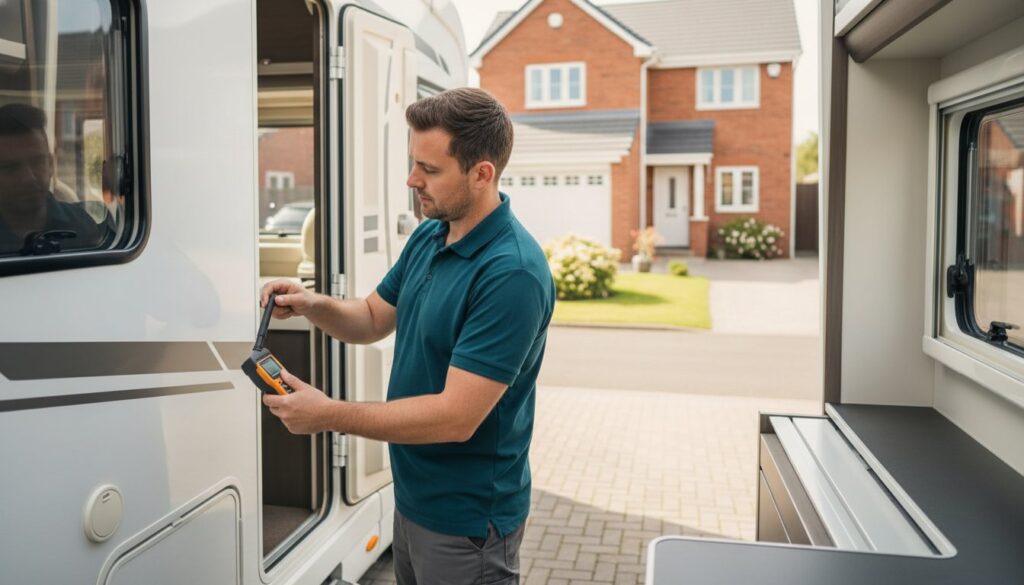
Water ingress is a silent threat to any motorhome. It often rots the internal structure long before you notice a damp patch or a musty smell. An annual damp report is a non-negotiable requirement for maintaining manufacturer bodywork warranties. By using calibrated moisture meters, we can detect rising moisture levels in the wall boards or floor before they cause permanent damage. Catching a small leak early transforms a potential structural failure into a minor maintenance task. This proactive approach saves you from the heavy hidden costs of major timber replacement and reconstruction whilst keeping your motorhome’s value intact.
The 66-Point Habitation Checklist: A Technical Breakdown
A full motorhome habitation service isn’t a quick visual check. It’s a rigorous 66-point technical inspection that typically takes 3 to 4 hours of meticulous work to complete. Our technicians use specialised equipment, including calibrated damp meters and electronic gas sniffers, to find issues that the human eye or nose would miss. While the Federal Motor Vehicle Safety Standards provide a regulatory baseline for vehicle construction, our checklist goes deeper into the specific living systems of your van. Every inspection is designed to be thorough and transparent.
The inspection covers four primary categories:
- Gas: Tightness testing and appliance safety.
- Electric: 230V and 12V system integrity.
- Water: Plumbing, pumps, and waste systems.
- Bodywork: Detailed damp reports and structural checks.
At the end of the process, you receive a detailed Action Report. This document clearly outlines the health of your vehicle and prioritises any necessary repairs. It acts as a roadmap for maintenance, helping you decide which tasks are urgent and which can be planned for later. This level of detail ensures you’re never surprised by a sudden failure whilst on holiday.
Electrical Systems: 230V and 12V Testing
We test the 230V mains system using an RCD trip time test. This ensures the safety cut-off works fast enough to prevent electric shocks if a fault occurs. We also examine the 12V charging circuit and leisure battery health to ensure you aren’t left without power whilst off-grid. Earth bonding is critical in metal-framed or skin vehicles because it ensures that any electrical fault is safely diverted to the ground rather than through the vehicle’s body.
Water Systems and Plumbing Integrity
Our team checks every tap, pump, and microswitch for correct operation. We look for tiny leaks that can cause long-term damage behind cabinets or under floors. We also inspect waste water drainage to prevent the buildup of “grey water” odours and hygiene issues. For total peace of mind, consider an antibacterial flush during your full motorhome habitation service to keep your system fresh and safe for use.
Gas System Integrity and Appliance Function
The gas tightness test is a vital part of the inspection. We use a manometer to identify microscopic leaks within the pipework that could lead to a fire. We also test Flame Failure Devices (FFDs) on your hob, oven, and fridge; these are safety valves that cut the gas if the flame goes out. Finally, we verify that your regulator and hoses are within their expiry dates and meet current UK safety standards.
Mobile Habitation Service vs. Main Dealer Workshops
The traditional main dealer model often involves a “drop-off” system. This requires you to drive your motorhome to a distant service centre, often accompanied by a second car so you can get back home. When you factor in the fuel costs for two vehicles and the hours spent on the road, the “hidden” expense of a workshop service starts to climb. By choosing a mobile full motorhome habitation service, you eliminate these logistical hurdles. We come to you, performing the entire inspection on your driveway or at your storage site whilst you carry on with your day.
Transparency is another major advantage of the mobile approach. In a large workshop, your vehicle disappears behind closed doors. On your own driveway, you can see the engineer at work. You’re free to ask questions about your system’s health or seek advice on specific issues you’ve noticed during your travels. This one-on-one interaction allows for personalised advice tailored to how you actually use your van. If you spend most of your time off-grid, a mobile engineer can offer specific insights into your battery health that a busy workshop team might overlook.
Convenience Without Compromise
Scheduling a service shouldn’t be a chore. For owners in Sheffield or Chesterfield, a mobile service fits around your life, not the other way around. Whether your van is parked at home or in a local storage facility, we bring the workshop to you. Mobile engineers are specialists in efficiency. We typically carry a wide range of specific spare parts, such as common taps, fuses, and seals. This means many minor faults found during the inspection can be fixed on-site immediately, avoiding the need for a follow-up appointment at a later date.
The “Safe Pair of Hands” Philosophy
There is a common misconception that mobile services are less “official” than those offered by large dealerships. In reality, a mobile full motorhome habitation service follows the same technical standards and uses the same calibrated equipment as any fixed workshop. The difference lies in the relationship. You deal with a seasoned expert who knows the local South Yorkshire roads and understands the specific challenges of local storage sites. Seeing the same engineer every year builds a history with your vehicle. This consistency ensures that small changes in your van’s condition are noted and tracked over time, providing a level of continuity that a rotating workshop team simply cannot match. Owners across the region looking for a motorhome habitation check in Sheffield benefit from exactly this kind of dedicated, local expertise.

Preparing Your Motorhome for a Professional Service
A little preparation goes a long way in ensuring your full motorhome habitation service is as accurate and efficient as possible. Whilst our engineers are experts at navigating compact living spaces, they need clear access to the vehicle’s “skeleton” to perform their technical checks. Think of it as preparing for a house survey; the less obstructed the view, the more thorough the final report. By following a few simple steps, you help us provide the most reliable data on your van’s health and safety. It’s about creating the right conditions for a meticulous technical audit.
Planning ahead also ensures that we don’t miss any hidden components. If your motorhome has been in storage, a quick visit a day before the service to check your gas levels and battery status can prevent delays. Our goal is to provide a “safe pair of hands” for your vehicle, and your preparation allows us to focus entirely on the technical integrity of your systems. This collaborative approach ensures that every tap, seal, and circuit is tested under real-world conditions.
The “Empty Van” Rule for Damp Testing
Water ingress often starts at the wall-floor junctions and corner joints. These are the most vulnerable points of any leisure vehicle structure. If your lockers are packed with bedding, pots, or heavy holiday gear, our calibrated damp meters cannot reach the specific surfaces where moisture levels are typically highest. Cluttered lockers can hide the early signs of water ingress, allowing a small leak to develop into a costly structural repair before it’s even noticed. A clear vehicle allows the engineer to complete the technical inspection swiftly and without obstruction.
Consumables and Access
To test your systems effectively, we need the “fuel” that runs them. Please ensure you have at least half a tank of fresh water and a sufficient supply of gas. We need to run the taps, test the water pump, and verify that the boiler and hob are functioning correctly. The leisure battery should also be fully charged before the engineer arrives. A flat battery prevents us from performing an accurate electrical system test or checking the 12V charging circuit. Finally, please have all keys ready for external lockers and petrol or diesel filler caps. This ensures we can inspect every compartment without delay. Ready to secure your van’s future? You can book your habitation service online to ensure your vehicle is ready for the road ahead.
Specialist Care: Beyond the Standard Habitation Check
A comprehensive habitation check covers the essentials, but modern motorhomes often feature advanced technology that requires specific attention. As vehicles become more sophisticated, the scope of maintenance must expand to protect these high-value components. For example, failing to maintain a complex heating system or ignoring a solar array can lead to expensive failures that a standard visual check might miss. We focus on these technical nuances to ensure your van remains a reliable home on the road. It’s about moving from basic compliance to total system reliability.
Alde Heating and Glycol Maintenance
The Alde system is a fantastic feature for year-round touring, but it relies on a specific mixture of water and glycol. Over time, the corrosion inhibitors in this pink fluid break down. If left for more than two years, the fluid can become acidic and begin to corrode the boiler and internal pipework from the inside out. We provide a specialised Alde heating system service that involves a full system flush and fluid replacement. By integrating this with your full motorhome habitation service, you protect the longevity of your heating system and avoid the heavy cost of a boiler replacement.
Solar Panel Health and Efficiency
With the growing trend for off-grid camping, solar panels have become a standard addition for many owners. However, exposure to the elements and vibration during travel can lead to degraded wiring or failing charge controllers. We include solar panel health checks as part of our modern routine. We verify the output and ensure the regulator is charging your leisure battery correctly. This ensures that when you’re parked up in a remote corner of the Peak District, your power supply is as dependable as your engine.
Local Expertise Across South Yorkshire
LeisureVan operates as the trusted regional specialist for Sheffield, Rotherham, and Doncaster. We understand the specific challenges that the South Yorkshire climate poses, particularly the high humidity and cold winters that can accelerate damp issues. Our mobile engineers also cover Barnsley, Wakefield, Worksop, and Huddersfield, bringing expert care directly to your doorstep or storage site. Using a local, independent engineer means you benefit from consistent, high-quality service from someone who knows the area and its storage facilities well.
Don’t wait for the first trip of the season to discover a fault. Booking your full motorhome habitation service for 2026 now ensures your vehicle is safe, legal, and ready for adventure. Whether you need a routine check or a specific fluid change, we provide the peace of mind you need to enjoy the open road with confidence.
Secure Your Motorhome’s Future for 2026
Investing in a full motorhome habitation service is about more than just checking boxes; it’s about protecting your family and your financial investment. By ensuring your gas and electrical systems are safe and your bodywork is free from hidden damp, you can travel with total confidence. We’ve seen how mobile servicing removes the stress of workshop drop-offs, providing a transparent and efficient technical audit right on your driveway.
LeisureVan offers the expertise of a qualified mobile service engineer who provides detailed damp and gas safety reports for every inspection. We proudly serve owners across Sheffield, Rotherham, and the wider South Yorkshire area, bringing professional standards directly to you. Whether you’re preparing for a summer tour or looking to maintain your manufacturer warranty, our thorough approach ensures your van remains in peak condition.
Book Your Full Motorhome Habitation Service with LeisureVan Today and enjoy the peace of mind that comes from a truly professional inspection. Your next adventure is just around the corner, and we’re here to help you get there safely.
Frequently Asked Questions
How long does a full motorhome habitation service take?
A full motorhome habitation service typically takes between 3 and 4 hours to complete. This timeframe allows the engineer to perform a meticulous 66-point check, covering everything from gas tightness testing to a comprehensive damp survey. The exact duration depends on the size of your vehicle and the number of appliances that require technical inspection.
Does a mobile habitation check invalidate my manufacturer warranty?
A mobile habitation check won’t invalidate your manufacturer warranty as long as the work is carried out by a qualified engineer. Most manufacturers recognise professional mobile servicing as a valid way to maintain bodywork and water ingress warranties. It’s a standard and widely accepted alternative to visiting a main dealer workshop.
How often should I have a habitation service carried out?
You should have a habitation service performed every twelve months. This annual schedule is often a mandatory requirement for maintaining your manufacturer’s warranty and insurance coverage. Regular inspections ensure that safety-critical systems like gas and electrics are tested frequently, whilst also catching early signs of damp before they become costly structural problems.
What is the difference between a mechanical service and a habitation service?
A mechanical service focuses on the engine, gearbox, and chassis to ensure the vehicle is safe to drive on the road. In contrast, the habitation service focuses on the living area, testing the safety and functionality of the gas, water, and electrical systems. You need both to ensure your motorhome is roadworthy and safe for your family to sleep in.
Do I get a damp report with my habitation service?
Yes, a detailed damp report is a core part of every full motorhome habitation service. The engineer uses a calibrated moisture meter to take readings at various points throughout the vehicle, specifically focusing on joints, windows, and floor junctions. This report provides documented evidence of your van’s structural health, which is essential for resale value.
Can I stay in the motorhome while the service is being performed?
It’s best if you don’t stay inside the motorhome whilst the engineer is working. The service requires unrestricted access to all cupboards, lockers, and under-seat areas to check for damp and inspect pipework. For safety reasons, gas and electrical systems are also isolated during various stages of the technical audit, making the living space impractical for use.
What happens if the engineer finds a gas leak or damp?
If a gas leak is identified, the engineer will immediately isolate the supply or the specific appliance to ensure the vehicle is safe. For damp issues, the engineer will document the moisture percentages and provide a clear report on the affected areas. You’ll receive professional advice on the next steps, allowing you to plan any necessary repairs before the damage worsens.
Is a gas safety certificate included in the habitation service?
A gas safety record is provided as part of the documentation you receive after the inspection. This document confirms that your gas system has passed a tightness test and that all appliances are functioning safely with correct flame failure protection. It serves as vital proof for your insurance provider and gives you peace of mind during your travels.