
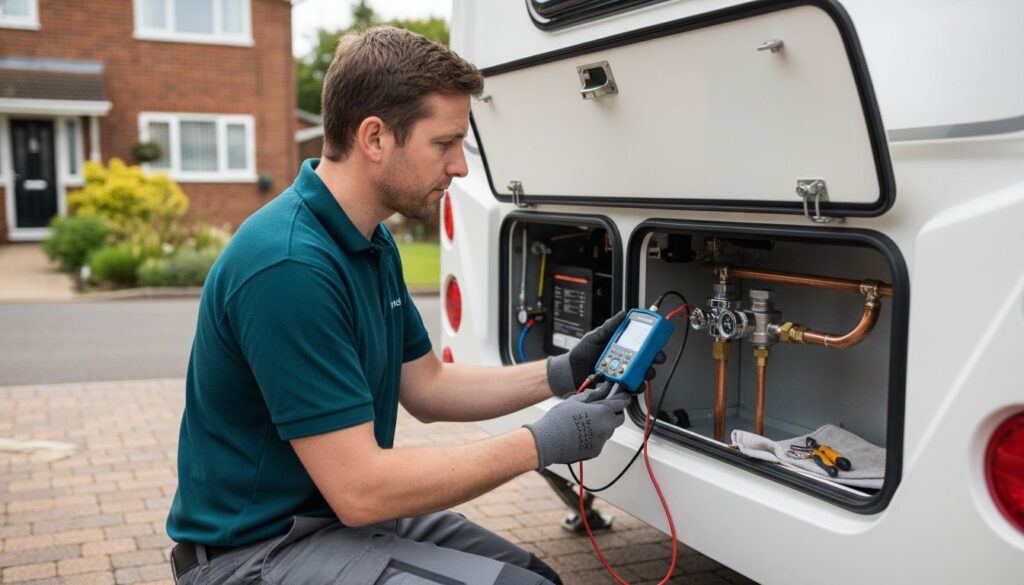
What if the biggest threat to your caravan’s gas system isn’t age, but the very road trips you love so much? While many owners assume a leak is a result of old components, the reality is that movement-induced wear is a far more common culprit. Constant vibrations and road shocks can loosen joints and stress pipework, making a regular gas safety inspection caravan owners trust a technical necessity rather than just a recommendation.
You want total peace of mind for your family’s safety, yet navigating the maze of regulations for touring vehicles is often confusing. It’s frustrating to think about the inconvenience of dragging your van to a workshop, especially when you just want to ensure your insurance remains valid and your warranty stays intact. We understand that your time is precious and your safety is paramount.
This guide explains exactly what happens during a professional inspection and why it is a critical requirement for your insurance policy. We’ll preview the essential safety checks involved and show you how to book a mobile expert to visit your home or storage site in South Yorkshire. From carbon monoxide prevention to system pressure tests, you’ll learn how to keep your adventures safe and your paperwork perfect.
Key Takeaways
- Understand why a professional gas safety inspection caravan owners book is essential for identifying movement-induced wear and ensuring every appliance operates safely.
- Discover the technical details of the 10-point checklist, including gas tightness tests and regulator performance checks that protect your family.
- Learn how to stay compliant with insurance stipulations and legal regulations to ensure your warranty remains valid and your documentation is up to date.
- Find out how to prepare your vehicle for a mobile expert’s visit to guarantee a thorough and efficient service at your convenience.
What is a Caravan Gas Safety Inspection?
A professional gas safety inspection caravan owners book is much more than a simple visual check. It’s a meticulous technical evaluation of your vehicle’s entire Liquid Petroleum Gas (LPG) setup. This process involves testing every component from the cylinder locker to the final exhaust flue to ensure the system is gas-tight and operating within safe parameters. Any engineer performing this work must be correctly qualified and listed on the Gas Safe Register to ensure they meet the necessary UK standards for leisure vehicles.
The inspection covers every gas-powered appliance inside your caravan. This includes your hobs, ovens, fridges, and space heaters. We don’t just check if they turn on; we examine how they burn fuel and how they handle waste. A primary focus is the safe expulsion of combustion products. If a flue is blocked or a burner is soot-damaged, it can lead to the build-up of Carbon Monoxide (CO). Often called the “silent killer,” CO is colourless, odourless, and potentially fatal. A rigorous inspection identifies these risks before they become a danger to your family.
The Difference Between a Service and a Safety Test
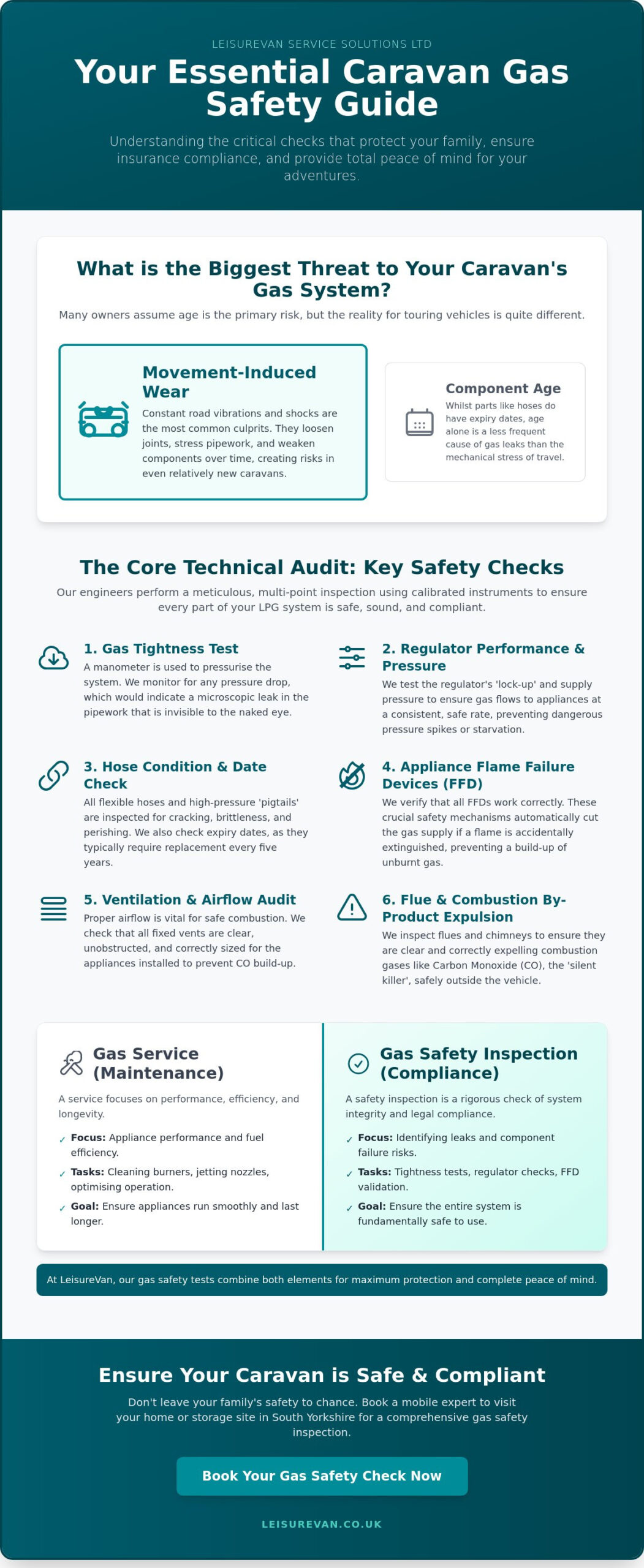
It’s easy to confuse a gas service with a safety inspection, but they serve different purposes. A service is primarily about performance and longevity. It involves cleaning burners, jetting nozzles, and ensuring your appliances run efficiently to save you fuel. It’s about maintenance.
In contrast, a safety inspection is a rigorous check of system integrity and compliance. We use specialist tools like manometers to perform “tightness tests,” ensuring there are no microscopic leaks in the pipework. At LeisureVan Service Solutions Ltd, we believe safety and efficiency go hand-in-hand. That’s why we combine these elements into our gas safety tests and habitation services. This approach provides maximum protection by ensuring your equipment isn’t just working, but is fundamentally safe to use.
Why Touring Caravans Face Unique Risks
Many owners assume that if their caravan is relatively new, the gas system must be fine. However, touring caravans face mechanical stresses that domestic systems never encounter. Every mile you drive subjects your chassis to road vibrations and shocks. These constant movements can loosen compression joints and stress copper pipework over time. Unlike a fixed home, your caravan is effectively a mobile earthquake zone.
Seasonal storage also introduces specific risks. When a caravan sits idle over winter, the rubber diaphragms in LPG regulators can perish or “bond” in place. Flexible pigtail hoses also have a limited lifespan and can degrade even when not in use. Regular professional checks identify these weakened components before they fail during your first holiday of the season.
The 10-Point Mobile Gas Safety Checklist
A professional gas safety inspection caravan owners receive is a methodical process designed to catch faults that the naked eye often misses. It’s a high-precision technical audit. We don’t just look at your appliances; we use calibrated instruments to measure exactly how your system is performing under pressure. This ensures that every joint, seal, and valve is functioning as intended, providing you with a documented record of your vehicle’s safety status.
The core of the inspection involves several critical technical stages:
- Gas Tightness Test: We use a specialist manometer to measure the pressure within the system. By sealing the system and monitoring for any pressure drop, we can confirm the absence of even microscopic leaks in the internal pipework.
- Regulator Performance: Our engineers test the supply pressure and “lock-up” of the regulator. This ensures the gas flows at a consistent, safe rate to your appliances without dangerous spikes in pressure.
- Hose Condition: We inspect high-pressure pigtails and flexible hoses for signs of cracking, brittleness, or date-expiry. It’s recommended that these are replaced every five years to prevent sudden failure.
- Appliance Safety: We verify that Flame Failure Devices (FFDs) are operational on all burners. These safety valves automatically cut off the gas supply if a flame accidentally blows out, preventing your caravan from filling with unburnt gas.
- Ventilation Audit: Proper airflow is vital. We ensure all fixed vents are clear and meet the required sizing for the appliances installed. This prevents the dangerous build-up of combustion by-products.
All procedures are designed to align with the Gas Safety (Installation and Use) Regulations 1998, which provide the legal framework for safe LPG handling in the UK. Adhering to these standards is the only way to guarantee your system meets modern safety expectations.
Flue and Combustion Analysis
Checking the integrity of flues for water heaters and space heaters is a priority. These channels are responsible for carrying poisonous exhaust gases outside your vehicle. We look for signs of corrosion or blockages caused by debris and insect nests, which are common after periods of storage. Using a flue gas analyser, we test for the presence of Carbon Monoxide during appliance operation. This provides a definitive reading of whether your appliances are burning fuel cleanly and safely.
Visual Inspection of Pipework and Cylinder Storage
The physical security of your gas supply is just as important as the pressure it holds. We verify that gas bottles are secured correctly in the locker to prevent movement during transit. Our engineers also check for corrosion on copper pipework under the chassis, where road salt and moisture can cause damage. Finally, we ensure the gas locker is adequately sealed from the living area. This ensures that any minor leak at the bottle remains outside the cabin. If you’re unsure about the state of your system, booking a professional gas safety test is the most reliable way to gain total peace of mind.
Legal Requirements vs. Insurance Compliance
Understanding the difference between a legal obligation and an insurance requirement is vital for every owner. While a gas safety inspection caravan owners book for private use isn’t mandated by criminal law in the same way an MOT is for a car, the civil and financial implications are significant. Failing to maintain your gas system can lead to rejected insurance claims, voided warranties, and, most importantly, avoidable risks to your family. Maintaining a professional service history is the only way to prove you’ve exercised your “duty of care” as a vehicle owner.
For many, the motivation for an annual check is warranty protection. Most manufacturers require a documented Caravan Habitation Service or a specific gas test to keep their long-term warranties valid. If a component fails and you cannot produce a certificate from a qualified engineer, you may find yourself footing the bill for expensive repairs. Beyond the paperwork, there’s a clear moral obligation. Caravans are often parked in close proximity on sites. Ensuring your system is leak-free protects not only your occupants but also your fellow campers. If you also own or are considering a motorhome, understanding the motorhome gas safety certificate cost is equally important for budgeting your annual safety compliance.
Hiring Out Your Caravan: The Landlord Rule
The legal landscape changes the moment you receive payment for the use of your caravan. Under the Gas Safety (Installation and Use) Regulations 1998 (GSIUR), specifically Regulation 36, you’re legally classified as a landlord if you hire out your vehicle. This law applies regardless of whether you’re running a professional business or simply letting a friend use the van for a nominal fee to cover costs.
As a landlord, you’re legally required to have a gas safety check performed every 12 months by a Gas Safe registered engineer. You must also provide your “tenants” with a copy of the record within 28 days of the inspection. Non-compliance is a serious matter. In the event of an accident, the lack of a valid Landlord Gas Safety Record can lead to heavy fines or even criminal prosecution. It’s a strict standard designed to ensure that anyone paying for accommodation is protected by verified safety systems.
Insurance and Post-Incident Investigations
Insurance companies are in the business of assessing risk. If your caravan is involved in a fire or explosion, a loss adjuster will be appointed to investigate the cause. One of the first things they’ll look for is proof of consistent maintenance. Without a recent Gas Safety Test certificate, an insurer may argue that the incident was caused by negligence or a lack of upkeep. This can lead to a total payout refusal, leaving you with a significant financial loss.
A professional certificate is your best defence in any claim dispute. It provides an objective, third-party record that the system was safe and compliant at the time of testing. By using a specialist who is properly trained in leisure vehicle systems, you demonstrate that you’ve taken every reasonable precaution. This professional documentation transforms a “he-said, she-said” situation into a clear-cut case of responsible ownership.
Preparing for Your Mobile Gas Inspection in South Yorkshire
Arranging a professional gas safety inspection caravan owners can trust is a straightforward process. However, a small amount of preparation helps our engineers work efficiently and ensures your vehicle is back in service as quickly as possible. The goal is to provide a seamless experience that gives you total peace of mind without disrupting your schedule. By following a few simple steps, you can help us complete a thorough technical assessment of your system.
To facilitate a comprehensive check, please consider the following points before your appointment:
- Check your gas supply: We must run your appliances to test their safety and performance under load. Please ensure you have at least one full gas cylinder available for the duration of the inspection.
- Clear access to appliances: Our engineers need to reach the rear of fridges, boiler units, and space heaters to check flues and connections. Clearing out cupboards or storage areas around these units saves time and allows for a more detailed visual check of the pipework.
- Report existing concerns: If you’ve noticed a faint smell of gas or an unusual flame colour on your hob, tell us beforehand. Identifying these issues early helps us pinpoint potential faults during the pressure testing phase.
- Gather your documentation: Have your previous service history or habitation reports ready for reference. This allows us to track the age of components like regulators and hoses more accurately and ensures your records are kept up to date.
The Convenience of Mobile Servicing
One of the biggest hurdles for caravan owners is the inconvenience of towing a vehicle to a remote workshop in Sheffield or Leeds. Our mobile service removes this stress entirely. We visit you at your home, your storage plot, or even your pitch whilst you’re on holiday. This approach doesn’t just save you fuel and time; it offers complete transparency. You’re welcome to see the tests being performed first-hand and ask questions about your system’s maintenance. It’s a personalised service designed around your specific requirements.
Local Coverage Areas
We’re proud to be a trusted local partner for owners across South Yorkshire. By focusing our expertise on Sheffield, Rotherham, Doncaster, and Barnsley, we can offer reliable scheduling and faster response times. Our reach also extends into neighbouring areas like Chesterfield, Worksop, Wakefield, and Huddersfield. Choosing a local South Yorkshire engineer means you’re working with someone who understands the specific needs of the regional caravanning community. Ready to secure your vehicle for the season ahead? You can book your gas safety test today to ensure your next trip is a safe one.
Why Choose LeisureVan Service Solutions Ltd for Your Gas Safety Test?
Choosing a specialist for your gas safety inspection caravan requirement is about more than just ticking a box. It’s about finding a partner who understands the intricate mechanical systems of your leisure vehicle and treats your safety as their primary goal. At LeisureVan Service Solutions Ltd, our mobile engineers are fully qualified and insured, possessing the specific training needed for LPG systems in caravans and motorhomes. We bring technical authority directly to your doorstep, providing a service that is as thorough as it is convenient.
You won’t just receive a verbal “all clear” when the job is done. We provide detailed digital reports immediately upon completion of the inspection. These documents are clear, transparent, and easy to understand. They serve as vital proof for your insurance provider and help maintain your manufacturer’s warranty history. Our “safe pair of hands” approach means we communicate any findings with honesty and simplicity, ensuring you feel confident in the safety of your equipment.
By choosing a mobile expert, you eliminate the stress of logistics. We work across South Yorkshire and the surrounding regions, delivering a professional service at your home or storage site. This focus on your convenience, combined with our technical expertise, creates the “peace of mind” that every caravan owner deserves before heading out on the road.
Beyond the Gas: A Holistic Safety Approach
We believe in looking at the whole vehicle health rather than just isolated components. While gas safety is critical, it’s often just one part of a wider safety picture. To provide total peace of mind, you can combine your gas test with other essential services from our range. Many of our clients choose to add a Damp Inspection and Report or a comprehensive Electrical System Test to their booking. This ensures that every potential risk, from water ingress to wiring faults, is professionally managed in a single visit.
We also act as a helpful guide for those looking to improve their touring experience. Our engineers can provide professional advice on technical upgrades that enhance your vehicle’s longevity and comfort. This includes Solar Panel Installation for off-grid freedom or an Alde Heating System Fluid Change to maintain your internal climate control. By addressing these needs proactively, we help you prevent small issues from becoming expensive repairs later in the season.
Booking Your Inspection
We’ve designed our booking process to be simple, transparent, and respectful of your schedule. We serve owners across South Yorkshire, including Sheffield, Rotherham, Barnsley, and Doncaster. Because we are a local mobile service, we can offer reliable time slots that fit around your work or family life. There’s no need to worry about the logistics of moving your van to a workshop; we come to you.
Our communication rhythm is methodical and logical. From the moment you book to the delivery of your final digital report, we ensure the process is steady and efficient. We take pride in our meticulous work and our commitment to high standards of customer satisfaction. If you’re ready to ensure your vehicle is safe for your next adventure, book your mobile gas safety inspection with LeisureVan Service Solutions Ltd today. We are here to provide the expert care your caravan deserves.
Secure Your Safety for the Road Ahead
Your caravan represents freedom and family time; however, that peace of mind depends on the hidden systems working behind the scenes. We’ve explored how road vibrations can stress gas joints and why insurance providers demand documented proof of maintenance. A regular gas safety inspection caravan owners prioritise is the most effective way to identify these issues before they escalate into dangerous faults. By taking a proactive approach, you protect your investment and, more importantly, the people inside it.
At LeisureVan Service Solutions Ltd, we make this essential task as simple as possible. As a qualified mobile service engineer serving South Yorkshire and West Yorkshire, I provide a “safe pair of hands” directly at your home or storage site. You’ll receive detailed safety compliance reports immediately upon completion, ensuring your records are always up to date for warranty or insurance purposes. There’s no need for the stress of workshop logistics when expert care can come to you.
Secure your peace of mind; Book your mobile gas safety test today. We look forward to helping you prepare for a season of safe, worry-free adventures across the UK.
Frequently Asked Questions
Is a gas safety certificate a legal requirement for a touring caravan?
A gas safety certificate is only a legal requirement if you rent out your caravan for payment. Under the Gas Safety (Installation and Use) Regulations 1998, anyone hiring out a vehicle is legally considered a landlord and must provide an annual record. For private owners, while not mandated by law, a certificate is usually required to maintain your insurance coverage and manufacturer warranty.
How much does a caravan gas safety inspection cost in the UK?
The cost of a gas safety inspection caravan owners pay varies depending on your location and the number of gas appliances installed. Engineers typically charge a base fee for the system pressure test and certificate, with small additional charges for checking multiple items like ovens, space heaters, and fridges. You should contact a local specialist to get a quote based on your specific vehicle layout. If you also run a motorhome, you may find our detailed breakdown of motorhome gas safety certificate cost a useful reference for comparing typical pricing across leisure vehicles.
How long does a professional gas safety test take to complete?
A professional gas safety test typically takes between 45 and 90 minutes to finish. This timeframe allows the engineer to perform a full pressure tightness test and conduct individual safety checks on every appliance. If your caravan has a complex setup with multiple heating systems or external points, the process may take slightly longer to ensure every flue and joint is thoroughly examined.
Can I use a standard domestic Gas Safe engineer for my caravan?
No, you cannot use a domestic engineer unless they hold specific LPG and Leisure Accommodation Vehicle (LAV) qualifications. Domestic engineers are trained for natural gas in fixed properties, which operates at different pressures and follows different safety standards. Always check that your engineer is qualified for LPG and caravans on the Gas Safe Register before they start any work on your vehicle.
What happens if my caravan fails its gas safety inspection?
If your caravan fails, the engineer will identify the specific fault and may need to isolate the dangerous appliance or the entire gas supply for your safety. This prevents immediate risks such as leaks or carbon monoxide build-up. You will receive a report detailing the required repairs, which must be carried out by a qualified professional before a pass certificate can be issued.
How often should I have my caravan gas system checked?
You should have your gas system checked every 12 months to ensure continued safety. This annual interval is the industry standard and helps catch issues like perished hoses or loosened joints caused by road vibrations during your travels. Regular inspections also ensure that your regulator hasn’t bonded or failed after sitting idle during the winter months.
Do I need a gas safety certificate to stay on UK campsites?
While not a national law for all sites, many private campsites and holiday parks now mandate a valid gas safety certificate in their terms and conditions. This is especially common for seasonal pitches where the caravan stays on-site for long periods. Keeping a copy of your latest report in the vehicle ensures you can prove compliance if the site warden requests it.
What is the difference between a gas safety test and a habitation check?
A gas safety test is a dedicated technical inspection focusing exclusively on the LPG system and appliances. In contrast, a habitation check is a comprehensive “MOT” for the living area of your caravan. The habitation service includes the gas safety test but also covers damp inspections, electrical system testing, water system checks, and bodywork seals to provide a complete health report.