
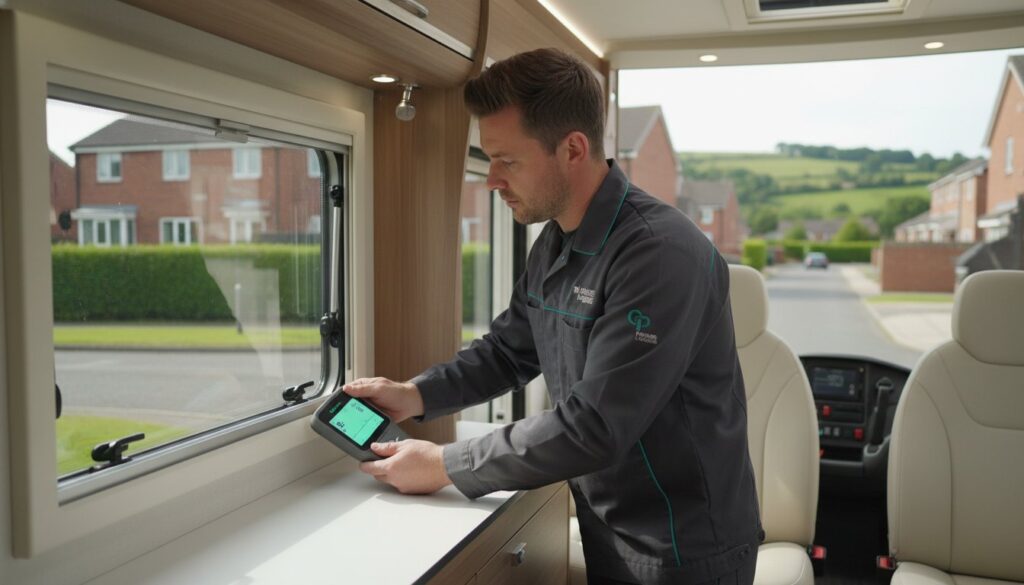
That faint, musty scent in your corner cupboard isn’t just a sign of an ageing vehicle. It’s often the first warning of a structural cancer that can quietly devalue your motorhome by thousands of pounds whilst you sleep. A professional motorhome damp inspection is the only reliable way to catch this “silent killer” before it compromises your health or your bank balance.
We understand the genuine anxiety that comes with purchasing a pre-owned vehicle or preparing for winter storage. It’s easy to feel overwhelmed by fluctuating moisture meter readings or the nagging fear of accidentally “buying a lemon” with hidden rot. You deserve peace of mind, not a list of expensive surprises. This guide explains how expert moisture mapping provides the technical clarity you need to protect your investment. You’ll learn what the industry standard percentages actually mean for your vehicle’s longevity and how a certified report can significantly boost your resale value. We’ll show you how early detection turns a potential disaster into a manageable maintenance task, keeping your adventures on track for 2026.
Key Takeaways
- Understand why water ingress is the “silent killer” of leisure vehicles and how a systematic survey prevents costly structural damage.
- Learn the professional “roof-to-floor” inspection process that identifies leaks in high-risk areas like window seals and lockers.
- Discover how to spot early warning signs like bubbling wall tape and why a professional motorhome damp inspection is vital for finding hidden rot.
- Decipher moisture percentage categories in your report to understand when action is required to maintain your warranty and resale value.
- Explore the convenience of mobile engineering for owners in South Yorkshire, providing expert moisture mapping at your home or storage site.
Why a Motorhome Damp Inspection is Critical for Every Owner
A motorhome damp inspection is a systematic moisture survey designed to assess the health of your vehicle’s bodyshell. It involves using professional, non-invasive moisture meters to map out water content within the walls, floor, and ceiling. Many seasoned owners refer to damp as the “silent killer” of leisure vehicles. This isn’t an exaggeration. Because motorhomes are typically constructed using sandwich panels that often contain timber frames, water can rot the internal structure without showing any external symptoms for months or even years. By the time you notice a soft spot or a discoloured patch, the structural integrity of your home-on-wheels may already be compromised.
Undetected moisture does more than just destroy wood; it creates a fertile breeding ground for mould and fungal spores. In the confined living space of a motorhome, these allergens can lead to persistent respiratory issues and allergic reactions. This makes regular checks a matter of personal safety as much as mechanical maintenance. Ensuring your cabin remains dry and sterile is the only way to guarantee a healthy environment for your family during your travels.
The Financial Risk of Neglect
Proactive maintenance is always more affordable than a major structural cure. A routine inspection acts as a vital early warning system. Catching a failing window seal early might only require a straightforward reseal. If left unaddressed, that same leak could lead to a repair bill that reaches into the thousands. Beyond the immediate repair costs, regular damp reports are a mandatory requirement for maintaining most manufacturer warranties. Skipping a single year could void your cover entirely. When you eventually decide to sell, a complete history of clean damp reports serves as a powerful tool. It provides prospective buyers with the technical evidence they need to pay a premium for a well-maintained vehicle.
Damp vs. Condensation: Knowing the Difference
It’s easy to confuse surface moisture with a structural leak, but the causes are entirely different. Condensation is usually a ventilation issue caused by everyday activities like cooking, showering, or even sleeping. It typically sits on the surface of windows and cold spots. Structural damp is far more serious. Professional inspectors use technical expertise to distinguish between the two by measuring deep into the substrate of the vehicle panels. Water ingress is the external penetration of moisture through seals, joints, or the vehicle’s outer skin. For a broader perspective on how these issues develop, understanding water damage helps clarify why moisture is so destructive once it enters a closed system. Whilst condensation can often be managed by opening a vent, structural damp requires professional intervention to stop the rot before it spreads.
The Professional Inspection Process: Beyond the Visual Check
A professional motorhome damp inspection is a methodical, technical survey that goes far beyond a simple visual check. We follow a strict, top-down methodology to ensure no corner of the vehicle is overlooked. The process begins at the roof, where we examine every seal and joint, before working down through the wall panels to the floor. This systematic approach is essential because water follows the path of least resistance; a leak at a roof light often manifests as a damp patch in a lower locker. The Approved Workshop Scheme (AWS), which represents over 550 fixed and mobile workshops in the UK, provides the standardisation for these procedures to ensure consistency and accuracy.
Throughout the survey, the engineer creates a comprehensive “moisture map.” This document is a visual representation of your vehicle’s health, recording percentage readings from dozens of specific points. One significant benefit of choosing an independent mobile service is total impartiality. Because we specialise in maintenance and safety tests rather than major bodywork repairs, there is no incentive to “find” problems that don’t exist. You receive an honest, transparent assessment of your vehicle’s condition. Booking a standalone damp inspection and report provides the technical clarity you need to make informed decisions about your investment.
Specialist Tools of the Trade
Professional engineers use sophisticated equipment that far exceeds the capabilities of basic DIY meters. We utilise non-invasive moisture meters that use capacitance to “see” through wallboards without leaving unsightly pinpricks. These are often paired with prong-type meters for deeper analysis when high readings are detected. We also use hygrometers to measure the ambient humidity inside the van. This is crucial for context; a high reading on a rainy day might simply be high humidity rather than a structural leak. Some modern inspections even incorporate thermal imaging to identify hidden cold spots, which often indicate the presence of moisture behind cabinets or furniture.
High-Risk Zones: Where Damp Hides
Water ingress usually targets points where the vehicle’s skin has been penetrated. We pay close attention to roof lights, aerial points, and solar panel mounts, as these seals are constantly exposed to UV degradation and road vibration. Service lockers and battery boxes are also high-risk zones; their seals frequently perish, allowing water to seep into the floor. Floor delamination is another common issue, typically starting in the corners where the vertical walls meet the horizontal floor. By catching these issues in these specific zones early, you can prevent the rot from spreading to the main structural framework.
Spotting the Signs: DIY Observation vs. Professional Survey
Developing a keen eye for early warning signs is a useful skill for any owner, yet visual checks alone are rarely sufficient to confirm a vehicle’s health. Water ingress often begins in hidden cavities, only becoming visible once the internal structure is saturated. Common visual indicators include bubbling or “pimpling” on wallboards, discoloured panels that show grey or black staining, and wall tape that has started to peel or lift at the edges. If you notice these symptoms around window frames or in the corners of lockers, it is a clear signal that moisture has already bypassed the external seals.
The “soft spot” test is another practical method for owners to monitor their vehicle. By applying gentle thumb pressure to the walls and floor, you can feel for any unusual “give” in the substrate. A firm, solid surface is expected; a spongy or springy sensation suggests that the timber framework beneath the decorative board has begun to rot. However, a professional motorhome damp inspection provides the technical verification that a simple physical walk-through cannot offer. Many vehicles appear pristine and feel solid to the touch while harbouring high moisture levels that only a calibrated meter can detect.
The Limitations of the Sniff Test
Many owners mistakenly believe that a musty or earthy smell is the only reliable indicator of a leak. Relying on your sense of smell is risky because many factors can mask the scent of rot. Strong air fresheners, cleaning products, or the dry air of a summer trip can easily hide a problem. Furthermore, water can travel several metres away from the original point of ingress, settling in areas where air circulation is poor. By the time a distinct “damp smell” becomes noticeable in the main cabin, the damage is usually extensive and the repair costs significantly higher. Professional detection identifies the issue long before the odour develops.
When to Book a Professional Survey
Timing is everything when it comes to preventing structural failure. We recommend booking a comprehensive survey in the following scenarios:
- Annual Habitation Service: A routine check ensures small seal failures are caught before they turn into major repair jobs.
- Pre-Purchase Inspections: Never buy a used vehicle without a professional motorhome damp inspection. It is the only way to ensure you aren’t inheriting someone else’s expensive problem.
- Post-Winter Checks: Freezing temperatures can cause sealant to contract and crack. A spring survey confirms your motorhome survived the winter unscathed.
- End of Warranty: Arrange an inspection shortly before your manufacturer’s warranty expires to ensure any legitimate claims are filed in time.
Understanding Your Damp Report: What the Percentages Mean
Receiving the results of a motorhome damp inspection can feel overwhelming, especially when faced with a grid of numbers and percentages. However, these figures provide a clear, technical snapshot of your vehicle’s health. It is important to remember that moisture readings are not static; they can fluctuate slightly based on the weather, the time of year, and the ambient humidity on the day of the survey. A professional engineer does not just look at a single number. They look for patterns across the vehicle to distinguish between surface condensation and structural ingress.
If a reading falls into a borderline category, we often implement a “re-test” protocol. This involves checking the specific area again after a period of dry weather or after the vehicle has been used with the heating on. If the reading remains high or increases, it confirms that water is entering from the outside rather than being a result of internal lifestyle moisture. For total peace of mind regarding your vehicle’s condition, you can book a dedicated damp inspection and report to get a definitive answer.
The Damp Reading Scale
In the UK, the industry follows a standard scale to categorise moisture levels. Understanding these zones helps you prioritise maintenance and avoid unnecessary panic:
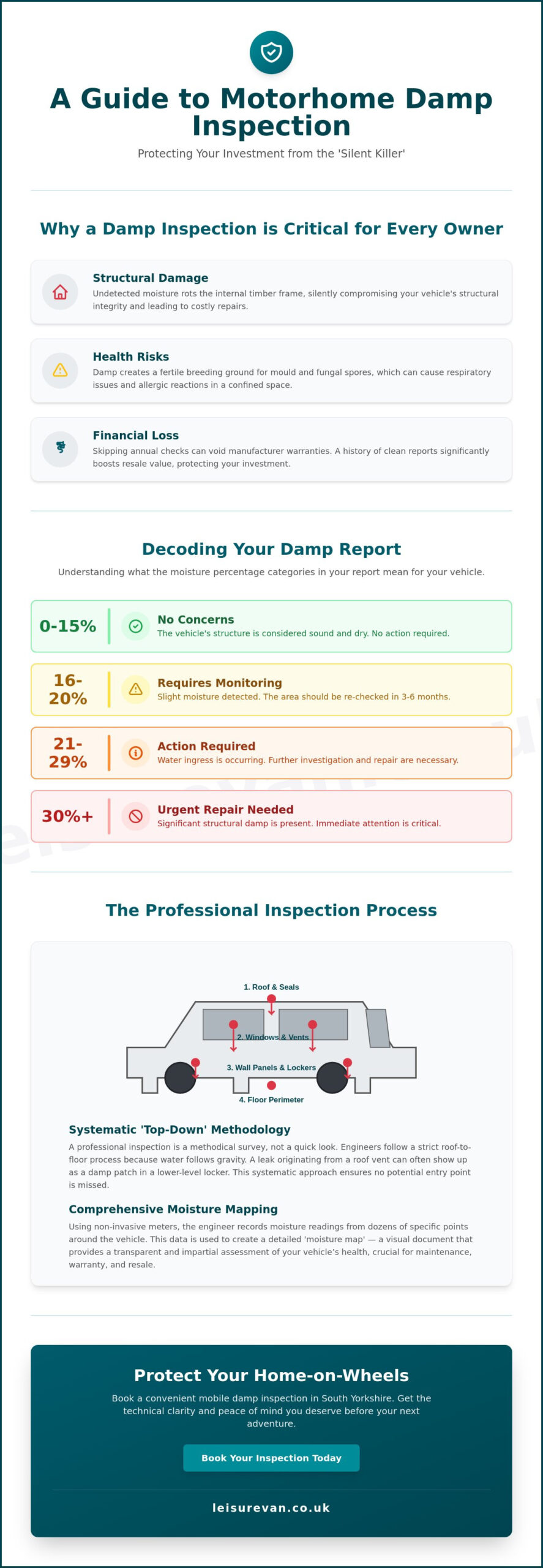
- 0-15% (Normal): These readings are considered healthy. Most motorhomes will naturally sit within this range due to the UK’s temperate climate. No action is required.
- 15-20% (The Watch Zone): This “amber” range indicates that moisture levels are higher than ideal. It may be a sign of a seal beginning to perish or a lack of ventilation. We usually recommend monitoring these areas and booking a follow-up check within three months.
- 20%+ (Action Required): Readings in this bracket are evidence of active water ingress. At this level, moisture is likely saturating the timber frame or wallboard. Immediate professional attention is needed to identify the leak and prevent structural rot.
Actionable Advice for High Readings
If your report highlights a “red zone” reading, the first priority is stopping the ingress. This usually involves a professional reseal of the affected joints, rails, or window frames. Once the leak is sealed, the “dry out” process can begin. Using a dehumidifier in a controlled environment can help pull moisture from the wallboards, provided the external source has been blocked. In cases where the reading is significantly over 30%, a simple reseal might not be enough; the timber framework may have already lost its structural integrity, necessitating more intensive repairs.
If you encounter high readings while viewing a potential new vehicle, proceed with caution. We strongly suggest arranging a comprehensive Pre-Purchase Inspection before committing to the sale. This ensures you fully understand the extent of the damage and the likely cost of any required repairs, protecting you from a poor investment.
Mobile Damp Inspections in South Yorkshire: Convenience Meets Expertise
Choosing a mobile service for your motorhome damp inspection offers a level of convenience that fixed workshops simply cannot match. Instead of navigating narrow South Yorkshire roads or arranging a tow to a distant service centre, our engineer brings the diagnostic equipment directly to your driveway or storage plot. This flexibility is particularly valuable for owners who keep their vehicles at high-exposure sites near the Pennines or the Peak District. These regions often experience harsh, wind-driven rain that tests the limits of any sealant. Having a local expert who understands the regional climate ensures your vehicle is assessed against the real-world conditions it faces every day.
LeisureVan provides detailed, technical reports that are widely accepted by insurance companies and prospective buyers. Whether you are preparing for a long summer tour or checking for winter ingress, our mobile service delivers professional results without the logistical headache. We focus on providing a “safe pair of hands” for your vehicle, ensuring that every seal and joint is meticulously checked while you carry on with your day. It’s about creating peace of mind through technical accuracy and honest communication.
Serving Sheffield, Doncaster, and Beyond
Our mobile coverage extends across the heart of the region. We regularly visit owners in Sheffield, Doncaster, Barnsley, and Rotherham, as well as those further afield in Worksop and Chesterfield. Booking a survey whilst your van is in winter storage is an efficient way to ensure it’s ready for the first trip of the spring. Many of our clients utilise local storage centres or secure plots, where we can perform a comprehensive motorhome damp inspection without the owner even needing to be present, provided access is arranged. This proactive approach catches minor issues before they become expensive problems during your holiday.
The LeisureVan Difference: Professional Integrity
The core of our service is transparency. As a mobile specialist, we do not profit from major bodywork repairs; our only goal is to provide an accurate, impartial assessment of your vehicle’s condition. This technical integrity gives you the confidence that any issues identified are genuine and require attention. For most owners, these checks are most effective when integrated with a Full Motorhome Habitation Service. This combined approach ensures that whilst the bodyshell is being checked for moisture, your gas, water, and electrical systems are also being tested for safety and functionality. Don’t leave your vehicle’s health to chance. Book your mobile damp inspection in South Yorkshire today to secure your peace of mind for the season ahead.
Secure Your Vehicle’s Future
Protecting your motorhome from water ingress is a continuous commitment that pays dividends in both safety and resale value. As we’ve explored, relying on a “sniff test” or visual check is often insufficient; true peace of mind comes from technical moisture mapping and professional expertise. By identifying failing seals early and understanding the data in your moisture report, you can prevent minor issues from escalating into structural failures.
LeisureVan offers a comprehensive motorhome damp inspection delivered with AWS-style thoroughness. We bring our specialist tools directly to your home or storage site, providing a convenient solution for owners throughout Sheffield, Doncaster, and Barnsley. Our impartial reports give you the clear, honest evidence needed to maintain your warranty or secure a private sale. Don’t wait for a musty smell to signal a problem. Book your expert mobile damp inspection with LeisureVan today and keep your adventures on the road for years to come. We’re here to help you protect your home-on-wheels with integrity and precision.
Frequently Asked Questions
How long does a motorhome damp inspection take?
A standalone motorhome damp inspection typically takes between 45 and 90 minutes to complete. The exact duration depends on the size of your vehicle and the number of internal lockers or cabinets that need checking. We take the time to ensure every high-risk joint and seal is thoroughly assessed to provide you with a reliable moisture map of the entire bodyshell.
Can I fail my MOT because of damp in the habitation area?
No, your vehicle will not fail its MOT due to damp in the living quarters. The MOT test focuses strictly on roadworthiness, safety features, and emissions. Structural damp is a maintenance issue that affects the habitation area rather than the mechanical components required for the legal MOT certificate. However, severe damp can eventually affect the structural integrity of the floor near seatbelt mountings, which could lead to a failure in extreme cases.
Will my insurance cover the cost of damp repairs?
Most standard insurance policies do not cover damp repairs caused by gradual water ingress or a lack of maintenance. Insurers usually view damp as a wear-and-tear issue rather than a sudden accident. However, if the water damage is the direct result of a specific event, such as a storm or a collision, you might be covered. It’s best to check your individual policy wording for any specific exclusions regarding water ingress.
Is it worth buying a motorhome with a damp reading of 20%?
Purchasing a vehicle with a 20% reading requires careful consideration and professional advice. As discussed earlier, 20% is the threshold where active water ingress is likely, meaning repairs are probably necessary. You should use this information to negotiate the purchase price or insist that the seller carries out a professional reseal before you complete the transaction. Buying a van with known damp is only advisable if you have a clear quote for the repair work.
How often should I have a professional damp survey performed?
You should arrange a professional survey at least once every twelve months. Annual inspections are the industry standard for maintaining manufacturer warranties and ensuring the long-term health of the bodyshell. Regular checks allow you to catch small seal failures before they turn into expensive structural problems. If you store your vehicle in a high-exposure area, you might consider an additional check after the winter months.
What is the average cost of a motorhome damp inspection in the UK?
The cost of an inspection varies depending on your location and the size of your vehicle. It is generally a modest investment that focuses specifically on moisture mapping and structural health. Many owners find this focused report provides significant value when they don’t yet require a full habitation service but want to monitor a specific concern or provide evidence of health for a private sale.
Can a solar panel installation cause water ingress if not done correctly?
Yes, any modification that involves penetrating the roof skin carries a high risk of water ingress. If the cable entry points or mounting brackets aren’t sealed with high-quality marine-grade adhesive, water can easily seep into the sandwich panels. We always pay extra attention to these areas during a motorhome damp inspection to ensure the seals remain intact and the installation hasn’t compromised the vehicle’s outer skin.
Does a habitation check always include a full damp report?
A comprehensive habitation check should include a damp survey as standard, but it is always worth confirming this with your engineer. Most professional providers incorporate moisture mapping into their service to provide a full picture of the vehicle’s health. If you only require a moisture check, perhaps for a mid-season peace of mind, you can book a standalone damp inspection and report instead of the full service.