

If you’re wondering what fails a caravan gas safety check, a suspected leak, an obstructed vent or an appliance fault can feel worrying, especially if you’re unsure whether it’s safe to use. A failed check is a finding to understand, not a verdict on your whole caravan.
This guide explains the areas an engineer may assess, what different findings can mean and what to ask about repair, further investigation or follow-up testing. A fault, a safety concern and a confirmed inspection failure aren’t always the same thing. Don’t try to diagnose or repair gas equipment yourself; ask a specialist to assess it.
You’ll also find practical ways to prepare for an appointment, without attempting DIY tests. A gas safety test may form part of a wider habitation check, so confirm which service you’ve arranged and what it covers. Mobile caravan gas safety tests are available across Sheffield, Rotherham, Doncaster, Barnsley and nearby areas, with coverage also including Worksop, Chesterfield, Wakefield, Huddersfield and Leeds. Check availability for your location when booking.
Key Takeaways
- Learn what fails a caravan gas safety check and which parts of the installation an engineer may assess.
- Understand how an inspection moves from discussing symptoms to checking the system and explaining the findings.
- Know the difference between a confirmed fault, an advisory finding and a need for further investigation.
- Prepare by making appliances accessible and noting unusual smells or intermittent problems for the engineer.
- Find out what to ask after a failed check, so you understand whether repair, diagnosis or follow-up testing is advised.
What fails a caravan gas safety check? Start with the common fault areas
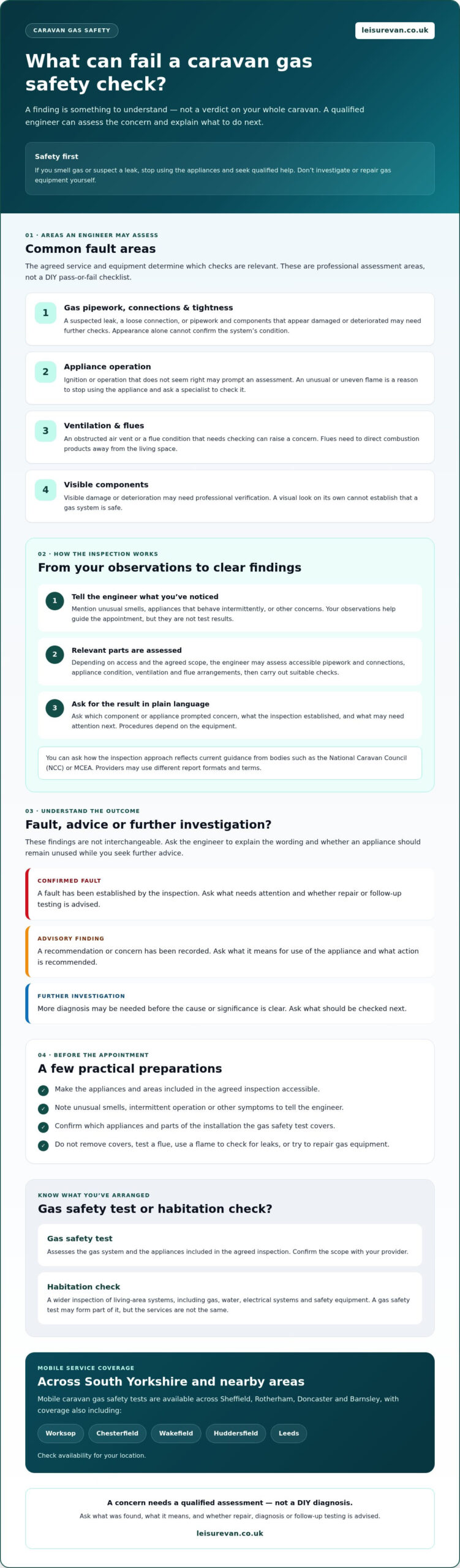
A caravan gas safety check assesses the gas system and the appliances included in the inspection. Depending on the agreed scope and equipment, an engineer may consider gas tightness, appliance operation, ventilation, flues and the visible condition of components. These are areas for a professional to assess, not a pass-or-fail checklist for owners to apply themselves.
Possible concerns include a suspected leak, an appliance that doesn’t operate as expected, restricted ventilation, a flue issue or visible damage to gas components. Each needs professional assessment before you can know what it means for your caravan. A visual look may reveal a concern, but it cannot confirm that a gas system is safe.
Gas pipework, connections and signs of leakage
Loose connections, pipework or components that appear damaged or deteriorated may prompt further checks. An engineer needs to assess their condition rather than relying on appearance alone. Never use a flame or a DIY method to look for a leak. If you smell gas or suspect a leak, stop using the appliances and seek qualified help. Don’t investigate or repair the system yourself.
Appliances, ventilation and flue condition
An engineer may assess whether appliances ignite and operate as expected, as well as their visible condition. An unusual or uneven flame is a reason to stop using the appliance and ask for an assessment, but only the engineer can determine what it indicates. The relevant test procedures and acceptance criteria depend on the equipment, so ask the engineer to explain what applies.
Ventilation and flues matter too. Air vents should remain unobstructed, and a flue needs to be in suitable condition to direct combustion products away from the living space. Don’t remove covers or try to test a flue yourself. Ask the engineer whether an observation is a confirmed fault, a safety concern or something that needs further investigation.
- Gas tightness: possible leaks at pipework or connections.
- Appliance operation: ignition or operation that raises a concern.
- Ventilation and flues: obstructions or visible condition issues that need assessment.
- Visible components: damage or deterioration that needs professional verification.
The Gas Safety (Installation and Use) Regulations 1998 provide wider context on the UK’s gas safety framework. For owners, the practical step is to have concerns assessed by a suitably qualified professional. A gas safety test may form part of a wider habitation check, but a visual inspection alone cannot establish that the gas system and appliances are safe.
How a caravan gas safety check finds faults in the system
A useful inspection starts with what you’ve noticed. The engineer then assesses relevant parts of the installation, carries out suitable checks and explains the findings. This helps you understand the concern and what may need attention next.
Your observations help guide the appointment, but they aren’t test results. For example, an appliance that sometimes fails to light gives the engineer useful information, but doesn’t prove what caused the problem. The engineer decides which checks are suitable for the caravan and the appliances included in the agreed inspection.
What the engineer may examine during the appointment
Depending on access and the service scope, an engineer may assess accessible pipework and connections, appliance condition, ventilation and flue arrangements. The appliance type also affects which checks are relevant. Before the visit, ask what the gas safety test covers and which appliances are included, so you know what to expect.
Inspection practice can draw on industry guidance, but confirm the specific procedures with the engineer. You can ask how the approach reflects current guidance from bodies such as the National Caravan Council (NCC) or MCEA, rather than assuming every provider follows an identical process.
How findings are recorded and explained
Ask the engineer to identify the component or appliance that prompted concern and explain what the inspection established. A confirmed fault, a recommendation and a point that needs further diagnosis are different findings. Report formats and terms can vary between providers, so ask what the wording means and whether an appliance should remain unused pending further advice.
A habitation check looks at living-area systems, including gas, water, electrical systems and safety equipment. It is broader than a gas safety test, so confirm which service you’ve arranged. For the wider legal framework, you can read the Gas Safety (Installation and Use) Regulations 1998. Ask the engineer how any guidance relevant to your inspection applies to your vehicle.
If you’d like a mobile gas safety test at your preferred location in the South Yorkshire area, you can send a service booking request. Sharing any symptoms when arranging the appointment can help the engineer understand your concern.
Failed check, warning or further investigation: understand the difference
Any finding needs context. Providers may use different terms for results, so ask the inspecting engineer what the wording means for your caravan and the appliance concerned. A fault recorded on one appliance doesn’t automatically establish the condition of every other gas appliance or system. It also doesn’t prove that the rest is safe to use.
The table below describes types of wording you may hear, not a universal grading system. Follow the inspecting engineer’s explanation and safety advice when deciding what to do next.
| Finding | What it may mean | What to clarify |
|---|---|---|
| Confirmed fault | A check has identified a specific problem with a component or appliance. | Which item is affected, what evidence supports the finding, and what action is advised? |
| Advisory finding | The engineer has raised a concern or recommendation that may not be recorded as a confirmed failure. | Is there a safety risk, and should anything be repaired or monitored? |
| Further investigation | The available checks haven’t established the cause or full extent of a concern. | What diagnosis or follow-up test is needed, and should the equipment remain unused meanwhile? |
What to ask when an engineer reports a fault
Before the appointment ends, ask which appliance or component is affected and what the engineer found. Clarify whether the next step is repair, further diagnosis or a follow-up test. If a term in the report isn’t clear, ask for a plain-language explanation. Request the findings in writing where available, so you can refer to the advice when arranging next steps.
These questions turn the result into a practical plan. They also help distinguish a recommendation from a confirmed fault, rather than leaving you to interpret the report on your own.
When to stop using an appliance and seek help
Follow the inspecting engineer’s instructions for the specific finding. If they identify an appliance as unsafe, don’t use it until they advise that it’s safe to do so. Don’t assume that isolating one appliance means every other gas appliance can be used. Ask the engineer directly about the caravan’s overall condition.
If you suspect a gas leak, stop using the appliances and contact a qualified professional. The Gas Safe Register advice for caravans and motorhomes offers further safety guidance. If you’re unsure whether the caravan can be used after a finding, ask the inspecting engineer for advice specific to the fault rather than relying on the report wording alone.
Prepare for a caravan gas safety check in South Yorkshire
Simple preparation helps the engineer focus on the concerns you want assessed. Make the caravan accessible and note which appliances you’d like checked. You don’t need to diagnose a problem yourself. Practical details, such as an appliance that works intermittently, can help the engineer decide what to look at.
Use this simple checklist:
- Clear access to the caravan and the relevant appliances.
- Note any intermittent faults, unusual smells or appliances that fail to light, including when you noticed them.
- Have previous reports or notes about known faults ready, if available. They provide useful history but don’t confirm the caravan’s current safety.
- Ask the provider in advance whether the appointment has any access, power or other requirements.
Don’t remove panels, alter pipework or attempt repairs before the inspection. If you suspect a gas leak, stop using the appliances and seek qualified help rather than waiting to mention it at a routine appointment.
What to have ready before the appointment
Make sure the engineer can reach the appliances and areas you’ve discussed. Describe symptoms clearly and practically: for example, which appliance failed to light and whether it happens every time or only occasionally. Share previous findings, but let the engineer assess the caravan afresh. If you’re unsure what the visit includes, confirm the agreed scope and any access or power requirements beforehand.
LeisureVan Service Solutions provides mobile caravan gas safety tests across South Yorkshire and nearby areas, including Sheffield, Rotherham, Doncaster and Barnsley, as well as Worksop, Chesterfield, Wakefield, Huddersfield and Leeds. Coverage can depend on your postcode, so check availability for your location. Read more about caravan gas safety checks in South Yorkshire.
Why a gas check may sit within a habitation check
A habitation check looks at the caravan’s living-area systems, including gas, water, electrical systems and safety equipment. A gas safety check focuses on the gas system and appliances included in that inspection. They’re related services, but they aren’t interchangeable. Confirm which service you’ve booked and what it covers. A damp report records findings from a separate damp inspection, so ask whether that is included if you need one. For broader maintenance information, see this caravan servicing guidance.
If you have concerns or want to arrange a mobile gas safety test, request a service appointment. Share your notes about symptoms when you get in touch, so you can clarify what you’d like the engineer to assess.
What to do after a caravan gas safety check fails
A failed check is a finding to understand and act on, not a reason to guess at the cause. Before arranging work, ask the inspecting engineer which appliance or part of the gas system raised concern, what was found and what they recommend next. Depending on the fault, the next step may be repair, further diagnosis or follow-up testing.
Follow the inspecting engineer’s advice before using any equipment identified as unsafe. Don’t assume the rest of the caravan is safe to use simply because the finding relates to one appliance. If you’re unsure whether you can use other gas appliances or the caravan itself, ask the engineer for advice specific to their findings.
Arrange diagnosis or remedial work safely
Gas-system diagnosis and remedial work should be carried out by an appropriately qualified specialist. Ask a provider whether they can assess the reported issue, what the appointment includes and whether follow-up testing may be needed. A gas safety test can help clarify a concern, but don’t assume every inspection includes repairs or that work can be completed during the same visit.
Keep a copy of the findings and share them when seeking further help. If you’re trying to understand what fails a caravan gas safety check, the engineer’s report is more useful than a general checklist because it identifies the issue found and the action advised.
Book professional mobile support in the local area
A mobile appointment brings a caravan gas safety test to your preferred location, so you don’t need to move the caravan just for an inspection. LeisureVan offers mobile gas safety tests across its South Yorkshire and nearby service area, including Sheffield, Rotherham, Doncaster, Barnsley, Worksop, Chesterfield, Wakefield, Huddersfield and Leeds. Availability depends on location, so confirm that your postcode is covered.
If you need an inspection or want the gas system and appliances assessed, request a mobile gas safety check. Include any previous findings or symptoms in your enquiry, and ask what the appointment covers. This helps set clear expectations before the engineer visits.
Take the next step with clear advice
Knowing what fails a caravan gas safety check can help you recognise concerns, but only an engineer can assess the system and explain the findings. A fault on one appliance doesn’t automatically describe the condition of every appliance. Ask what was identified, whether further diagnosis or corrective work is advised, and follow the engineer’s instructions before using equipment they’ve identified as unsafe.
LeisureVan provides mobile caravan gas safety tests at your preferred location. Service coverage includes Sheffield and nearby South Yorkshire areas, with availability to be confirmed when booking. If you have a concern or want a professional assessment, request a mobile caravan gas safety check and share any symptoms or previous findings when you get in touch.
Clear findings give you a practical next step. Ask for a mobile gas safety check from LeisureVan and get professional guidance on what to do next.
Frequently Asked Questions
What are the most common reasons a caravan gas safety check fails?
Possible reasons include a leak, obstructed ventilation, an appliance that doesn’t operate safely, a concern with a flue, or damaged or unsuitable components. An engineer may also identify issues with a hose, regulator, carbon monoxide alarm or installation. These are potential fault areas, not a pass-or-fail checklist for owners. If you’re asking what fails a caravan gas safety check, the result depends on the inspection and the engineer’s findings.
Can I still use my caravan if it fails a gas safety check?
Don’t decide whether the caravan is safe to use based on the word “fail” alone. Ask the inspecting engineer which appliance or system is affected and follow their advice before using equipment they’ve identified as unsafe. A fault may require repair, further diagnosis or follow-up testing. If you’re uncertain whether other appliances can be used, ask the engineer directly rather than assuming they’re safe.
Does one faulty caravan appliance mean the whole gas system fails?
No. A fault identified on one appliance doesn’t automatically establish the condition of every gas appliance or system in the caravan. However, it also doesn’t confirm that the rest is safe to use. Ask the engineer what was checked, which component raised concern and whether any other equipment should remain unused. Let the inspection findings guide your next steps.
What should I do if I smell gas in my caravan?
If you smell gas, stop using the appliances and contact a qualified professional for help. Don’t use a flame or attempt a DIY test to find the source. Tell the professional what you noticed and when it happened. If an engineer has already inspected the caravan, follow their specific safety advice. A suspected leak needs professional assessment, not a repair attempt based on appearance or guesswork.
Can I fix a caravan gas safety failure myself?
No. Don’t alter pipework, dismantle appliances or try to repair a gas fault yourself. Ask the inspecting engineer to explain the finding and whether it calls for remedial work, further diagnosis or a follow-up test. Gas-system work should be assessed and carried out by an appropriately qualified specialist. If an appliance has been identified as unsafe, don’t use it until the engineer advises you what to do.
Is a caravan gas safety check the same as a habitation check?
No. A gas safety check focuses on the gas system and the appliances included in that inspection. A habitation check is broader, covering living-area systems such as gas, water, electrical systems and safety equipment. The services are related, but don’t assume one includes the full scope of the other. Check what your appointment covers so you know which parts of the caravan are being assessed.
Can a mobile engineer carry out a caravan gas safety check in South Yorkshire?
Yes. LeisureVan provides mobile caravan gas safety tests at the customer’s preferred location across its South Yorkshire and nearby service area. Coverage includes Sheffield, Rotherham, Doncaster, Barnsley, Worksop, Chesterfield, Wakefield, Huddersfield and Leeds. Check availability for your postcode when booking. If you have a known fault or previous inspection findings, share those details when arranging the appointment so the service scope can be clarified.