
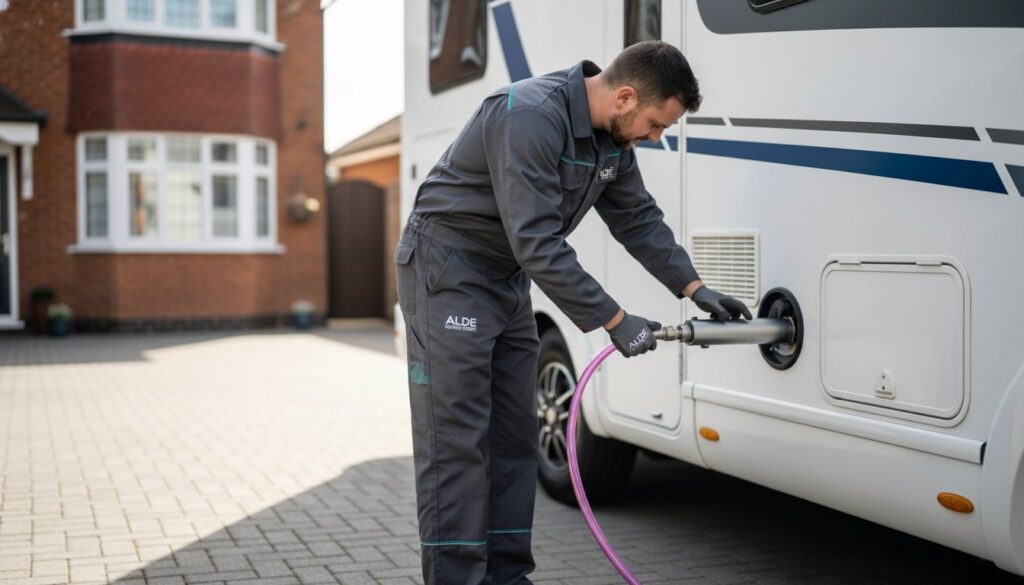
What if the fluid inside your Alde heating system isn’t just there to keep you warm, but is actually the only thing stopping your boiler from rotting from the inside out? It is a common source of anxiety for caravan and motorhome owners. You likely know that regular maintenance is vital, yet the confusion over fluid colours and the inconvenience of towing your vehicle to a service centre often leads to unnecessary delay.
This guide explains exactly why a professional alde glycol change service is a critical anti-corrosion treatment rather than just a simple fluid top-up. You’ll learn how to identify the correct five-year G12 EVO fluid, when to schedule your replacement to protect your manufacturer warranty, and how expert maintenance prevents internal system rot. We will walk you through the technical requirements and practical steps to ensure your heat distribution remains efficient and your winter trips stay perfectly comfortable.
Key Takeaways
- Understand why upgrading to 5-year G12++ Magenta fluid is the gold standard for long-term boiler protection and reduced maintenance costs.
- Discover why a professional alde glycol change service using a specialised pumping station is essential to remove the acidic residue that standard gravity drains leave behind.
- Learn how to verify your service provider’s credentials and ensure they use Alde-approved fluids to keep your manufacturer warranty intact.
- Find out how mobile specialist services in South Yorkshire provide a convenient way to maintain your heating system at your home or storage yard.
What is an Alde Glycol Change Service?
An alde glycol change service is a methodical maintenance procedure designed to safeguard the internal health of your caravan or motorhome’s heating system. It involves the complete drainage of the existing fluid and a thorough flush of the entire circuit before refilling with fresh, inhibited glycol. Whilst many owners view this as a simple antifreeze swap, it’s actually a precision anti-corrosion treatment. This process ensures that the heart of your vehicle’s comfort remains protected against the elements and chemical degradation.
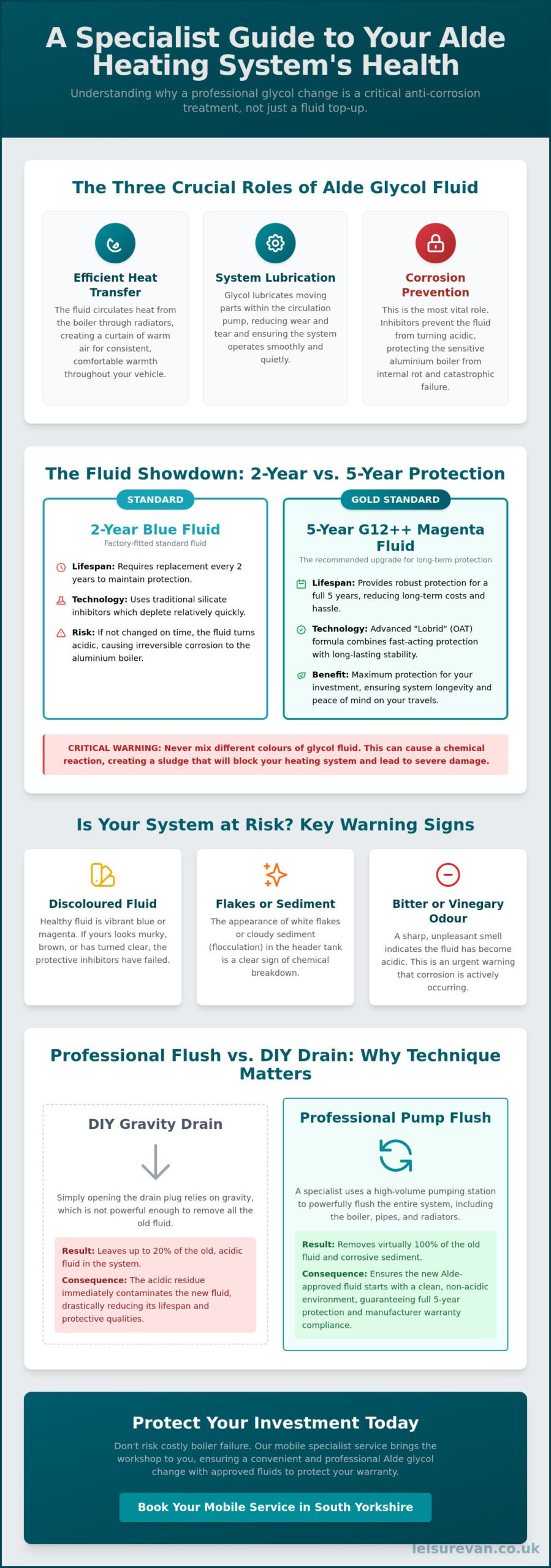
Alde systems rely on a 50/50 mix of water and ethylene glycol. This chemical blend serves three distinct purposes. First, it transfers heat from the boiler to your radiators. Second, it lubricates the moving parts within the circulation pump. Third, and most importantly, it contains chemical inhibitors that prevent the fluid from becoming acidic. Without these inhibitors, the liquid would eventually destroy the very pipes it travels through.
Unlike a car radiator which often uses cast iron or steel components, an Alde boiler is primarily constructed from aluminium. This material is exceptionally efficient at transferring heat but is hyper-sensitive to pH levels. If the glycol inhibitors expire, the fluid turns acidic and begins to eat the aluminium from the inside. This internal rot eventually leads to pinhole leaks and total boiler failure. A professional alde glycol change service ensures these inhibitors are fresh, keeping the system’s pH within the safe, alkaline range to prevent costly damage.
The Anatomy of a Hydronic Heating System
Hydronic heating works by circulating warmed fluid through a series of convector heaters hidden behind your furniture. This creates a curtain of warm air that rises along the walls. The system relies on a boiler to warm the fluid, a circulation pump to keep it moving, and an expansion tank to manage pressure. The aluminium heat exchanger inside the boiler is the most critical component. It requires a specific fluid balance to ensure heat is distributed evenly without causing metal fatigue or corrosion.
Signs Your Glycol Needs Replacing
You don’t always have to wait for the calendar to tell you it’s time for a change. Your system provides clear physical warnings. Healthy fluid is usually a vibrant blue or magenta. If it looks murky, brown, or clear, the inhibitors have likely failed. You might also spot flocculation, which appears as white flakes or sediment in the header tank. Finally, keep an eye out for a bitter or vinegary odour. This smell indicates the chemical breakdown of the glycol, suggesting an immediate service is required.
The 2-Year vs 5-Year Fluid Life: Why Timing is Critical
Most new caravans and motorhomes leave the factory with blue-tinted glycol. This is a standard choice for manufacturers looking to manage production costs, but it places a specific maintenance burden on the owner. This blue fluid is designed to last only two years. After this point, the chemical inhibitors within the liquid lose their effectiveness. Upgrading to G12++ Magenta or Purple fluid has become the industry gold standard in 2026. This superior product offers a five-year lifespan, providing longer periods of protection and reduced long-term maintenance costs for the owner.
The timing of an alde glycol change service is critical because of how these chemicals behave. Inhibitors are sacrificial. They actively work to neutralise the corrosive effects of the water and heat within your system. Once these additives are exhausted, the fluid’s pH level shifts from alkaline to acidic. In an aluminium-heavy environment like an Alde boiler, this acidity is devastating. It causes microscopic pinhole leaks in the boiler casing. By the time you notice a drop in pressure or a damp patch under the boiler, the internal damage is often irreversible.
Handling these chemicals also requires professional care. Beyond the mechanical risks to your vehicle, there are documented health risks of ethylene glycol if it is handled or disposed of incorrectly. Ensuring a specialist manages the swap protects both your equipment and your personal safety. If your vehicle is approaching its second birthday, booking an Alde heating system fluid change is the most effective way to transition to a more durable five-year protection cycle.
Understanding Corrosion Inhibitors
Modern glycol uses different technologies to protect your system. Traditional blue fluids often rely on silicates, whilst newer magenta fluids use Organic Additive Technology (OAT). G12++ is a “Lobrid” technology. It combines the fast-acting protection of silicates with the long-lasting stability of OAT. You must never mix these different colours. Doing so can trigger a chemical reaction that creates a thick, gel-like sludge, which can block the narrow channels in your radiators and header tank.
The Financial Risk of Neglect
The cost of a professional alde glycol change service is a minor investment compared to the alternative. Replacing a corroded Alde boiler can cost several thousand pounds when parts and labour are factored in. Furthermore, a documented service history is essential for maintaining your manufacturer warranty on newer vehicles. A clear record of glycol changes also significantly boosts the resale value of a motorhome, as it proves to potential buyers that the most expensive component of the heating system has been meticulously maintained.
Professional Pumping vs DIY: Evaluating Your Options
While it’s tempting to view fluid replacement as a simple weekend task, the reality of caravan plumbing makes DIY attempts risky. Most online tutorials demonstrate draining the system via the bottom bung. This method relies entirely on gravity. Unfortunately, because heating pipes often navigate complex routes over wheel arches and under furniture, gravity is rarely enough. Roughly 30% to 40% of the old, degraded fluid typically remains trapped in these low points. When you pour fresh glycol into a system containing this acidic residue, you immediately compromise the new inhibitors.
A professional alde glycol change service avoids this pitfall by using a dedicated pumping station. Instead of relying on a bucket and a bung, a specialist engineer connects a high-pressure machine to create a closed loop. This equipment forces the new fluid through the entire circuit, ensuring a 100% exchange. It’s a methodical process that guarantees the system is completely purged of old contaminants and air. This level of thoroughness is impossible to achieve with a basic gravity drain.
The Professional Pump-Out Process
The pumping station works by circulating fluid at a much higher flow rate than the standard internal pump. This pressure acts as a “power flush,” which is effective at removing any sediment or debris that has settled in the radiators over time. By maintaining a constant flow, the machine ensures that no air is introduced during the swap. This results in a perfectly primed system that provides silent, efficient heat from the moment it’s switched back on. It removes the need for hours of manual bleeding and the frustration of cold spots in your radiators.
Why DIY Often Costs More in the Long Run
The risks of a botched DIY job extend beyond mere inconvenience. If air remains trapped in the circuit, it can lead to pump cavitation. This is a condition where the pump works against air bubbles rather than liquid, causing mechanical strain and eventual failure. There’s also the physical risk of spillages. Glycol is highly toxic to pets and can cause permanent staining to caravan upholstery or carpets. Dealing with a toxic spill is a stressful experience that often costs more to rectify than the original service fee.
Choosing a professional alde glycol change service also protects your vehicle’s future value. A specialist engineer will provide a formal stamp in your service book, which is a vital piece of evidence for future buyers. It proves the heating system has been maintained to manufacturer standards. Finally, you don’t have to worry about disposal. A registered professional will transport the toxic waste to a dedicated treatment facility, ensuring you stay on the right side of environmental regulations while keeping your driveway clean.
Choosing the Right Alde Glycol Change Service Provider
Finding a reliable engineer for your alde glycol change service requires more than a quick search for the lowest price. You should prioritise technicians who’ve completed the official Alde UK training course. This specialist certification ensures they understand the specific flow rates and pressure requirements of your particular boiler model. Using an untrained individual risks damaging the delicate internal circulation pump or leaving stubborn airlocks that hinder your heating performance. A qualified expert acts as a safe pair of hands, ensuring the longevity of your equipment through technical precision.
Always confirm the specific fluid the provider intends to use before they begin. A reputable specialist will only ever use Alde-approved G12++ spec fluid. This magenta-coloured liquid is essential for maintaining your manufacturer warranty and protecting the aluminium heat exchanger from internal rot. Additionally, verify that the business is fully insured to work on your specific caravan or motorhome model. Looking for local testimonials from owners in Sheffield or South Yorkshire can also provide a reliable indicator of the engineer’s thoroughness and professional conduct.
Mobile vs Workshop: The Convenience Factor
Towing a caravan to a fixed service centre is a logistical headache. It involves significant fuel costs, hours of travel, and often losing access to your vehicle for several days. Mobile engineers offer a far more efficient alternative. They can perform the alde glycol change service on your driveway or whilst your van is in a storage yard. This on-site approach allows you to witness the fluid quality first-hand and ensures the job fits around your schedule rather than the workshop’s opening hours.
Essential Questions for Your Engineer
Before booking, ask these three questions to separate experts from amateurs. Their answers will tell you everything you need to know about their commitment to high standards:
- Do you use a specialised Alde pumping station to ensure a 100% fluid exchange?
- Is the waste glycol disposed of at a licensed environmental facility?
- Will you provide a formal stamp or certificate for my service history?
A professional will answer these questions with transparency and technical confidence. If you’re ready to protect your boiler and ensure a warm winter, you can book a professional Alde heating system fluid change to ensure your vehicle receives the meticulous care it deserves.
Specialist Alde Maintenance in South Yorkshire: The Mobile Solution
LeisureVan Service Solutions Ltd brings a specialist alde glycol change service directly to your vehicle, removing the logistical burden of visiting a fixed workshop. We understand that navigating the busy roads of Sheffield or Rotherham with a caravan isn’t how most owners want to spend their day. Our mobile engineers cover the entire South Yorkshire region, including Doncaster, Barnsley, and Worksop. Whether your vehicle is parked on your driveway, secured in a storage yard, or pitched at a local campsite, we arrive with the necessary technical equipment. This mobile approach saves you time and fuel whilst ensuring your heating system receives expert attention in its own environment.
We often suggest combining your fluid replacement with a Motorhome Habitation Service or a Caravan Habitation Service. This integrated care strategy is highly efficient. Whilst our pumping station is busy refreshing your glycol, we can perform vital safety checks on your gas, water, and electrical systems. It’s a comprehensive way to ensure your vehicle is fully prepared for the season ahead in a single, convenient appointment. Our goal is to provide a safe pair of hands for your equipment, giving you total confidence in your vehicle’s reliability.
Expert Care in Sheffield and Surrounding Areas
Our technicians are deeply familiar with the specific plumbing layouts used by major UK manufacturers like Swift and Bailey. These systems often feature complex pipe runs that require precise handling to ensure a perfect fluid exchange. We exclusively use manufacturer-approved 5-year long-life fluid to provide the best possible protection against internal boiler rot. You’ll frequently see our service vans near the Peak District, where we help owners maintain their vehicles amidst some of the region’s most popular touring spots. We take pride in delivering meticulous results that meet official Alde standards.
Booking Your 2026 Alde Service
The demand for heating maintenance usually spikes just as the temperatures begin to drop. To avoid the winter rush, we recommend booking your alde glycol change service well in advance. Planning ahead ensures you secure a date that suits your schedule and guarantees your boiler is protected before the first frost arrives. Every service we perform includes a fully stamped record for your maintenance book. This documentation is essential for protecting your manufacturer warranty and proving the vehicle’s history to future buyers. You can Book your Alde Glycol Change with LeisureVan Service Solutions Ltd today to ensure your caravan or motorhome is ready for your next adventure.
Secure Your Comfort and Boiler Longevity
Maintaining your Alde system is a choice between proactive care and reactive repair. By booking a professional alde glycol change service, you’re doing more than simply swapping fluid; you’re applying a critical anti-corrosion treatment to your boiler’s aluminium core. We’ve explored why the transition to 5-year G12++ fluid is the industry gold standard and why professional pumping stations are essential to avoid the pitfalls of DIY gravity draining.
Our Alde-trained mobile engineers bring this specialist expertise directly to your door across Sheffield, Rotherham, and the wider South Yorkshire area. We use 5-year long-life G12++ fluid as standard to ensure your manufacturer warranty remains intact and your vehicle stays warm throughout the winter. Peace of mind comes from knowing your equipment is in a safe pair of hands. Our methodical approach ensures every airlock is purged and every radiator performs at its peak.
Ready to protect your investment? Get a Professional Alde Glycol Change Quote from LeisureVan Service Solutions Ltd today. We look forward to helping you enjoy many more years of comfortable, trouble-free touring.
Frequently Asked Questions
How often should I have an Alde glycol change service?
You should schedule an alde glycol change service every two years if your system contains standard blue fluid. If you have upgraded to the long-life magenta G12++ or G12 EVO fluid, the interval extends to five years. Checking the colour in your header tank is the easiest way to identify which cycle your vehicle is currently on. Sticking to these manufacturer-recommended timelines ensures your corrosion inhibitors remain active and your boiler stays protected.
Can I mix pink and blue Alde fluid if the level is low?
No, you must never mix different colours of glycol. Mixing blue silicate-based fluids with pink or magenta OAT-based fluids can trigger a chemical reaction that creates a thick, jelly-like sludge. This blockage restricts the flow of heat and can cause the circulation pump to fail or the system to overheat. If your level is low and you’re unsure of the type, it’s safer to top up with a small amount of distilled water until a full flush is performed.
How long does a professional Alde fluid change take?
A professional alde glycol change service typically takes between 90 minutes and two hours to complete. This timeframe allows for the methodical connection of a specialised pumping station, a complete purge of the old liquid, and a thorough bleed of the circuit to remove airlocks. The exact duration depends on the complexity of your vehicle’s pipework and the number of radiators installed. Using a mobile engineer ensures this process happens efficiently on your driveway without any travel time for you.
Will a glycol change fix my noisy Alde pump?
It often helps if the noise is caused by air bubbles or degraded fluid that has lost its lubricating properties. Fresh glycol provides better lubrication for the pump’s internal bearings, which can quieten a mechanical hum. However, if the pump is making a loud grinding or rattling sound, it may indicate a mechanical failure that requires a replacement part rather than just a fluid swap. A specialist can diagnose the specific cause during the service.
Does the 5-year fluid really last 5 years in a caravan?
Yes, the five-year long-life fluid is specifically formulated to maintain its pH balance and inhibitor strength for half a decade. This durability assumes the system hasn’t been contaminated by mixing other fluids or excessively diluted with tap water. Using high-quality G12++ ensures you spend less time on maintenance whilst enjoying consistent protection against internal corrosion. It is a cost-effective upgrade that provides long-term peace of mind for motorhome and caravan owners.
Is the Alde glycol change included in a standard habitation service?
No, a fluid change is not part of a standard habitation check. A regular service includes a visual inspection of the header tank and a check for leaks, but the actual replacement of the liquid is a specialist task requiring specific pumping equipment. It is most efficient to book it as an additional item alongside your annual habitation service. This approach saves on travel costs and ensures your entire vehicle is maintained to the highest safety standards in one visit.
Can a mobile engineer change Alde fluid in a storage yard?
Yes, a mobile specialist can perform the work in a storage yard provided there is enough space around the vehicle to operate the pumping equipment. You don’t necessarily need to be present as long as the engineer has access to the interior and the header tank. This is a highly convenient option that avoids the need to tow your caravan to a fixed service centre, making it easier to stay on top of your maintenance schedule.
What happens if I never change my Alde heating fluid?
Neglecting your heating fluid leads to the chemical breakdown of vital corrosion inhibitors. Once the fluid becomes acidic, it begins to eat away at the aluminium boiler casing from the inside out. This process eventually causes pinhole leaks and total system failure, which is a significantly more expensive and complex issue to rectify than a routine preventative change. Regular maintenance is the only way to prevent this internal rot and ensure your winter comfort remains uninterrupted.