
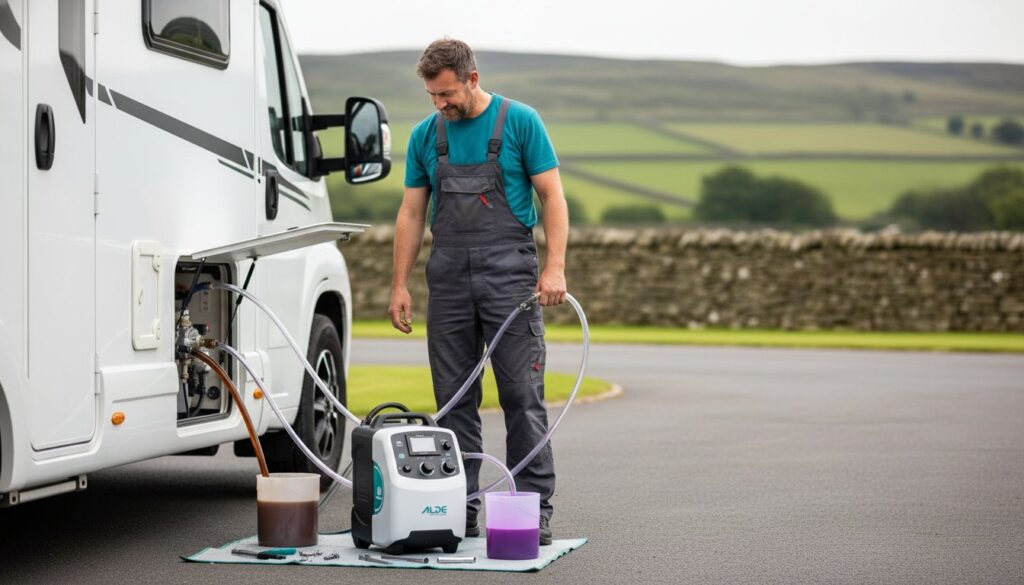
Could the colour of your heating fluid be the only thing standing between a cosy winter and a multi-thousand pound boiler replacement? It’s a question that keeps many caravan and motorhome owners awake at night, especially when faced with conflicting advice about the alde heating fluid change interval. You might have heard that if the fluid hasn’t frozen, it’s still doing its job, but the technical reality is far more nuanced.
We understand the confusion caused by different glycol colours and the genuine fear of a system failure whilst you’re away on holiday. This guide will provide the technical truth behind Alde glycol intervals so you can protect your boiler from the silent threat of internal corrosion. It’s about more than just frost protection; it’s about preserving the delicate internal components of your entire heating system through proactive maintenance.
We’ll clarify why the industry has shifted toward the 5-year G13 standard and help you identify the specific signs of degraded fluid. You’ll gain a clear understanding of how to maintain your system’s longevity, giving you total peace of mind before the temperature starts to drop.
Key Takeaways
- Understand the dual role of Heat Transfer Fluid in preventing both winter freezing and the silent threat of internal galvanic corrosion.
- Identify the correct alde heating fluid change interval for your system by debunking the myths surrounding blue, pink, and purple glycol colours.
- Learn why “clean” looking fluid can be chemically exhausted and how professional pH testing provides the only true measure of protection.
- Discover how to accurately review your service history and expansion tank levels to spot early signs of fluid degradation before damage occurs.
- See how a professional mobile flush using a specialist Alde pump station ensures a completely air-free system and handles all hazardous waste disposal for you.
Why the Alde Heating Fluid Change Interval Actually Matters
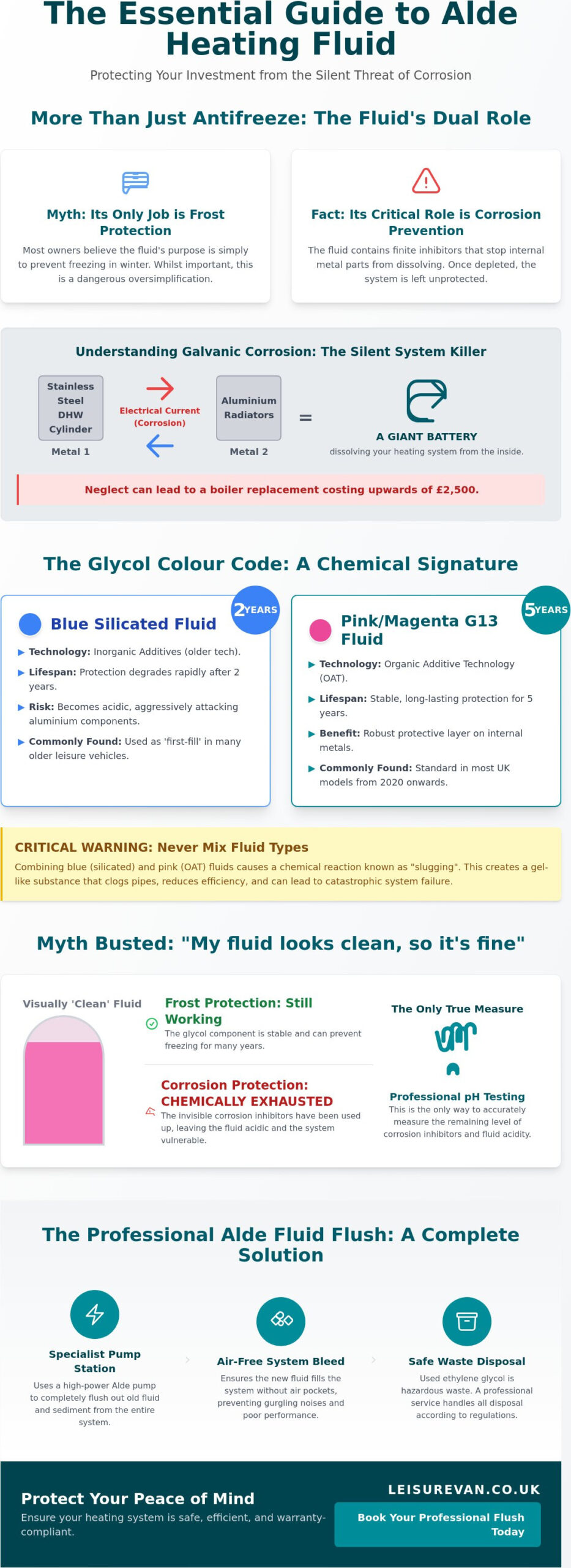
Alde Heat Transfer Fluid (HTF) is more than just a liquid in a pipe. It is a carefully engineered blend of ethylene glycol, deionised water, and a sophisticated package of chemical inhibitors. Maintaining the correct alde heating fluid change interval isn’t just about ticking a box in a service book. It’s about protecting the heart of your leisure vehicle. Whilst most owners focus on the fluid’s ability to prevent freezing during a harsh winter, its most critical job happens throughout the year. It prevents the slow, invisible destruction caused by galvanic corrosion.
The Anatomy of a Hydronic System
Modern units like the Alde Compact 3020 or 3030 use a “jacket” design. This means the central heating fluid surrounds a stainless steel domestic hot water cylinder. The rest of the system consists of aluminium radiators and rubber pipework. When you have two different metals, such as stainless steel and aluminium, connected by a liquid, you essentially create a giant battery. Without the right chemical balance, an electrical current flows between these metals. This causes the aluminium to literally dissolve from the inside out. This is why standard tap water is the enemy of your system. It contains minerals and chlorine that accelerate this process, leading to pinhole leaks and total system failure.
Antifreeze vs. Corrosion Protection
A common misconception is that if the fluid still protects against frost, it is still healthy. This is a dangerous metric to follow. The glycol component, which prevents freezing, is chemically stable and can last for many years. However, the antifreeze corrosion inhibitors are finite. These chemicals, often containing silicates or phosphates, work by “sacrificing” themselves. They coat the internal metal surfaces with a microscopic protective layer. Over time, these inhibitors are used up. Once they are gone, the fluid becomes acidic and the protection vanishes.
Neglecting the alde heating fluid change interval can be an expensive mistake. Even in 2026, manufacturers require proof of fluid changes to maintain your warranty. When you consider that a full boiler replacement can cost upwards of £2,500, the cost of a professional fluid change is a small price to pay for long-term security. It ensures your system remains efficient, quiet, and, most importantly, safe for your next adventure.
Blue vs Pink: Debunking the Glycol Colour Myths
Colour is often the first thing an owner notices in the expansion tank, yet it’s frequently the most misunderstood aspect of system maintenance. It’s a chemical signature rather than an aesthetic choice. The alde heating fluid change interval is determined by the specific chemical standard of the glycol used, not just the brand name on the bottle. Whilst many owners believe pink is simply a newer version of blue, the two fluids rely on entirely different technologies to protect your boiler.
The 2-Year Blue Fluid Reality
Many caravan manufacturers historically used blue or green silicated fluid as a “first-fill” in new vehicles. This choice often comes down to initial production costs. These fluids use inorganic inhibitors that provide excellent immediate protection but have a very short lifespan. Scientific research into the degradation of glycols confirms that as these chemicals age, they produce organic acids that can aggressively attack aluminium heat exchangers. Once the two-year mark passes, the chemical bond in blue glycol breaks down rapidly. This leaves your system vulnerable to internal pitting and a significant increase in acidity levels.
The 5-Year Pink/Purple Upgrade
The industry has largely transitioned to magenta or pink fluids that meet the G13 or G12++ standards. These modern fluids utilise Organic Additive Technology (OAT). Unlike the older silicated versions, OAT inhibitors are far more stable and don’t deplete as quickly. This is why the alde heating fluid change interval for magenta fluid is officially five years. It provides a more robust, long-lasting protective layer on the internal metal surfaces. Most UK caravan manufacturers have been installing this 5-year fluid as standard in models produced from 2020 onwards, offering owners significantly better value and reduced maintenance frequency.
Mixing these two distinct chemistries is a recipe for disaster. Combining blue silicated fluid with pink OAT fluid can cause a chemical reaction known as “slugging”. This creates a thick, jelly-like substance that can block narrow waterways in your radiators or the boiler’s internal jacket. If you’re looking to upgrade your protection, a professional Alde Heating System Fluid Change ensures all traces of the old chemistry are removed before the new G13 fluid is introduced. A full system flush is the only way to safely transition between these two types of antifreeze without risking a costly blockage.
Myth: “My Fluid Looks Clean, So It Does Not Need Changing”
It’s a common sight in caravan forums: owners claiming they haven’t changed their fluid in a decade because it “still looks like new.” This visual check is perhaps the most dangerous myth surrounding the alde heating fluid change interval. Clarity is not a reliable indicator of chemical health. Whilst the glycol itself rarely loses its ability to prevent freezing, the protective inhibitors are invisible to the naked eye. Once these are exhausted, the fluid is essentially “chemically dead,” even if it remains perfectly transparent in the expansion tank.
The pH Factor
The primary reason for system failure isn’t the cold; it’s acidity. Every time your boiler fires up, the fluid undergoes thermal cycling. This process slowly breaks down the chemical buffers that keep the liquid alkaline. According to the Official Alde Maintenance Guidelines, the fluid must maintain a specific chemical balance to protect the system. Ideally, the pH level should remain between 7.5 and 8.5. If the pH drops below 7, the fluid becomes acidic. At this point, it stops protecting the aluminium and begins to actively dissolve it, leading to internal pitting that no visual inspection can detect.
Professional engineers don’t rely on their eyes or old-fashioned hydrometers, which can be notoriously inaccurate with modern glycol mixes. Instead, we use a refractometer to measure the precise freeze protection level. However, even a perfect freeze rating doesn’t mean the corrosion protection is intact. This is why sticking to the alde heating fluid change interval is vital. Beyond the chemistry, old fluid can develop a grit-like sediment. As inhibitors precipitate out of the solution, they create abrasive particles that can wear down pump seals and cause premature mechanical failure. If you’re already experiencing symptoms like gurgling noises or cold spots, our guide to alde heating system problems can help you diagnose the root cause before booking a service.
Signs of Fluid Degradation
Whilst internal damage is often silent, there are a few physical clues that your system is struggling. If you notice any of the following, your fluid has likely reached its limit:
- Cloudiness: If the fluid in your expansion tank looks “milky” or has tiny “floaties,” the inhibitors have likely failed and are precipitating out.
- Kettling: Increased pump noise or a whistling sound from the boiler often indicates internal scaling or air pockets caused by fluid breakdown.
- Cold Spots: If your radiators have cold patches despite the boiler running at full power, it’s often a sign of sludge build-up restricting the flow.
Don’t wait for these symptoms to appear. By the time you hear the pump straining or see the fluid change colour, the corrosion process is already well underway. Maintaining the fluid based on the calendar rather than a visual check is the only way to ensure the long-term health of your boiler.
Identifying When Your System Needs a Professional Flush
Identifying the right time for a system flush requires a methodical approach rather than guesswork. Whilst the calendar is your primary guide, your heating system will often provide physical clues when the chemistry is failing. Following a simple five-step inspection can help you decide if you need to act before your next scheduled service.
- Step 1: Inspect the Expansion Tank. Check the fluid level and colour. If the level is consistently dropping or the vibrant magenta has turned to a muddy brown, the inhibitors are likely exhausted.
- Step 2: Review Your Service History. Look for the specific date of your last flush. Your alde heating fluid change interval is strictly either two or five years depending on the fluid type used. If you are approaching that deadline, the protection is fading.
- Step 3: Listen to the Pump. A healthy Alde system should be almost silent. If you hear gurgling, clicking, or a faint “kettling” sound from the circulation pump, it suggests air pockets or sediment build-up. These are classic alde heating system problems that often point to degraded fluid as the underlying cause.
- Step 4: The Smell Test. Carefully open the expansion tank cap and check for a pungent, vinegar-like odour. This is a tell-tale sign that the glycol has oxidised and the fluid has become dangerously acidic.
- Step 5: Book a Professional Service. If any of these signs are present, it is time to arrange a specialist alde heating service Sheffield owners can rely on to restore full protection without the hassle of a dealership visit.
Why a Simple Drain and Fill Isn’t Enough
Many owners consider a DIY “drain and fill” by simply opening the bottom drain tap. This is rarely effective in a hydronic system. Because of the complex layout of caravan floor heating loops and the internal “jacket” design of the boiler, gravity alone only removes about 80% of the liquid. This leaves behind a significant volume of old, acidic fluid. When you add new glycol, it is immediately contaminated by the old residue. A professional service uses a specialised pumping station. This equipment forces the new fluid through the entire circuit under pressure, ensuring a 100% exchange and purging every air lock from the system.
Annual Habitation Checks and the Alde System
We integrate Alde system testing into our standard Caravan Habitation Service to provide a complete safety overview. This includes checking the 12V and 230V heating elements simultaneously to ensure they are drawing the correct current and heating efficiently. During a fluid change, we also take the opportunity to inspect the flue and gas burner. This ensures the combustion side of your boiler is as reliable as the wet side, giving you total confidence in your equipment’s safety and performance.
Professional Alde Fluid Replacement in South Yorkshire
Securing a high-standard service for your hydronic system shouldn’t involve the stress of a dealership visit. LeisureVan provides a specialised Alde Heating System Fluid Change directly at your home or storage site. We serve owners across Sheffield, Rotherham, and the wider South Yorkshire region, bringing technical expertise to your doorstep. This mobile approach removes the risk of towing a vehicle with potentially degraded fluid and ensures your maintenance schedule stays on track.
The LeisureVan Mobile Advantage
Choosing a mobile engineer offers benefits that a traditional workshop simply cannot match. You won’t need to tow your caravan through traffic or leave your motorhome at a dealership for days on end. Instead, you can interact directly with the engineer. We encourage owners to see the quality of the fluid being removed. It’s the most transparent way to understand the health of your system. For residents in Barnsley, Doncaster, and Chesterfield, this means professional-grade maintenance fits around your schedule, not the other way around.
We use the official Alde pump station for every fluid exchange. This specialist equipment is essential for achieving air-free results, particularly in modern vehicles with complex underfloor heating loops. A standard gravity drain is insufficient; our pump station ensures the entire alde heating fluid change interval is reset with 100% fresh, G13-standard magenta fluid. This methodical process guarantees that every part of the heat exchanger and radiator circuit is protected from the moment we pack up our tools.
Environmental responsibility is a core part of our service. Ethylene glycol is a hazardous substance that requires careful handling and legal disposal. Many owners find that local recycling centres or dealerships are reluctant to accept old heating fluid due to strict regulations and high disposal costs. We handle this entire process for you. Every drop of old, acidic glycol we remove is safely contained and transported to a licensed waste facility. This gives you total peace of mind that your maintenance is as kind to the environment as it is to your boiler.
Booking Your 2026 Alde Service
Whilst many owners wait for the first frost, spring is actually the best time to refresh your system. Changing the fluid after a heavy winter of use ensures that any moisture or acidity build-up is removed before the vehicle sits idle during the warmer months. To prepare for our visit, we simply ask that you ensure we have clear access to the vehicle and a 230V electric hook-up. This allows us to run the pump station and test the heating elements thoroughly. Book your Alde fluid change in South Yorkshire today to ensure your leisure vehicle is ready for another five years of reliable, cosy adventures.
Protecting Your Boiler for the Long Term
Understanding that your heating fluid is a sacrificial protector rather than just a liquid is the first step to avoiding a costly system failure. Whilst the fluid might look clear in the expansion tank, the depletion of invisible corrosion inhibitors is a silent process. Adhering to the correct alde heating fluid change interval, whether two years for older blue glycol or five years for modern magenta G13 fluid, is the only way to ensure your aluminium heat exchanger remains intact and efficient.
As a qualified Alde technical specialist, I provide a comprehensive mobile service across Sheffield, Rotherham, and Doncaster. We use professional pumping stations to ensure a 100% fluid exchange and include full environmental disposal of your old glycol as part of the service. This methodical approach gives you total confidence that your caravan or motorhome is prepared for whatever the British weather has in store.
Don’t leave your winter comfort to chance. Request a quote for your Alde Heating Fluid Change in South Yorkshire today and enjoy the peace of mind that comes from expert maintenance. We look forward to helping you keep your adventures warm and worry-free.
Frequently Asked Questions
Can I top up my Alde system with tap water if the level is low?
You should avoid using tap water because it contains minerals and chlorine that accelerate internal corrosion. Instead, use deionised water for small top-ups to maintain the chemical balance. If you need to add a significant amount, it’s best to use a pre-mixed 50:50 solution of Alde-approved antifreeze to ensure the frost protection doesn’t drop too low.
Will my Alde warranty be void if I don’t change the fluid every 2 years?
Your boiler warranty will likely be void if you cannot provide proof that the alde heating fluid change interval has been respected. Manufacturers like Alde require these services to be documented to ensure the internal heat exchanger is protected by active inhibitors. Failing to change the fluid on time allows the glycol to become acidic, which is a common cause for rejected warranty claims.
What is the difference between G12++ and G13 fluid for Alde systems?
G13 is the current magenta standard used by Alde, whilst G12++ was the previous long-life specification. Both are chemically compatible and offer the same five-year protection against corrosion. The primary difference is in the manufacturing process; G13 uses a more environmentally friendly glycerine base. Both are perfectly safe to use and mix within your system.
How long does a professional Alde fluid change take to complete?
A professional fluid change typically takes between 90 minutes and two hours to complete. This timeframe allows us to set up the specialised pumping station, perform a full flush of the old fluid, and run the system up to temperature. We also use this time to check for any air locks and ensure the 12V and 230V heating elements are functioning correctly.
Why is my Alde heating noisy after I topped it up myself?
Noise after a DIY top-up is almost always caused by trapped air within the heating loops. Because caravan systems use complex pipework and radiator layouts, air can easily get stuck when fluid is added manually through the expansion tank. A professional pumping station is designed to force air out under pressure, which is the only way to restore silent operation.
Can I use Comma Xstream G40 or G48 in my Alde system?
Comma Xstream G40 is a magenta fluid that meets the G12++ standard, making it suitable for a five-year alde heating fluid change interval. However, Comma G48 is a blue silicated fluid with only a two-year lifespan. You should always check that any aftermarket fluid explicitly meets the G12++, G13, or VW TL 774 J specifications before adding it to your system.
Does a standard habitation check include an Alde fluid change?
A standard habitation check doesn’t include the fluid change itself, as it is an inspection-based service. We’ll check the fluid level and condition during your habitation service, but the full flush and replacement is a separate technical task. It requires different equipment and additional time to ensure the system is properly purged and refilled.
What happens if I mix blue and pink antifreeze in my caravan?
Mixing blue and pink antifreeze can cause a chemical reaction that creates a thick, jelly-like sediment known as “slugging.” This substance can quickly block the narrow waterways inside your radiators and the boiler’s internal jacket. If you’ve accidentally mixed different colours, you should arrange a professional power flush as soon as possible to prevent permanent damage to the system.