
The true cost of owning a motorhome or caravan isn’t just the initial purchase; it is the hidden expense of a missed inspection that could lead to thousands of pounds in damp repairs. When you start wondering how much for a habitation check, you are likely looking for more than just a figure. You want the peace of mind that comes from knowing your investment is safe, your warranty is intact, and your family is protected. Recent market data shows that vehicles with a full-service history and recent damp reports sell up to 40% faster, making regular maintenance a savvy financial move.
We understand that the choice between mobile services and fixed workshops can feel overwhelming. You want a service that is thorough and dependable, whilst avoiding the fear of hidden issues or invalidated warranties. This guide will help you discover the factors that determine habitation service costs and why an annual check is the most cost-effective way to protect your leisure vehicle. We will provide a clear overview of what to look for in a quality provider to ensure your vehicle remains safe, functional, and compliant throughout 2026.
Key Takeaways
- Learn how much for a habitation check by weighing the initial investment against the thousands of pounds saved through early damp detection and prevention.
- Understand how vehicle complexity, such as twin-axle configurations or integrated motorhome systems, affects the total time and labour required for a thorough service.
- Ensure your manufacturer warranty remains valid by adhering to the strict annual inspection schedules required by major UK leisure vehicle brands.
- Realise the convenience of mobile inspections that bring professional expertise directly to your home or storage site whilst maintaining the highest industry standards.
- Identify the essential safety checks and professional credentials that distinguish a high-quality, comprehensive service from a basic inspection.
Factors That Influence the Cost of a Habitation Check
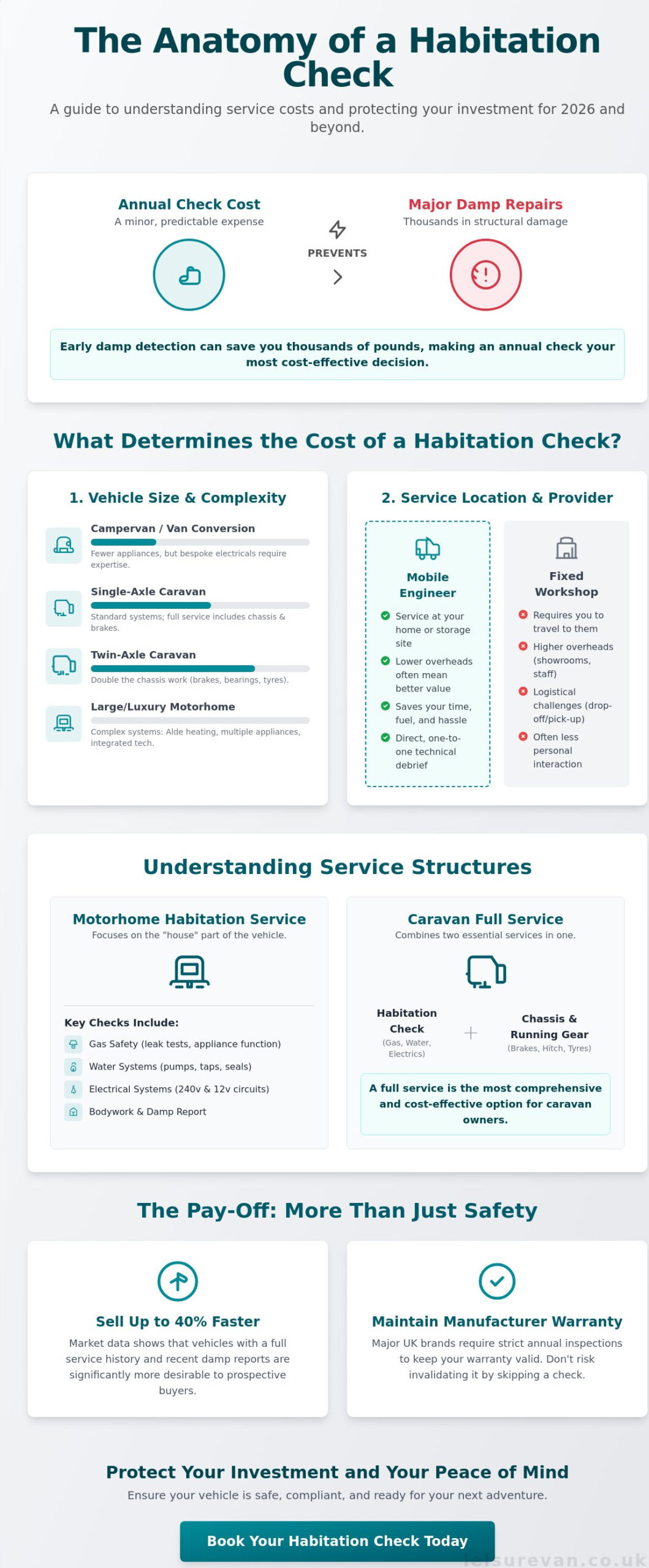
Calculating how much for a habitation check involves looking at several variables. It isn’t a one-size-fits-all service because every leisure vehicle has a unique configuration. A compact van with a simple gas ring requires less time than a luxury tag-axle motorhome with multiple heating zones and integrated entertainment systems. The physical size of the vehicle, the complexity of its onboard systems, and even the number of axles all play a role in the final price you pay for professional expertise.
Vehicle Complexity and Size
Larger motorhomes naturally demand more attention from an engineer. If your vehicle has a complex Alde heating system, multiple gas appliances, and several water points, the inspection process takes longer to complete. Every gas joint must be tested, and every water seal must be checked for potential leaks. This thoroughness ensures that your living space remains safe and functional throughout the touring season.
For those curious about What is a Campervan? and how it differs from a coachbuilt motorhome, the internal systems are often the key. Whilst campervans might have fewer appliances, they frequently feature bespoke electrical setups or solar installations that require specialist technical knowledge to inspect correctly. Custom conversions also present unique challenges. An engineer must verify that the installation meets safety standards without the benefit of a manufacturer’s standard blueprint, which can add time to the technical assessment.
The chassis also impacts the workload. Twin-axle caravans require more extensive chassis and brake labour than single-axle models. This is a critical factor; the additional set of brakes, bearings, and tyres doubles the physical work required during a full caravan service compared to a lighter, single-axle equivalent.
Mobile Convenience vs. Fixed Workshop
The location where the service is performed is another significant factor when considering how much for a habitation check. Large dealerships often carry significant overheads, including massive showrooms and high staffing costs. These expenses are frequently reflected in their service rates. In contrast, an independent mobile habitation service operates with lower overheads by bringing the equipment directly to your home or storage site.
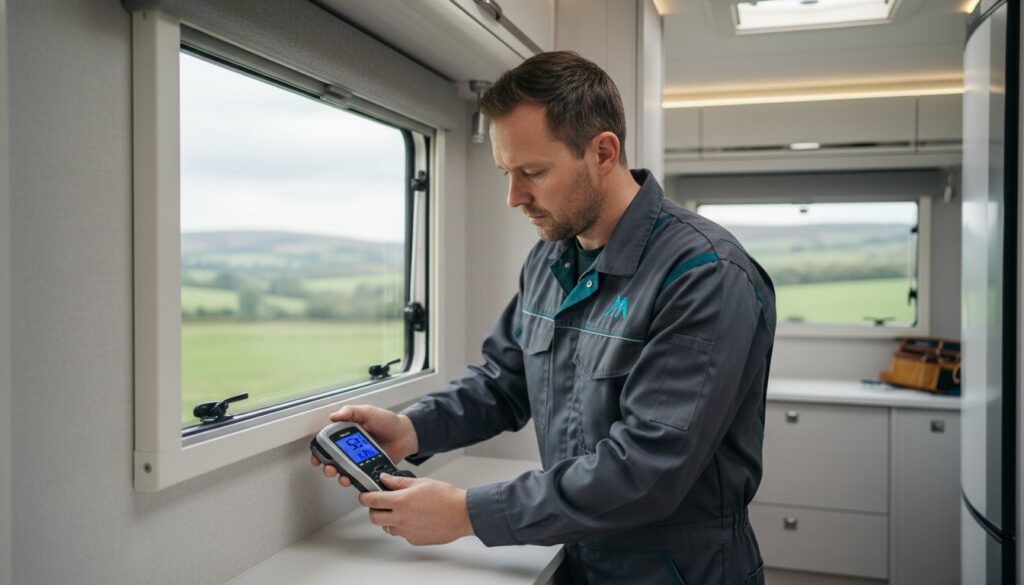
Choosing a mobile service eliminates the hassle of towing a caravan or driving a motorhome to a distant service centre. It saves you fuel, time, and the logistical headache of arranging transport after dropping the vehicle off. Many owners find that mobile engineers provide a more personal, one-to-one technical debrief. You can discuss the findings immediately, look at the damp meter readings yourself, and understand exactly what work has been carried out. This transparent approach builds a level of trust that is often missing in a large, corporate workshop environment.
Finally, the technical depth of the report influences the cost. A basic safety check covers the essentials, but a comprehensive service includes detailed damp mapping. This proactive measure identifies moisture ingress before it causes structural damage, acting as an early warning system for your investment.
Understanding the Price Structure for Different Vehicles
When investigating how much for a habitation check, it’s vital to distinguish between the various service levels available for motorhomes and caravans. A standard motorhome habitation service focuses exclusively on the “house” side of the vehicle. This includes life-critical systems like gas safety, water systems, and electrical circuits, but it deliberately excludes the engine and cab area. For caravans, the structure is slightly different, often offering a choice between a standalone habitation check or a more comprehensive full caravan service.
A caravan habitation service mirrors the motorhome equivalent by inspecting the living quarters and bodywork for water ingress. However, caravans also possess a chassis, hitch, and braking system that require regular maintenance. Combining these into a full service is usually the most cost-effective route for owners. It ensures the entire unit is roadworthy and safe in a single visit, rather than splitting the work across multiple appointments. This joined-up approach provides a complete safety record for your vehicle in one go.
Specialist reports, such as a pre-purchase inspection, often carry a premium price. These are high-stakes assessments conducted before a sale is finalised. The engineer provides an exhaustive report on the vehicle’s condition, which can be used to negotiate a fair price or walk away from a potential “damp trap.” Following Approved Workshop Scheme standards during these inspections ensures every safety-critical component is scrutinised to the highest industry level. This level of detail is essential for protecting your investment before money changes hands.
Habitation Check vs. Full Service
The difference between a habitation-only check and a full service primarily concerns the chassis. Whilst motorhome owners typically book their mechanical engine servicing at a garage and their habitation work with a specialist, caravan owners benefit from a “one-stop” approach. A full caravan service includes the habitation check plus a detailed inspection of the axles, tyres, and corner steadies. To avoid long waiting lists, many seasoned owners book their appointments in late autumn or early winter. This ensures the vehicle is ready for the first spring trip and sometimes allows for more flexible scheduling with your engineer.
Specialist Add-ons and Technical Requirements
Standard checks provide a solid foundation for safety, but certain systems require extra attention. Items like solar panel efficiency or air conditioning performance are often considered specialist add-ons. For vehicles with liquid-based heating, an Alde heating system fluid change is a vital maintenance task that should be performed every two to five years to prevent internal corrosion. Additionally, older vehicles may benefit from a dedicated electrical system test to verify the integrity of the wiring and RCD protection. These targeted services ensure your leisure vehicle remains a reliable home away from home for years to come.
The Financial Logic: Why Skipping a Check is an Expensive Mistake
Viewing a habitation inspection as a mere administrative hurdle is a mistake that can cost thousands of pounds. When owners ask how much for a habitation check, they are often surprised to learn that the cost is a fraction of the potential repair bills it prevents. Think of this service as a specialized insurance policy. A professional inspection identifies issues whilst they are still minor adjustments rather than structural disasters. Ignoring these checks doesn’t just risk your comfort; it puts your entire financial investment on the line.
Safety and liability are equally critical components of this financial logic. A gas leak or an electrical fault isn’t just a safety hazard; it’s a significant liability risk. A documented gas safety test and electrical system test provide proof that you’ve exercised due diligence as an owner. This documentation is vital if you ever need to make an insurance claim following a system failure. Without a valid habitation certificate, some insurers may question the maintenance history of the vehicle, potentially complicating a claim. If you are new to leisure vehicle ownership and want to understand exactly what is a habitation check and what the full inspection process covers, our detailed 2026 guide walks you through every stage from gas pressure tests to moisture readings.
The Hidden Cost of Damp and Water Ingress
Damp is the silent enemy of any leisure vehicle. It often spreads undetected behind wall panels, slowly rotting the wooden framework and causing floor delamination. By the time you can smell or see the damp, the damage is usually extensive. A professional damp inspection and report uses calibrated moisture meters to detect water ingress long before it’s visible to the naked eye. Finding a small leak early might result in a simple reseal. Missing that same leak can lead to a major structural rebuild costing between £5,000 and £10,000, which is a staggering price to pay for skipping a routine check.
Warranty Compliance and Resale
Most major UK manufacturers, including Swift, Elddis, and Bailey, have strict requirements to keep their bodywork warranties valid. They typically insist on an annual professional habitation check. If you miss just one scheduled service, you may find your damp warranty is instantly voided. This leaves you fully responsible for any future repairs that would have otherwise been covered by the manufacturer.
A documented history also pays dividends when it’s time to upgrade. In the current market, listings with full-service histories and recent damp reports move up to 40% faster than those without. Private buyers and dealerships alike look for a consistent paper trail to justify a premium price. A habitation certificate acts as a health passport for your vehicle, proving its structural and mechanical integrity to any future owner.
Specialist systems like the Alde heating setup also require specific financial foresight. WhilstSection 2 mentioned the technical side, the financial reality is that failing to perform an Alde heating system fluid change can lead to internal corrosion. Replacing a corroded boiler or heat exchanger is a massive expense that a simple fluid refresh prevents. Investing in these targeted maintenance tasks ensures your vehicle remains a reliable asset rather than a financial burden.
Mobile Habitation Checks in South Yorkshire and Beyond
The landscape of leisure vehicle maintenance has shifted significantly toward mobile services. Gone are the days of navigating narrow dealership gates or leaving your vehicle at a workshop for a week. When owners ask how much for a habitation check, they are increasingly finding that the answer includes the added value of extreme convenience. Mobile engineers bring the workshop to your driveway or storage pitch, saving you the fuel costs and time associated with a round trip to a service centre. This personal approach allows for a direct conversation with the person actually performing the work.
Travel fees and logistics are usually handled with complete transparency. Most mobile engineers structure their call-out charges based on specific zones or mileage from their central base. This is often a far more economical choice than the hidden costs of taking time off work or arranging a second car to follow you to a dealership. You pay for the technical expertise and the time spent on your vehicle, without subsidising the massive overheads of a luxury showroom. It is an efficient, modern way to manage your service history whilst keeping your vehicle exactly where it belongs. Owners who want to understand the full scope of what an on-site visit involves can learn more about a professional mobile habitation service for motorhomes and caravans that delivers comprehensive safety reports and valid warranty documentation directly to your driveway.
Serving the South Yorkshire Caravan Community
South Yorkshire is a major hub for leisure vehicle owners, with thriving communities in Sheffield, Barnsley, and Doncaster. Local expertise is a significant benefit here. An engineer familiar with the region understands the specific challenges faced by owners, such as the impact of the Northern climate on sealants or the common issues found in local storage sites. Serving areas like Rotherham, Wakefield, and Chesterfield, a mobile specialist can often provide quicker response times for a damp inspection and report or a gas safety test than a busy regional dealership. Having the check performed at your storage location means the vehicle is assessed in its natural environment, which can often reveal environmental factors affecting its condition. Owners in the Sheffield area can find out more about the benefits of a dedicated motorhome habitation check Sheffield service that combines expert safety inspections with the convenience of a mobile visit.
The Logistics of a Mobile Visit
Preparing for a mobile visit is straightforward and requires very little from the owner. To ensure a thorough inspection, you simply need to provide clear access and enough space to work around the vehicle’s perimeter. It’s also helpful to have a small amount of water in the system and a charged leisure battery so the engineer can test the pumps and electrical circuits. Mobile engineers use sophisticated, portable gas and electrical testing equipment that meets the exact same standards as a fixed workshop.
One of the greatest advantages of this setup is the transparency it offers. You can watch the engineer work, see the results of the moisture readings in real-time, and ask technical questions as they arise. This educational aspect helps you understand your vehicle’s systems better, leading to better long-term care. If you are ready to ensure your vehicle is road-ready and safe, you can book your motorhome habitation service with a local expert who values your time as much as your safety.
Choosing the Right Service Provider for Your Peace of Mind
Whilst the initial question is often how much for a habitation check, the real value lies in the technical competence of the engineer performing the work. Selecting a provider based solely on the lowest price can be a false economy if critical safety steps are overlooked. High-quality service providers should ideally be part of the Approved Workshop Scheme (AWS) or hold equivalent industry-recognised qualifications. These certifications ensure that the technician has undergone rigorous training and follows a standardised inspection procedure that protects both your safety and your manufacturer’s warranty.
A professional service is characterised by transparency and thoroughness. You should receive a comprehensive, written report at the conclusion of the inspection. This document must include a detailed damp map, showing moisture readings from various points around the vehicle. This data is essential for your service history and provides a clear baseline for future inspections. A reputable engineer will take the time to explain these findings in plain English, ensuring you understand the current health of your vehicle without needing a degree in mechanical engineering.
Checklist for a High-Quality Habitation Service
A comprehensive inspection is a methodical process that typically takes several hours to complete. If a provider offers a “cheap” check that is finished in 45 minutes, they are likely skipping vital safety protocols. A standard-compliant habitation service must include the following core areas:
- Gas Tightness: A pressure drop test to ensure there are no leaks in the system, alongside an inspection of all gas appliances and flame failure devices.
- Electrical Systems: Testing of both 230V AC and 12V DC circuits, including RCD trip times and battery health.
- Water Systems: Checking for leaks in pipework, testing the pump operation, and ensuring the waste system is clear.
- Bodywork and Damp: A full moisture survey of the walls, floor, and ceiling to identify early signs of water ingress.
- Fire Safety: Verifying the presence and expiry dates of smoke alarms, carbon monoxide detectors, and fire extinguishers.
The LeisureVan Difference: Expert Mobile Care
LeisureVan Service Solutions Ltd projects the personality of a seasoned, trustworthy expert who acts as a helpful guide for owners. We provide a “safe pair of hands” for your investment, combining technical authority with a friendly, approachable service. Our mobile units are fully equipped to handle complex technical requirements beyond a standard inspection. We specialise in Alde heating system fluid changes and solar panel installation, ensuring your vehicle’s most advanced systems are maintained to the highest standards.
We believe in honest communication and meticulous work. By choosing a specialist who understands the nuances of modern leisure vehicles, you gain more than just a stamp in a book; you gain the confidence to travel knowing your home on wheels is safe. It’s always wise to book your annual check early in the year. This ensures your vehicle is summer-ready and avoids the peak season rush, keeping your travel plans on track. If you are ready for a dependable, professional service that comes to you, you can book your mobile habitation check with LeisureVan today.
Protect Your Investment for the Road Ahead
Understanding how much for a habitation check is the first step toward responsible vehicle ownership. This guide has shown that the true value of an inspection lies in its ability to prevent catastrophic damp repairs and maintain your vital manufacturer warranty. Whether you own a compact campervan or a large twin-axle caravan, regular professional checks ensure your living space remains safe and functional. By identifying minor issues before they escalate, you turn a routine maintenance task into a savvy financial strategy.
LeisureVan provides a dependable solution for owners across South Yorkshire. As a qualified mobile service engineer, I bring technical authority directly to your home or storage site. From comprehensive damp inspections and reports to a specialist Alde heating fluid change service, every task is performed with meticulous attention to detail. This proactive approach gives you peace of mind and protects your vehicle’s resale value for years to come.
Don’t wait for a small leak to become a major structural issue. You can get a professional habitation check quote from LeisureVan today and ensure your next adventure is a safe one. Your leisure vehicle is a gateway to freedom; let’s keep it in peak condition together.
Frequently Asked Questions
Is a habitation check a legal requirement in the UK?
There is no legal requirement for a habitation check in the UK. Unlike the MOT for roadworthiness, this is a voluntary safety and maintenance inspection. However, most insurance providers and manufacturer warranties mandate an annual check to remain valid. It is the only way to ensure your gas, water, and electrical systems are functioning safely throughout the year.
How long does a full habitation service typically take?
A comprehensive habitation service usually takes between three and four hours to complete. Larger motorhomes with multiple gas appliances or complex heating systems may require more time. This duration allows the engineer to perform a methodical gas tightness test, a full electrical survey, and a detailed moisture report. Rushing this process often means vital safety steps are missed.
Does a habitation check include the engine and chassis of my motorhome?
A habitation check focuses exclusively on the living quarters or the “house” side of your motorhome. It does not include engine servicing, oil changes, or mechanical chassis work. For motorhomes, you should book a separate mechanical service at a garage. When considering how much for a habitation check, remember it covers life-critical systems like gas and fire safety rather than road performance.
Can I carry out my own habitation check to save money?
You can perform basic maintenance yourself, but a DIY check won’t be recognised for warranty or insurance purposes. Professional engineers use calibrated equipment, such as gas leak detectors and moisture meters, that provide accurate data. A professional habitation certificate acts as a legal record of safety that protects your resale value and ensures your manufacturer’s bodywork warranty remains intact.
Will a mobile habitation check invalidate my manufacturer warranty?
A mobile habitation check won’t invalidate your warranty as long as the engineer is appropriately qualified. Manufacturers typically require that work is carried out by a member of the Approved Workshop Scheme (AWS) or a technician with equivalent certifications. Using a mobile specialist often provides a more transparent experience whilst ensuring your vehicle stays fully compliant with all warranty conditions.
What happens if the engineer finds damp during the inspection?
If damp is discovered, the engineer will record the moisture levels in a detailed damp report and identify the likely source of the ingress. Finding damp early is actually a positive outcome of the inspection. It allows you to organise a simple reseal before the moisture causes structural rot. This proactive approach is exactly why owners ask how much for a habitation check to avoid future repair bills.
Do I need to be present whilst the mobile habitation check is being carried out?
You don’t strictly need to be present, but it is highly beneficial to be available for the final debrief. Being on-site allows the engineer to show you any specific findings, such as high moisture readings or worn gas hoses, in real-time. If you can’t be there, ensure the engineer has full access to the vehicle, including keys for all lockers and internal cupboards.
How often should I have my Alde heating system fluid changed?
You should have your Alde heating system fluid changed every two to five years. The frequency depends on the type of antifreeze used; blue fluid typically lasts two years, whilst high-quality pink fluid can last up to five. Regular fluid changes prevent internal corrosion within the boiler and pipework, ensuring the system remains efficient and reliable for winter touring.