
Did you know that between 2020 and 2021, over 850 fires were recorded in vehicles like motorhomes and caravans across the UK? It is a sobering statistic that highlights why understanding the motorhome gas safety certificate requirements UK is about much more than just ticking a box for your insurer. You want the total peace of mind that comes from knowing your family is safe whilst they sleep, yet the difference between a private check and a landlord certificate for hire platforms often leaves owners feeling confused.
We understand that you want clear, technical authority without the jargon. This guide explains exactly what the UK law requires for 2026 to ensure your vehicle remains compliant and your insurance stays valid. We will explore the specific LAV standards for Leisure Accommodation Vehicles, the hidden dangers of carbon monoxide, and how to find a qualified engineer who truly understands specialised LPG systems. By the end, you will have a straightforward roadmap to keeping your adventures safe and your paperwork in perfect order.
Key Takeaways
- Understand the legal distinction between private use and hiring out your vehicle to ensure you meet all motorhome gas safety certificate requirements UK for 2026.
- Learn what happens during a professional gas tightness test and why checking every appliance from bottle to burner is vital for your family’s safety.
- Discover the specific requirements for Landlord Gas Safety Certificates and mandatory Carbon Monoxide detectors if you plan to hire out your motorhome.
- Get practical tips on how to prepare your vehicle for a mobile inspection, including appliance access and ensuring you have sufficient gas for testing.
- Find out how a specialised Gas Safety Test integrates with a full habitation service to provide total peace of mind for your next adventure.
Understanding Motorhome Gas Safety Certificate Requirements in the UK
A motorhome gas safety certificate is a formal record confirming that your LPG appliances and pipework are leak-free and functioning correctly. It serves as a technical audit of your vehicle’s living area, verifying that everything from the regulator to the burner meets modern safety standards. Many owners mistakenly believe that a standard MOT covers these systems. However, an MOT only assesses the vehicle’s mechanical roadworthiness, such as brakes and lights. It ignores the gas hob, heater, and fridge entirely. To ensure your vehicle is truly safe, you must look specifically at the motorhome gas safety certificate requirements UK standards.
Is a Gas Safety Certificate Legally Required?
For private owners, there’s no strict legal requirement to hold a certificate in the same way you need an MOT. However, this is a grey area where insurance becomes a factor. Most UK insurers expect you to maintain your vehicle in a safe condition. If a gas-related incident occurs and you lack proof of a professional inspection, your claim could be rejected. The rules change completely if you rent out your van. Under the Gas Safety (Installation and Use) Regulations 1998, any vehicle hired for profit is treated as a rental property. This makes an annual certificate mandatory. Platforms like Camplify or Quirky Campers require this documentation before you can list your vehicle. Beyond the law, a valid record protects your manufacturer warranty and boosts resale value by proving the vehicle’s been meticulously maintained.
LPG and Leisure Accommodation Vehicles (LAV)
In the industry, motorhomes and caravans fall under the category of Leisure Accommodation Vehicles (LAV). Gas behaviour in an LAV is unique because the vehicle’s constantly subject to road vibrations and temperature fluctuations. These forces can stress joints and seals in ways a static house never experiences. This is why a specialist gas safety check is essential. A core part of the inspection is the ‘Tightness Test’, which uses a manometer to detect even the tiniest pressure drop in the system. Domestic gas engineers are often not qualified to work on these systems. You need a Gas Safe registered engineer specifically qualified in the LAV category to ensure the work’s compliant and safe.
The Legal Framework: Private Ownership vs. Hiring Out
The distinction between private use and commercial hire is the most critical factor in determining your legal obligations. If you use your motorhome solely for personal holidays, the law doesn’t strictly mandate a certificate. However, as soon as you accept payment for someone else to use your vehicle, it’s classified as a rental property. In this scenario, The Gas Safety (Installation and Use) Regulations 1998 apply. This legislation requires you to hold a valid Landlord’s Gas Safety Certificate, which is the motorhome equivalent of a domestic CP12. This document proves that all gas appliances are safe for public use.
To remain compliant in 2026, you must renew this certificate every 12 months. This isn’t just a recommendation; it’s a firm requirement for hire platforms and most commercial insurance policies. Failing to provide this proof can lead to severe consequences. Your insurance could be invalidated in the event of a fire, and you may face personal legal liability if a guest is injured due to a faulty system. For vehicles with fixed combustion appliances, such as gas heaters or water boilers, the installation of a functional Carbon Monoxide detector is also a mandatory safety requirement.
Qualifications: Finding the Right Gas Safe Engineer
It’s a common mistake to assume any domestic plumber can sign off your motorhome. Most domestic engineers aren’t qualified to work on the high-pressure LPG systems found in leisure vehicles. When you hire an engineer, you should always check the back of their Gas Safe ID card. You’re looking for specific categories: ‘LPG’ and ‘Caravans’. For hire-fleet certification, the engineer must also hold the ‘LAV’ (Leisure Accommodation Vehicle) qualification. This ensures they understand the unique ventilation and vibration-resistance standards required for a vehicle in motion. If you’re unsure about your current setup, you can request a professional safety assessment to verify your compliance.
Insurance and Warranty Implications
Insurance providers view unauthorised gas work or a lack of documented maintenance as a significant risk. If you can’t prove that your system has been professionally inspected, you’re essentially self-insuring against any gas-related disasters. Furthermore, most motorhome manufacturers require an annual habitation check to keep your warranty live. This check usually includes a gas safety inspection as standard. A professional certificate acts as the ultimate ‘proof of care’, providing future buyers with documented evidence that the vehicle’s gas systems have been maintained to the highest safety standards.
What is Included in a Motorhome Gas Safety Inspection?
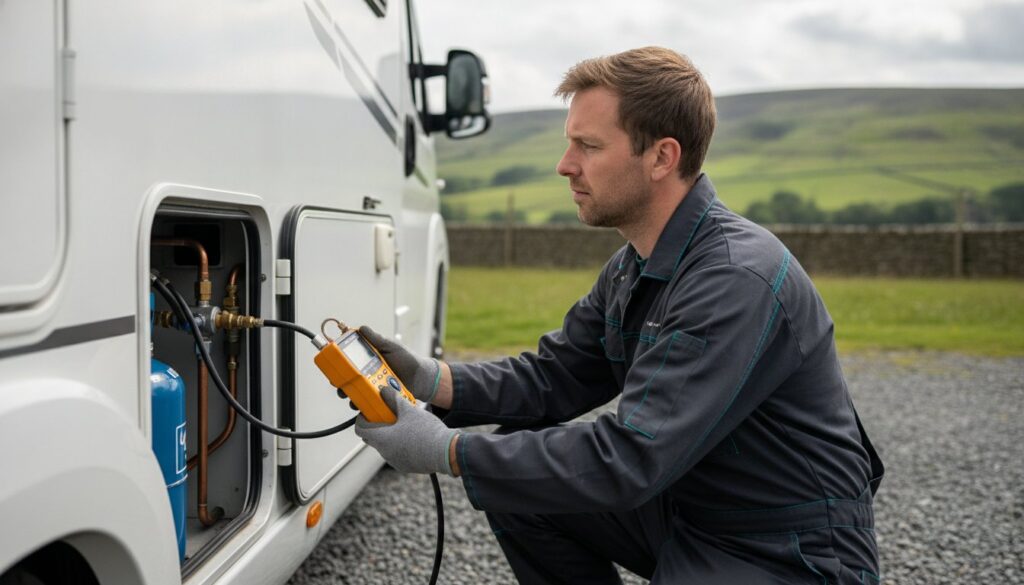
A professional inspection is far more than a quick sniff for gas. It’s a structured technical audit designed to meet the rigorous motorhome gas safety certificate requirements UK standards. The process begins with a gas tightness test. A qualified engineer uses a manometer to measure pressure drops within the system. If the pressure holds, the system’s sealed; if it drops, there’s a leak that must be found and fixed. This test covers everything from the gas bottle connection right through to the individual burner jets.
Beyond leaks, we examine the condition of your regulators and high-pressure hoses. These components have a limited lifespan. Rubber hoses, for example, can perish or crack due to UV exposure and temperature swings. Most industry standards recommend replacing hoses every five years to prevent sudden failure. We also check that the regulator is providing the correct pressure for your appliances, as an incorrect flow can lead to inefficient burning or dangerous flame behaviour. This level of detail is a core part of our gas safety checks.
The Technical Testing Process
Every appliance undergoes a functional check. We pay close attention to Flame Failure Devices (FFDs) on hobs and ovens. These safety features automatically cut the gas supply if the flame blows out, preventing your van from filling with unburnt gas. We also measure burner pressure and gas rates to ensure complete combustion. A visual inspection of the copper pipework is equally vital. We look for corrosion or physical damage caused by the constant vibration of travel, ensuring that every joint remains secure.
Carbon Monoxide and Ventilation Standards
Safety isn’t just about keeping gas in; it’s about getting waste products out. Following the Gas Safety (Installation and Use) Regulations 1998, we perform ‘spillage’ tests on flued appliances like water heaters and space heaters. This ensures poisonous gases escape the vehicle rather than lingering in the living area. We also verify that fixed ventilation points, such as floor vents and skylights, are clear of blockages. Finally, we check the placement and expiry dates of your Carbon Monoxide alarms. If you want to ensure your system is fully compliant, integrating this check into a habitation service is the most efficient approach for any owner.

Preparing for Your Inspection: A UK Owner’s Checklist
Preparing for a mobile engineer’s visit ensures the inspection is efficient and thorough. When we arrive at your home or storage site, we need clear access to every part of the gas system to meet the motorhome gas safety certificate requirements UK standards. A little bit of preparation goes a long way in providing the peace of mind you need for your next trip. It prevents delays and allows us to focus entirely on the technical integrity of your vehicle.
Start by clearing storage lockers that house your gas bottles or run along pipework routes. We must be able to inspect the regulator, hoses, and all visible joints for signs of wear or corrosion. Similarly, ensure that the areas around your hob, oven, and fridge are clear. If your appliances use electronic ignition, check that your leisure battery is charged. We cannot test the functionality of a boiler or fridge if the ignition system lacks power. Most importantly, verify that you have sufficient gas in your bottles. We need to run all appliances simultaneously to test the system under full load.
The Day of the Mobile Service
On the day of your service, try to park the motorhome on a level surface. This is vital for accurately testing absorption fridges and ensuring that flues for heaters are operating at the correct angles. A professional gas safety test typically takes between 45 and 60 minutes. During this time, we’ll be moving through the vehicle to check every connection. If a component fails to meet safety standards, we may issue a ‘Warning Notice’. This doesn’t mean your holiday is over; it’s a professional safeguard that identifies exactly what needs to be repaired to keep your family safe. You can schedule your inspection today to ensure your vehicle is ready for the road.
Documentation and Record Keeping
Once the inspection is complete, you’ll receive a formal certificate. This document should clearly list all appliances tested, the engineer’s Gas Safe registration number, and the results of the tightness test. We recommend organising a dedicated ‘van folder’ to keep this alongside your damp reports and electrical tests. Having a complete history of professional maintenance is a significant advantage when it comes to resale. It proves to any future owner that you’ve prioritised safety and followed the correct protocols. If you’re based in our service area, you can book your mobile gas safety check in South Yorkshire to get your documentation up to date.
Professional Gas Safety Services with LeisureVan Service Solutions
Managing the motorhome gas safety certificate requirements UK standards doesn’t have to be a logistical headache. LeisureVan Service Solutions brings technical expertise directly to your doorstep, saving you the time and hassle of driving to a fixed workshop. Choosing a mobile service is the most convenient way to handle your compliance. You don’t have to worry about the logistics of moving your vehicle or losing it for several days. We come to your home or storage site, performing the inspection whilst you get on with your day. This direct approach allows for clear communication. You can speak to the engineer who actually performed the test, getting immediate feedback on the health of your LPG system.
Our ‘Safe Pair of Hands’ approach means LeisureVan Service Solutions prioritises transparency and integrity. Whether we’re checking a simple hob or a complex Alde heating system, we explain our findings in plain English. We understand that your family’s safety is the priority. This is why we provide meticulous documentation that meets all motorhome gas safety certificate requirements UK standards for 2026. This professional record is essential for both your insurance and your own peace of mind. We proudly serve the South Yorkshire region, covering Sheffield, Rotherham, Barnsley, and Doncaster with dependable, local expertise.
Why Choose a Specialist Mobile Caravan Engineer?
A specialist mobile engineer understands that a motorhome is a complex ecosystem. LeisureVan Service Solutions has specific expertise in systems that domestic plumbers or general mechanics simply don’t see. From Alde heating fluid changes to solar integration, we look at how your gas systems interact with your electrical setup. You get the benefit of technical authority delivered with the personal touch of a dedicated specialist. This ensures that every component is functioning as intended, from the regulator in your gas locker to the flue on your roof. For many owners, the most efficient route is to integrate this check into a full motorhome habitation service.
Next Steps for Your Motorhome Safety
Don’t wait for the summer rush to ensure your vehicle is safe. Scheduling your annual inspection early means you’re ready for the road as soon as the holiday season starts. For the ultimate level of protection, many owners choose to combine their gas check with a damp inspection. This dual approach identifies potential structural and safety issues before they become expensive repairs. It’s the best way to maintain the value of your investment and ensure your vehicle remains a safe environment for your family. If you’re ready to secure your compliance and safety, you can Request a service booking today.
Secure Your Next Adventure with Professional Gas Safety
Ensuring your vehicle meets the motorhome gas safety certificate requirements UK standards is the most effective way to protect your family and your investment. Whether you’re navigating the strict legal rules for hiring out your van or simply seeking peace of mind for private trips, a professional audit is essential. You now understand the technical depth required for a valid certificate, from the critical gas tightness test to the verification of mandatory carbon monoxide alarms. These steps are vital for maintaining both safety and insurance validity.
We offer a fully mobile service across Sheffield, Doncaster, and Barnsley, bringing technical authority directly to your driveway. As a fully qualified LPG and LAV engineer, we provide the comprehensive safety reports you need for total compliance. Don’t leave your safety to chance before your next getaway. Book Your Mobile Motorhome Gas Safety Test in South Yorkshire today and enjoy the road with complete confidence. Your safe travels are our priority.
Frequently Asked Questions
Is a gas safety certificate a legal requirement for a motorhome in the UK?
For private owners, a certificate isn’t a strict legal requirement, but it is mandatory if you hire your vehicle out for profit. Under the Gas Safety (Installation and Use) Regulations 1998, any motorhome used for hire must have an annual Landlord’s Gas Safety Certificate. Even for private use, meeting motorhome gas safety certificate requirements UK standards is often a condition of your insurance policy to ensure the vehicle remains in a safe, roadworthy condition.
How much does a motorhome gas safety certificate cost in 2026?
Industry rates for a professional gas safety inspection vary depending on your location and how many gas appliances your vehicle has. Whilst some engineers charge a flat fee for the visit, others may adjust the price if you have multiple items like ovens, fridges, and space heaters to test. It’s often most cost-effective to combine this check with a full habitation service to ensure all systems are audited at once.
Can any plumber issue a motorhome gas safety certificate?
No, only a Gas Safe registered engineer with specific qualifications for LPG and Leisure Accommodation Vehicles (LAV) can perform this work. Domestic plumbers are usually only qualified for natural gas in static homes. Before any work begins, you should check the back of the engineer’s ID card to ensure they hold the correct ‘Caravans’ and ‘LPG’ categories required to work on your motorhome’s unique systems safely.
What is the difference between a habitation check and a gas safety test?
A habitation check is a broad health check of the entire living area, whereas a gas safety test is a dedicated technical audit of the LPG system. The habitation check includes damp testing, electrical safety, and water system checks alongside a basic gas inspection. A standalone gas safety test provides a more detailed analysis, including appliance pressure checks and flue spillage testing, which is essential for hire compliance.
How often should I have my motorhome gas appliances serviced?
You should have your gas appliances professionally inspected every 12 months to ensure they remain safe and efficient. Regular servicing prevents the buildup of soot in burners and ensures that safety features like Flame Failure Devices (FFDs) are working correctly. This annual rhythm is the industry standard for maintaining motorhome gas safety certificate requirements UK compliance and protecting your manufacturer warranty from being invalidated due to lack of maintenance.
Do I need a gas safety certificate to sell my motorhome privately?
You don’t legally need a certificate to sell a motorhome privately, but having one makes the vehicle much easier to sell. It provides the buyer with documented ‘proof of care’ and reassures them that the vehicle is safe to sleep in from day one. Many savvy buyers now insist on seeing a recent gas safety report and damp check before they are willing to commit to a purchase.
What happens if my motorhome fails its gas safety inspection?
If your vehicle fails, the engineer will issue a ‘Warning Notice’ and explain exactly which components are unsafe. Depending on the severity of the fault, the engineer may need to disconnect the faulty appliance or the entire gas supply to prevent an accident. Once the necessary repairs are completed by a qualified professional, the system can be retested and a pass certificate can then be issued.
Is a Carbon Monoxide alarm mandatory for the gas safety test?
Yes, a functional Carbon Monoxide alarm is a mandatory requirement for any motorhome being hired out under UK landlord regulations. For private owners, whilst not strictly a legal requirement for the test itself, no professional engineer would recommend using a gas-equipped vehicle without one. The alarm must be within its expiry date and correctly positioned to provide an early warning of any dangerous combustion leaks.