
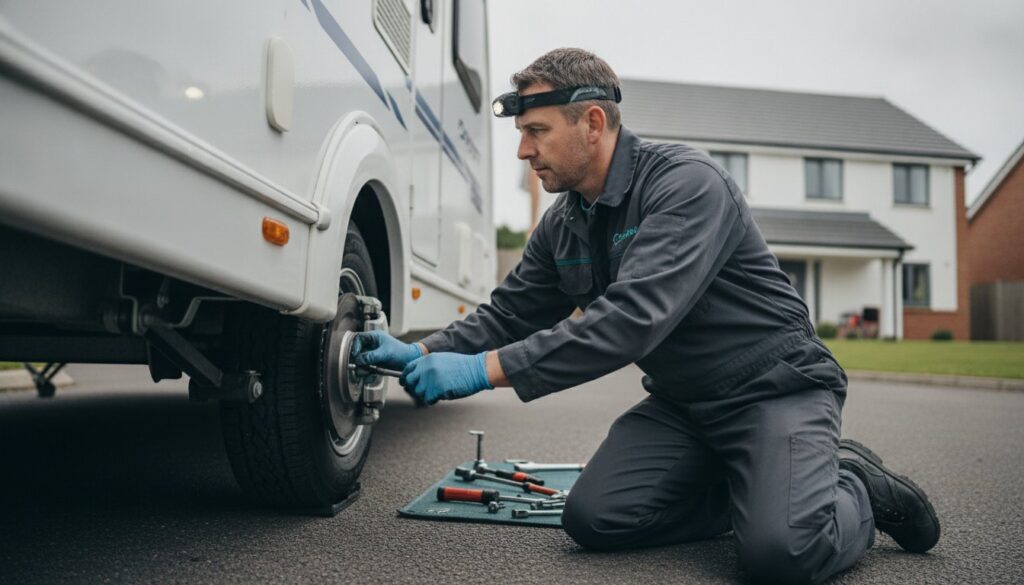
What if the most critical safety component of your caravan is the one you rarely actually see? Whilst many owners focus on interior comforts, the steel frame and running gear beneath your feet are what truly determine whether your holiday starts with a smile or a breakdown on the hard shoulder. It’s easy to feel a sense of anxiety when towing at speed, especially if you aren’t sure whether your caravan chassis maintenance is up to date or if winter storage has allowed hidden damage to take hold.
We understand that the technical side of caravanning can feel overwhelming, particularly when trying to distinguish between a habitation check and a dedicated chassis service. This guide is designed to give you total peace of mind. You’ll learn how to inspect your chassis components, follow a practical DIY maintenance checklist, and gain the confidence to know exactly when to call in a professional mobile engineer. By the end, you will have a clear understanding of how precision calibration keeps your caravan stable, safe, and ready for the road.
Key Takeaways
- Distinguish between habitation checks and chassis-only services to ensure the mechanical foundation of your caravan remains roadworthy.
- Identify the critical areas of your braking system and tyres that require regular inspection to prevent failures whilst towing at speed.
- Implement a simple DIY pre-journey checklist to catch visible issues with your hitch and handbrake before you leave your driveway.
- Understand why professional caravan chassis maintenance requires a full brake strip-down and how mobile servicing offers a convenient, expert solution.
- Learn why the “Annual Rule” and proper seasonal timing are vital for maintaining your warranty and ensuring your caravan is ready for summer.
What is Caravan Chassis Maintenance and Why is it Critical?
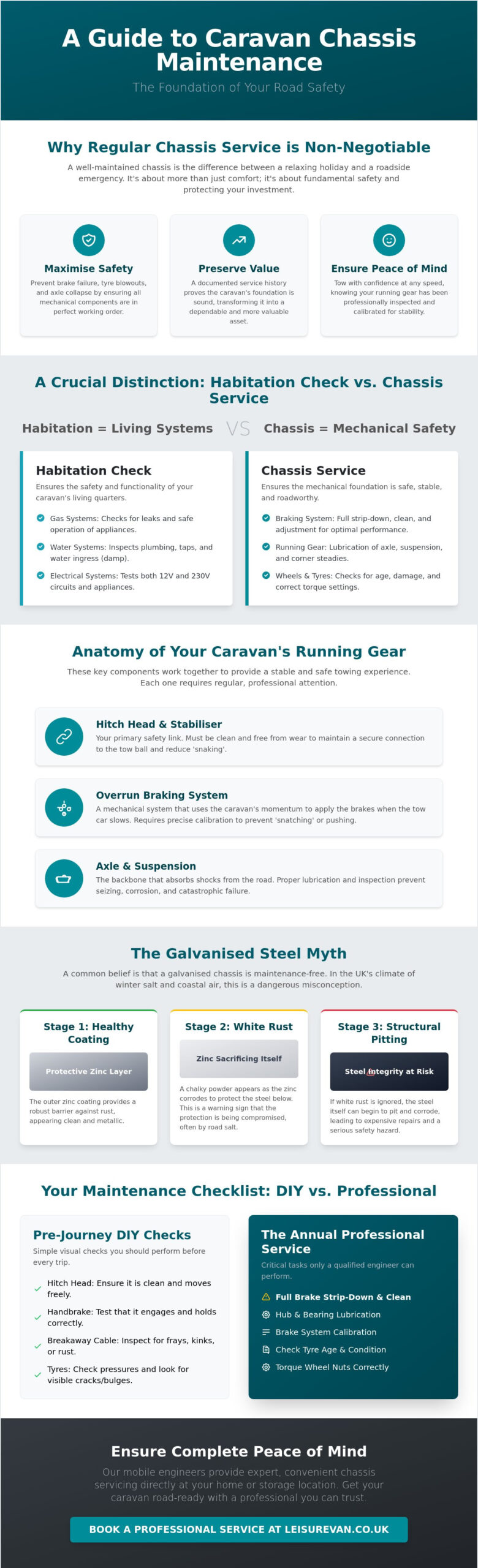
Caravan chassis maintenance is the systematic inspection, lubrication, and adjustment of your vehicle’s structural frame and mechanical running gear. When you tow a Caravan (towed trailer), you are responsible for more than just the comfort of your living quarters. You are managing a heavy piece of machinery that must perform reliably at 60mph. Whilst many owners prioritise a habitation check, it is vital to understand that this is not the same as a chassis service. A habitation check ensures your gas, water, and electrical systems are safe. A chassis service ensures your caravan actually stays on the road.
Safety is the primary driver behind this work. Neglected running gear leads to brake failure, tyre blowouts, or even axle collapse. Beyond the immediate physical risks, regular caravan chassis maintenance preserves the resale value of your leisure vehicle. A documented service history proves to future buyers that the foundation of the caravan is sound. It transforms an aging asset into a dependable investment. For more advice on keeping your vehicle in peak condition, you can explore our latest guides on our blog.
The Core Components of Your Running Gear
The running gear is a complex assembly designed to handle immense stress. The axle tube and suspension system act as the backbone, absorbing shocks from uneven road surfaces and potholes. Without proper lubrication and inspection, these parts can seize or corrode. The overrun braking system is equally essential. It uses a damper to apply the caravan’s brakes automatically when the tow car slows down. If this system is poorly adjusted, you risk “snaking” or increased stopping distances. Your hitch head and stabiliser are your primary safety links; they must be free from debris and wear to maintain a secure connection to your tow ball.
Galvanised Steel: Myths vs Reality
There is a common misconception that a galvanised chassis is maintenance-free. This is a dangerous myth in the UK climate. Our roads are frequently treated with aggressive salt and grit during winter, which can eventually compromise the protective zinc coating. You may notice “white rust”—a chalky, powdery substance on the metal. This is the zinc sacrificing itself to protect the steel underneath. If this oxidation is ignored, it can lead to structural pitting. Regular cleaning and professional inspections catch these issues before they require expensive remedial work. A simple visual check isn’t enough; you need an expert eye to ensure the integrity of the metal remains intact after years of storage or salty coastal trips.
Key Areas of the Chassis Requiring Regular Attention
Understanding the specific components that keep your caravan rolling safely is the first step in effective caravan chassis maintenance. Whilst the steel frame provides the structure, the moving parts of the running gear do the heavy lifting. These areas are exposed to constant vibration, road grime, and moisture, making regular intervention essential. A proactive approach prevents small issues from becoming dangerous mechanical failures.
The braking system is perhaps the most critical area. Unlike a car, caravan brakes are often hidden inside drums, making it impossible to see wear without a strip-down. Over time, brake shoes can become glazed or contaminated with grease, reducing their effectiveness. Cables can also stretch or corrode, leading to uneven application. For a detailed breakdown of these mechanical systems, this Caravan Maintenance Guide offers excellent context on annual requirements.
Your hitch and drawbar require a delicate balance of cleanliness and lubrication. The hitch head must move freely to engage the tow ball securely. Similarly, corner steadies and their winding mechanisms are prone to seizing if they aren’t greased regularly. A seized steady is more than just an inconvenience. It can lead to structural strain on the chassis if you’re forced to use excessive pressure to level the van. Keeping these parts moving freely ensures your setup remains stress-free.
Braking System Calibration
The overrun hitch is a clever piece of engineering that activates the caravan brakes when it senses the tow vehicle slowing down. If you notice “snatching” or feel the caravan pushing the car whilst braking, the system likely needs adjustment. The breakaway cable acts as your final fail-safe. It must be in perfect condition, free from frays or rust, to ensure the brakes engage if the caravan ever becomes detached. Regular calibration keeps these systems working in harmony.
Tyre Safety for Towed Vehicles
Caravan tyres are unique because they often “age out” before they “wear out”. Even if the tread depth looks legal, the rubber degrades over time. Look for UV cracking or flat spots, which frequently occur after long periods of winter storage. Incorrect tyre pressure is a leading cause of “snaking” on the motorway. Maintaining the manufacturer’s recommended PSI provides the stability needed for safe towing. Check your sidewall integrity every season to avoid a high-speed blowout.
If you’re unsure about the state of your running gear, booking a professional Chassis Only Service provides the technical expertise needed to ensure every component is inspected and torqued correctly.
How to Perform Basic DIY Chassis Checks
Whilst a professional service is essential for internal mechanical adjustments, performing your own interim checks ensures your vehicle remains safe between annual visits. Consistent caravan chassis maintenance starts on your driveway with a thorough visual walk-around. This proactive habit allows you to spot external wear or damage before it develops into a roadside emergency. By monitoring the condition of your running gear, you gain a deeper understanding of your caravan’s mechanical health.
Begin by testing the handbrake whilst the caravan is stationary. It should move smoothly and feel firm when engaged; if it pulls up too high or feels loose, the linkage may require professional adjustment. Next, inspect your 13-pin or twin 7-pin electrical plugs. Look for green corrosion on the copper pins and ensure the protective cover closes tightly. A quick spray of contact cleaner can prevent lighting failures during your journey. Finally, pay close attention to the hitch head. Use a clean cloth and brake cleaner to remove any grease or debris from the stabiliser pads. Contaminated pads will groan and fail to provide the friction needed to prevent snaking.
A Step-by-Step Pre-Tow Inspection
Examine the breakaway cable along its entire length for any signs of fraying, kinks, or corrosion that could compromise its strength in an emergency.
- Step 1: Inspect tyre pressures using a reliable gauge and ensure wheel bolts are tightened to the manufacturer’s specific torque setting using a calibrated torque wrench.
- Step 2: Test all road lights, including indicators, brake lights, and fog lamps, ideally with a partner or by using a reflective surface to confirm they are bright and functional.
- Step 3: Once coupled to the tow car, verify that the hitch safety indicator is showing ‘green’, confirming the internal mechanism has fully locked onto the tow ball.
Maintaining Corner Steadies and Moving Parts
The corner steadies are often neglected until they seize. To keep them functional, clean the worm drive with a stiff brush to remove road grit before applying a fresh layer of lithium-based grease. This ensures a smooth winding action and prevents the mechanism from stripping its thread under load. Similarly, the jockey wheel requires regular attention. Lubricate the internal thread and the handle pivot to ensure you can easily adjust the caravan’s height during uncoupling. Whilst you are underneath, check the wooden floor near the chassis mounting points. Look for sponginess or gaps, which are early signs of floor delamination that could eventually affect the structural stability of the caravan body on its frame.
Professional Mobile Chassis Servicing: What to Expect
Booking a professional mobile engineer takes the stress out of caravan chassis maintenance. The most significant advantage is convenience. You don’t need to navigate narrow workshop entrances or spend hours towing your vehicle across the county. We bring the workshop to your driveway or storage pitch. This allows you to witness the thoroughness of the inspection first-hand, providing a level of transparency that traditional workshops often lack.
A professional service goes far deeper than a simple visual inspection. It involves a full brake strip-down and adjustment. We remove the brake drums to clean out dust, inspect the shoes for wear or glazing, and check the condition of the return springs and expanders. This is a task DIYers should avoid; incorrect reassembly can lead to brake failure or “snatching” whilst on the road. We also perform critical moisture checks at the chassis-to-floor interface. This area is a common point for water ingress, which can lead to floor delamination if not caught early. Finally, every structural bolt is torque-tested to precise manufacturer specifications, ensuring the entire frame remains rigid and secure.
Why Some Tasks Must Be Professional
Safety is the non-negotiable reason for choosing professional care. Incorrectly adjusted brake shoes can overheat, leading to brake fade or even wheel bearing failure. We use specialist tools to check axle alignment and suspension health, identifying subtle issues that the naked eye might miss. Additionally, most insurance policies and manufacturer warranties require a professional service stamp. Without this documented proof of maintenance, you may find yourself unprotected in the event of a claim.
The LeisureVan Approach to Chassis Care
We take a methodical approach to every vehicle we visit. Our team understands the specific challenges of the South Yorkshire road network. The local prevalence of deep potholes can cause significant impact damage to axles and dampers. We pay extra attention to these components during our full caravan servicing visits. You receive a detailed report for your service history, giving you total peace of mind that your caravan is roadworthy and safe.
Don’t leave your safety to chance before your next big trip. You can book our expert Chassis Only Service today to ensure your running gear is in peak condition.
Scheduling Maintenance: When to Book Your Service
Adhering to the ‘Annual Rule’ is the industry standard for caravan chassis maintenance. Even if your touring is limited to a few hundred miles a year, the mechanical components of your running gear are constantly affected by time and environment. Grease can dry out, rubber seals can perish, and brake linings can bond to drums if left stationary for too long. A professional service every 12 months ensures your vehicle remains roadworthy and protects the validity of your manufacturer’s warranty.
Timing your service is just as important as the service itself. Whilst some owners prefer an autumn check before winter storage, most experts recommend a spring service. This approach ensures that any issues caused by winter damp or temperature fluctuations are resolved before your first major trip. It provides the most relevant “road-ready” status for the peak summer season. However, you should never wait for an annual date if you notice ‘red flag’ symptoms. Unusual groaning from the hitch, a handbrake that requires more effort than usual, or a caravan that feels “heavy” whilst braking all require immediate professional attention.
Local Considerations for South Yorkshire Owners
For owners in Barnsley, Rotherham, or Sheffield, winter storage often means dealing with high humidity and road salt from local gritting. These conditions are particularly harsh on moving parts like corner steadies and brake linkages. If your caravan is stored on a tight driveway or in a restricted access facility, mobile caravan servicing in Sheffield and the wider South Yorkshire area is the ideal solution. It removes the stress of towing a potentially unroadworthy vehicle through city traffic just to reach a workshop. We come to you, ensuring your chassis is prepared for the hills of the Peak District or a long haul to the coast.
Booking Your Professional Check
Organising your maintenance around your touring calendar is the best way to ensure a stress-free season. When you are ready to book, please have your caravan’s make, model, and year of manufacture to hand. This allows us to ensure we have the correct specifications for your specific axle and braking system. For total peace of mind, many of our clients choose to combine their mechanical inspection with a habitation check. This full caravan service provides a complete safety profile of your vehicle, covering everything from gas safety to tyre integrity. Contact LeisureVan today to secure your appointment and enjoy your next holiday with the confidence that comes from expert care.
Secure Your Next Touring Adventure with Confidence
Proactive care is the foundation of every safe caravan holiday. By combining regular DIY visual inspections with an annual professional service, you protect your vehicle from the hidden dangers of corrosion and mechanical wear. You now understand that the precision of your braking system and the integrity of your tyres are far too important to leave to chance. Consistent caravan chassis maintenance doesn’t just prevent breakdowns; it ensures your caravan remains a dependable asset for years to come.
As a qualified mobile service engineer and a specialist in AL-KO and BPW chassis, I provide the technical expertise needed to keep your running gear in peak condition. We service Sheffield, Rotherham, and the wider South Yorkshire area, bringing professional tools and thorough inspections directly to your doorstep. This level of dedicated care provides total peace of mind before you hitch up and head for the coast.
Don’t wait for a mechanical failure to disrupt your travel plans. Book your mobile caravan chassis service with LeisureVan today and enjoy the freedom of the road with a caravan that is truly roadworthy. Your next great adventure starts with a safe foundation.
Frequently Asked Questions
Do I really need a chassis service if I haven’t used the caravan much this year?
Yes, you still need an annual service because mechanical parts degrade even when stationary. Brake shoes can bond to the drums and grease in the wheel bearings can separate or dry out over time. Regular caravan chassis maintenance ensures that these moving parts don’t seize during storage. It also allows an engineer to check for flat spots on tyres or perished rubber components that may have failed whilst the vehicle was idle.
Can I grease my own hitch head if I have a stabiliser fitted?
You must never apply grease to the hitch head if your caravan is fitted with a modern stabiliser. These systems rely on friction pads gripping the tow ball to prevent snaking. Introducing grease or oil will contaminate the pads and render the stabiliser completely ineffective. If you accidentally grease the hitch, you will need to replace the pads and thoroughly clean the tow ball with brake cleaner before towing again.
What is a breakaway cable and how do I know if it’s working?
A breakaway cable is a thin steel safety line that triggers the caravan’s brakes if it becomes detached from the tow car. It is a legal requirement for most caravans. You can tell it is functional by inspecting the plastic coating for cracks and the steel wire for frays or kinks. If the cable is damaged, it may snap before applying the brakes, so it should be replaced immediately.
How often should I replace my caravan tyres, even if they have plenty of tread?
Caravan tyres should generally be replaced every five years regardless of how much tread depth is remaining. Unlike car tyres, they often suffer from UV degradation and sidewall cracking because they spend long periods stationary. The rubber becomes brittle over time, which significantly increases the risk of a high-speed blowout. Always check the date stamp on the sidewall to confirm the age of your tyres before starting your touring season.
Why does my caravan ‘clunk’ when I brake or pull away?
A loud clunking sound usually indicates that your hitch damper has failed or is losing its effectiveness. This component is responsible for absorbing the force when the caravan pushes against the car during braking. If the damper is worn, the hitch will slide back and forth too quickly, causing a metal-on-metal impact. This issue requires professional attention to ensure your overrun braking system is still operating safely and effectively.
Is a chassis-only service enough for insurance purposes?
A chassis-only service may satisfy basic roadworthiness requirements, but most insurance providers and manufacturers demand a full annual service to maintain a warranty. This is because a full service includes habitation checks that cover fire safety and water ingress. Whilst the chassis service keeps you safe on the road, the broader inspection protects the structural integrity of the entire vehicle. Always check your specific policy wording for their exact requirements.
Can a mobile engineer perform the same checks as a workshop?
Mobile engineers carry all the specialist equipment needed to perform the same comprehensive checks as a fixed workshop. We use high-grade jacks, torque wrenches, and brake cleaning tools to conduct a full strip-down on your driveway. This provides the same level of technical thoroughness without the inconvenience of you having to tow the caravan to a service centre. It’s an efficient way to manage your caravan chassis maintenance at home.
What should I do if I notice rust on my caravan chassis?
You should treat surface rust by cleaning the area with a wire brush and applying a protective coating if the galvanisation has worn thin. However, if you notice deep pitting or structural flaking, you must consult a professional engineer. Whilst surface oxidation is common in the UK climate, structural damage can compromise the strength of the frame. An expert can determine if the chassis remains safe for towing or requires remedial work.