
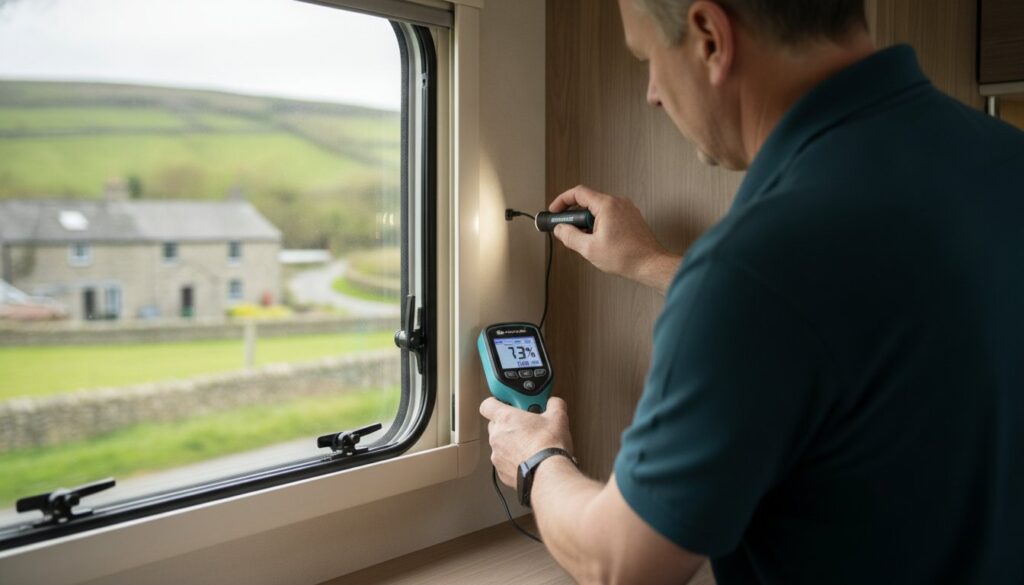
Did you know that a major damp repair, such as fixing floor delamination, can cost in excess of £5,000? For many UK buyers, this “silent killer” remains hidden behind pristine upholstery and fresh polish until it’s far too late. It’s a daunting prospect, and it’s perfectly normal to feel a sense of distrust when reviewing a seller’s paperwork or peering into dark corners. You deserve to know exactly what you’re buying without the fear of expensive, hidden structural failures. Performing a comprehensive motorhome damp check before buying is the only way to protect your investment and ensure your future trips aren’t cut short by mould and rot.
We understand that you want confidence, not a costly surprise. This guide provides a clear, step-by-step framework to help you identify red flags with the precision of an expert. We will cover the essential tools you need, the specific meter readings that signal danger, and a practical checklist for your next viewing. By the end, you’ll know exactly how to spot water ingress and understand when it’s time to call in a professional for a pre-purchase inspection to secure total peace of mind.
Key Takeaways
- Identify the “silent killer” of leisure vehicles before it devalues your investment by thousands of pounds in hidden structural repairs.
- Master the “nose test” and visual cues to spot early warning signs of water ingress that sellers may attempt to mask.
- Understand why a professional motorhome damp check before buying is essential to detect deep-seated moisture that basic DIY meters often miss.
- Discover the critical difference between unbiased independent inspections and dealer-provided reports to ensure you get the full picture.
- Learn how mobile pre-purchase inspections across South Yorkshire offer a convenient, expert solution to verify a vehicle’s condition on-site.
Why a Motorhome Damp Check Before Buying is Non-Negotiable
Buying a recreational vehicle is a significant life milestone. It represents freedom, adventure, and a heavy financial commitment. However, beneath the polished exterior of a used van, a “silent killer” often lurks. Water ingress is a structural failure that can remain entirely invisible to the naked eye until the damage is irreversible. Relying on a quick look around isn’t enough. A professional motorhome damp check before buying is the only way to ensure your dream purchase doesn’t become a financial nightmare. When damp takes hold, it can devalue a vehicle by thousands of pounds in an instant, often making the cost of repair higher than the actual market value of the van.
The “Silent Assassin”: How Damp Destroys Motorhomes
Damp doesn’t just sit on the surface. It travels through capillary action, creeping behind decorative wall tape and deep into the core of the structure. Once moisture reaches the internal timber frames or the floor ply, rot begins. This process happens in the dark, away from view. By the time you see bubbling wallpaper or feel a soft spot in the floor, the structural integrity is already compromised. Beyond the van itself, mould spores can begin to develop on damp surfaces within as little as 48 hours. In the confined space of a motorhome, these spores pose genuine health risks to you and your family, especially for those with respiratory sensitivities.
Financial Implications of Skipping a Pre-Purchase Check
The financial stakes are incredibly high. Major repairs, such as addressing floor delamination, can cost in excess of £5,000. If you buy from a private seller, the sale is usually final. Once the money has changed hands, you have almost no legal recourse if you discover rot a week later. Even with dealer sales, warranties often have strict clauses requiring a history of annual checks to remain valid. If the previous owner missed a service, your “guarantee” might be worthless. You can find more advice on maintaining your leisure vehicle on our expert blog.
A professional motorhome damp check before buying gives you the technical data needed for price negotiations. If an inspection reveals a reading between 15% and 20%, it serves as a warning for monitoring. If it’s over 30%, it suggests structural damage is occurring. Having this information allows you to walk away or demand a price reduction that reflects the true cost of the work required. It’s about protecting your savings and ensuring your peace of mind.
DIY Damp Detection: What to Look, Feel, and Smell For
You don’t always need high-tech equipment to spot the first warning signs of a leaking leisure vehicle. Your own senses are the most effective tools for an initial assessment. Performing your own motorhome damp check before buying is a vital first step that can save you a wasted journey and prevent you from inheriting a seller’s hidden problems. Whilst a DIY check isn’t a substitute for a professional report, it helps you filter out the obvious “rotters” quickly.
The “nose test” is your primary defence. When you first step inside, take a deep breath. A healthy motorhome should smell neutral. If you detect a musty, earthy, or damp odour, it’s a major red flag. Be particularly wary of vehicles that smell strongly of air fresheners, heavy perfumes, or bleach. Sellers sometimes use these scents to mask the tell-tale smell of mould. If the interior feels unusually humid or if there is heavy condensation on the windows during a dry day, the vehicle is likely holding moisture.
Visual cues provide the next layer of evidence. Look for staining, tide marks, or “pimpling” on the wallboards. Pimpling occurs when moisture causes the wallboard to swell, creating tiny bumps under the decorative vinyl. If you see bubbling wallpaper or discoloured patches, the damage is already well underway. For a deeper understanding of how water enters these structures, this guide on everything you need to know about water ingress offers excellent technical context. Don’t forget to check our latest blog posts for more tips on what to look for during a viewing.
Internal Red Flags During a Viewing
Damp thrives where airflow is restricted. Open every cupboard, locker, and under-bed storage area. Look into the dark corners and check for rusted screw heads or discoloured wallboard tape. These are clear indicators that water has been present. Use your hands to feel the wallboards; they should be firm and cool. If they feel soft, spongy, or “give” when pressed, the timber frame behind them is likely rotting. Pay close attention to the floor around the wheel arches and the entrance door, as these are high-stress areas prone to “sponginess” and delamination.
External Inspection Points for Potential Ingress
The exterior condition often tells the story of what’s happening inside. Examine the roof-to-wall seals and look for gaps in the mastic. Sealant naturally degrades over time and requires regular maintenance. Check for cracked plastic trims and poorly fitted aftermarket accessories like solar panels, aerials, or bike racks. Any hole drilled into the bodywork is a potential entry point for water, which is why professional motorhome solar panel installation is so important for preserving your roof’s watertight integrity. If you’re unsure about what you’re seeing, booking a professional pre-purchase inspection can provide the clarity you need before committing your savings.
The Limitations of DIY: Why Professional Damp Meters Matter
Whilst your senses are excellent for filtering out obvious issues, they cannot penetrate the structural core of a vehicle. A professional motorhome damp check before buying relies on technical precision that goes far beyond a simple “sniff test”. Many buyers make the mistake of relying on budget meters found online. These basic devices often provide a false sense of security or, conversely, trigger unnecessary panic due to false positives caused by surface condensation. It’s about precision. A professional inspection doesn’t just look for wet patches; it creates a calibrated moisture map of the entire vehicle to identify patterns of ingress before they become visible.
Pin vs. Pinless Damp Meters
Most entry-level damp meters feature two sharp metal pins. You should never stick these into a motorhome you don’t own. Not only does it leave unsightly holes in the decorative vinyl, but it can also lead to friction with the seller. More importantly, pin meters only measure the electrical resistance between the two points on the surface. If a seller has recently wiped down the walls or if the air is particularly humid, the reading will be inaccurate. Professional technicians use non-destructive, pinless meters. These tools use radio frequency to “see” through the wallboard and into the timber frame or insulation. This provides deep-core data without leaving a single mark on the interior, ensuring the structural health is verified properly.
Interpreting the Percentage: What the Numbers Actually Mean
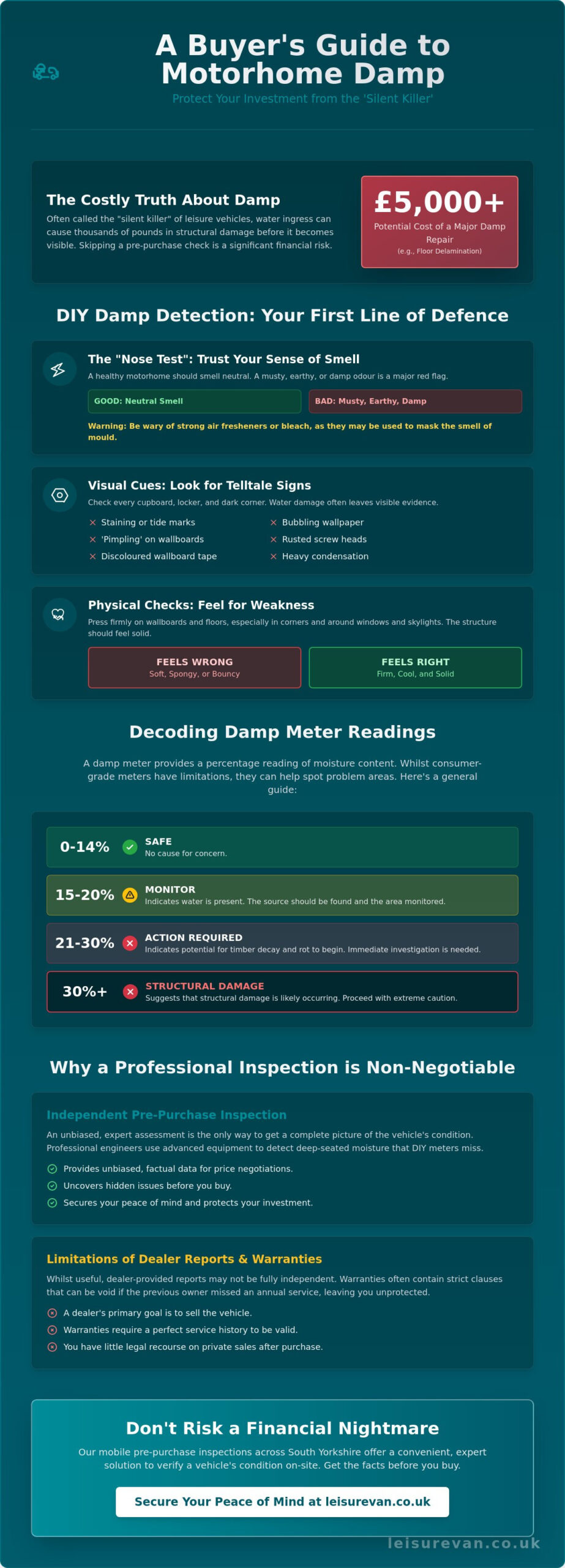
Understanding the data is just as important as collecting it. Professional reports use specific percentage thresholds to categorise the risk level of moisture within the panels. These figures are based on industry standards used by the National Caravan Council (NCC) to ensure consistency across the UK. When you receive your report, the numbers generally fall into these categories:
- 0-15%: This is the normal range. It indicates dry, healthy conditions where no action is required.
- 15-20%: This is a cautionary zone. Whilst not an immediate failure, it suggests that moisture levels are higher than expected and requires regular monitoring or further investigation into potential seal degradation.
- 20-30%: This indicates an active leak. Remedial action is likely required to prevent the spread of rot into the timber frame.
- Over 30%: This is a critical level. It suggests that structural damage is likely occurring and the vehicle may require significant, expensive repairs.
Relying on a professional with calibrated equipment ensures these readings are accurate and legally robust. This data provides the objective evidence you need to make an informed decision, whether that’s proceeding with the purchase, negotiating the price, or walking away from a “damp trap” entirely.
Professional Pre-Purchase Inspections vs. Dealer Damp Reports
When you find the perfect layout at a dealership, the salesperson will likely present a “clean” habitation report as proof of the vehicle’s health. Whilst this paperwork is a good starting point, it’s rarely enough to guarantee your peace of mind. A dealership’s primary goal is to move stock, which can lead to a rushed assessment. Choosing an independent motorhome damp check before buying ensures that the person examining the vehicle has no vested interest in whether you sign the contract or walk away. This impartiality is your strongest protection against inheriting a hidden “money pit.”
Independent reports carry significantly more weight with third parties. Many UK insurers and finance companies now mandate a professional report for used motorhomes over a certain age. They trust the findings of an external engineer over a dealer’s internal paperwork. Performing a thorough motorhome damp check before buying is the most effective way to avoid expensive surprises and ensure your investment is protected by the right cover from day one.
The Conflict of Interest in Dealer Paperwork
A “fresh habitation check” from a seller should always be verified by a third party. Dealership technicians are often under pressure to process vehicles quickly, meaning they might only check the most accessible areas. Hard-to-reach spots, such as the rear of the fridge, the internal structure of high-level lockers, or the floor beneath fixed furniture, are frequently overlooked. These are exactly the places where water ingress likes to hide. For a truly objective view, we always recommend booking an independent pre-purchase inspection. It’s a small investment that provides the leverage you need during negotiations.
What a Comprehensive PPI Includes
A professional mobile engineer takes a “chassis to roof” approach that goes far beyond a simple damp test. While moisture detection is critical, a thorough inspection also addresses your physical safety. This includes a comprehensive gas safety inspection and a full electrical system test. At LeisureVan, we provide a detailed PDF report complete with photos and specific findings, giving you a clear, documented history of the vehicle’s condition. This level of detail isn’t just for your benefit; it’s a vital tool for long-term maintenance and future resale value.
Don’t leave your investment to chance or rely solely on a seller’s word. If you’ve found a vehicle you love, contact us to arrange a professional Pre-Purchase Inspection today. We travel to the seller, providing you with the facts you need to buy with total confidence.
How LeisureVan Protects Your Investment Across South Yorkshire
At LeisureVan, we’ve spent years becoming the “safe pair of hands” for buyers across South Yorkshire. Our mobile engineers provide a dedicated motorhome damp check before buying in Sheffield, Rotherham, Doncaster, and Barnsley. We understand that finding the right van often means travelling to meet private sellers or visiting dealerships. That’s why we bring our technical expertise directly to the vehicle, wherever it’s located. We aren’t here to sell you a van; we’re here to ensure the one you’ve found is safe, dry, and worth the asking price.
Our team brings decades of combined technical experience to every inspection. This depth of knowledge allows us to spot the subtle signs of ingress that others might miss. We provide honest, impartial advice that puts the power back in your hands. Whether the report confirms a pristine vehicle or reveals hidden rot, you’ll have the objective data needed to negotiate a fair price or walk away from a bad deal. It’s about transparency and integrity, ensuring you can enjoy your future adventures with total peace of mind.
Convenient Mobile Inspections at the Point of Sale
We make the process as simple as possible for both you and the seller. You don’t even need to be present during the inspection. We coordinate directly with the dealership or private individual to perform our checks whilst you go about your day. Our service area is extensive, covering not just the major South Yorkshire hubs but also extending to Worksop, Chesterfield, Wakefield, and Leeds. Once you’ve completed your purchase, our comprehensive habitation service serves as the perfect follow-up to keep your new investment in peak condition.
Booking Your Pre-Purchase Damp Check
The spring buying season is our busiest time of year as everyone prepares for their summer holidays. We recommend booking your inspection as early as possible to ensure we can fit you in before your viewing date. Remember, the small fee for a professional motorhome damp check before buying is a fraction of the potential £5,000 cost for structural repairs. It’s a sensible investment that protects your savings and your safety. Contact LeisureVan for a professional motorhome damp check today and take the first step toward a worry-free purchase.
Secure Your Freedom with an Expert Inspection
Buying a motorhome should be the start of your greatest adventures, not a source of financial stress. You now know that identifying water ingress requires more than just a quick look around. A thorough motorhome damp check before buying is the only way to uncover structural rot hidden deep behind the wallboards. By combining your own sensory checks with the precision of professional, non-destructive technology, you can avoid the “damp traps” that frequently cost owners thousands in structural repairs.
As a Qualified Mobile Service Engineer, I provide the transparent, expert guidance you need to make a safe investment. My service includes detailed digital reports with photos so you have a clear, objective record of the vehicle’s health before any money changes hands. We serve Sheffield, Doncaster, and the wider South Yorkshire area, travelling directly to the seller for your convenience. Don’t let a hidden leak ruin your travel plans. Book an Independent Motorhome Pre-Purchase Inspection today to ensure your next vehicle is as solid as it looks. We’re here to help you buy with total confidence.
Frequently Asked Questions
Is it worth getting a damp check on a motorhome that is only 3 years old?
Yes, it’s absolutely worth it. Even nearly-new vehicles can suffer from manufacturing defects or sealant failure that occurred shortly after leaving the factory. Since manufacturers’ warranties are strictly tied to annual habitation checks, missing even one service can void your structural protection. A professional motorhome damp check before buying ensures that a three-year-old van is as dry as the seller claims, protecting your high-value investment from early depreciation.
Can I do my own motorhome damp check before buying?
You can certainly perform a preliminary check using your senses, but it shouldn’t be your only safeguard. Whilst a “nose test” or feeling for soft spots helps you filter out the worst examples, a DIY assessment lacks the precision of calibrated, non-destructive equipment. Professional meters detect moisture deep within panels that your hands simply cannot feel, providing a level of certainty that DIY methods lack. It’s best used as a way to decide if a vehicle is worth the cost of a professional inspection.
What is the most common area for damp in a motorhome?
Damp most frequently occurs around apertures such as windows, skylights, and door frames. Roof-to-wall seals are also high-risk areas because they are exposed to the harshest weather and vibration during travel. You should also check the floor around wheel arches and entrance steps, as these areas are prone to road spray and structural stress that can lead to water ingress over time.
How much does a professional motorhome damp inspection cost in the UK?
Costs for a professional damp inspection vary depending on whether it’s a standalone report or part of a full pre-purchase inspection. Generally, a standalone damp report is a modest investment compared to the potential £5,000 cost of structural repairs. Many buyers find that the peace of mind and negotiating power gained far outweigh the initial inspection fee, regardless of the vehicle’s age.
Will a dealer allow me to have an independent damp check performed?
A reputable dealer should have no objection to an independent technician performing an inspection. If a seller or dealership refuses to allow an external expert to verify the vehicle’s condition, you should consider this a significant red flag. Honest sellers are usually happy to have their vehicle’s quality confirmed by a third-party professional, as it builds trust in the sale.
What should I do if a damp check reveals high moisture levels?
If a motorhome damp check before buying reveals moisture levels above 20%, you should either negotiate a price reduction or walk away. Readings between 20% and 30% indicate an active leak that requires remedial action to prevent rot. If levels exceed 30%, structural damage is likely occurring. Use these findings to obtain a quote for the necessary repairs before deciding whether to proceed with the purchase.
Does a standard habitation check include a full damp report?
A standard habitation service usually includes a damp check, but it may not be as detailed as a dedicated pre-purchase report. A full Pre-Purchase Inspection is specifically designed for buyers, offering a more exhaustive look at the vehicle’s history and potential hidden faults. Always ask for a copy of the full moisture map to see exactly where readings were taken rather than accepting a simple “pass” or “fail”.
How long does a professional motorhome damp inspection take to complete?
A professional damp inspection typically takes between one and two hours to complete. This allows the engineer enough time to access every cupboard, locker, and hard-to-reach corner for a thorough assessment. Larger motorhomes or those with complex layouts may take slightly longer to ensure every seal and panel is properly tested with a calibrated moisture meter.