Imagine finding a vehicle with the perfect layout at a price that seems too good to pass up, only to discover a hidden patch of structural damp three months later. It’s a nightmare scenario that turns a dream of freedom into a costly financial burden. You’ve likely spent months saving, so the fear of accidentally buying a “lemon” is entirely valid. Using a detailed motorhome pre-purchase inspection checklist is the only way to ensure your investment is safe, sound, and damp-free before you hand over your hard-earned money.
We understand that the complexity of gas safety, 12V electrical systems, and water ingress can feel overwhelming when you’re standing on a seller’s driveway. This guide provides the technical clarity you need. We’ll show you how to recognise red flags during a first viewing, from testing for soft wall panels to checking the latest July 2026 safety assistance systems like Emergency Brake Assist. You’ll gain a clear understanding of what a professional report covers and the confidence to negotiate a price that reflects the vehicle’s true condition. By the end of this article, you’ll have the tools to move from uncertainty to total peace of mind.
Key Takeaways
- Understand how a small upfront investment in an inspection protects a significant financial commitment by uncovering hidden faults before you buy.
- Learn to identify external warning signs like ageing tyres and failing bodywork seals that often lead to expensive structural repairs.
- Use our detailed motorhome pre-purchase inspection checklist to conduct a thorough sensory “smell test” and verify essential 12V electrical systems.
- Discover the critical paperwork you must verify, including matching VIN numbers and a consistent history of annual habitation reports.
- Recognise the value of a professional mobile engineer who uses specialist equipment to detect damp and gas leaks that are invisible to the naked eye.
Why a Motorhome Pre-Purchase Inspection is Essential in 2026
Buying a motorhome is a significant milestone. It’s an investment in freedom, travel, and comfort. However, it’s also a high-stakes financial decision. Unlike a standard car, a recreational vehicle is a complex hybrid. It combines a heavy-duty automotive chassis with a sophisticated habitation centre. This dual nature means double the potential for hidden issues. Using a motorhome pre-purchase inspection checklist helps you navigate these complexities before you commit to a purchase.
Think about the financial risk involved. You might be looking at spending £30,000, £50,000, or even £100,000 on a pre-owned vehicle. Paying for a professional inspection is a small fraction of that cost. It acts as a vital insurance policy against the “lemon” that looks pristine on the surface but hides structural damp or failing gas systems underneath. It’s about protecting your capital and your future holidays.
Don’t assume that a dealer-bought van is automatically perfect. Dealers often operate under tight margins and quick turnover. An independent, third-party inspection provides an unbiased second opinion. It ensures that any “forecourt prep” has actually addressed the critical safety and damp issues. Having a neutral expert look at the vehicle provides a level of transparency that a sales-focused environment might lack.
The “House on Wheels” Analogy
You wouldn’t buy a house without a structural survey. A motorhome is effectively a house that experiences an earthquake every time it hits 60mph on the motorway. The gas pipes, water joints, and electrical circuits are constantly subject to vibration and movement. Over time, seals can perish and joints can loosen. A professional report gives you the technical authority to proceed with confidence. It ensures the “house” part of your vehicle is just as roadworthy as the engine.
PPI vs. Habitation Service
It’s easy to confuse different types of inspections. A Pre-Purchase Inspection (PPI) is a targeted health check designed specifically for buyers. It focuses on identifying immediate deal-breakers like active water ingress or safety failures. In contrast, a Full Motorhome Habitation Service is a deeper, periodic maintenance procedure. Whilst both are thorough, the PPI is your primary tool for price negotiation and risk assessment during the buying process. It finds the problems before they become your responsibility.
The Exterior and Chassis Checklist: First Impressions
Your initial walk-around is about much more than spotting surface scratches or dents. It’s the first stage of your motorhome pre-purchase inspection checklist, where you act as a detective looking for signs of neglect or ageing. A clean, polished exterior can often hide underlying issues that are expensive to rectify. You need to look past the shine and focus on the structural components that keep the vehicle safe and dry. If you feel unsure about what you’re seeing, you can always arrange a professional pre-purchase assessment to get a definitive answer.
Tyre Safety and Date Codes
Tyres on motorhomes rarely wear out through high mileage. Instead, they “age out” due to UV exposure and long periods of being stationary. Look closely at the sidewall for a four-digit code, usually following the letters “DOT”. The first two digits represent the week of manufacture, whilst the last two indicate the year. For example, “1223” means the tyre was made in the 12th week of 2023. The RV Industry Association and other safety bodies suggest replacing tyres every five to seven years, regardless of tread depth. Check for “crazing” or small cracks in the rubber amongst the sidewall and between the tread grooves. These are clear signs of perishing rubber that could lead to a dangerous blowout on the motorway.
Seals, Gaskets, and Water Ingress Points
Water is the greatest enemy of any leisure vehicle. When inspecting the bodywork, pay close attention to the sealant around window frames, rooflights, and awning rails. Look for “bloom”, which is a milky or discoloured appearance in the silicone, or signs that the sealant has shrunk away from the body panels. These gaps are open invitations for rainwater. Common failure points include aerial entry points and the joins between the cab and the habitation body. Robust exterior seals act as the primary barrier preventing moisture from reaching the internal timber frame and causing irreversible structural rot.
Chassis and External Lockers
Don’t be afraid to get on the ground and look underneath. Whilst some surface rust on the chassis is expected, look for heavy flaking or deep corrosion that could affect structural integrity. Check the wooden floor panels for signs of delamination, where the layers of ply begin to separate or feel soft to the touch. Finally, open every external locker. The hinges should move freely without seizing, and the rubber gaskets should be supple and intact. A crushed or torn locker seal can lead to damp lockers and damaged gear, which is a sign that the vehicle hasn’t been maintained with the necessary care.
The Habitation Interior Checklist: Electrics, Gas, and Damp
Step inside and take a deep breath. A musty or earthy odour is often the first sign of active water ingress. Whilst the exterior inspection focused on structural barriers, the interior part of your motorhome pre-purchase inspection checklist focuses on the living environment. You’re looking for evidence of leaks, system failures, and general wear that could impact your safety or comfort. It’s about ensuring the “home” part of the vehicle is as reliable as the engine.
Spotting Damp Without a Meter
You don’t always need a professional meter to find trouble. Look for “pimpling” on the wall tape or discolouration in the upper corners of cupboards. Feel the wallboard around windows and rooflights; it should be firm and cool, not soft or spongy. If a wall feels “tacky” or gives under light thumb pressure, it’s a major red flag. For a more detailed walkthrough of what to look for, see our Motorhome Damp Check Before Buying guide. These DIY checks help you decide if the van is worth the cost of a professional report.
Gas and Electrical Functionality
Ask the seller to connect a gas bottle before you arrive. You must see the hob, oven, and fridge ignite and stay lit. A fridge that fails to start on gas can be an expensive fix. On the electrical side, test every light switch and 230V socket. Check the 12V control panel for clear readings and look at the leisure battery terminals for white, powdery corrosion. Standards set by organisations like the National RV Inspectors Association emphasise the importance of verifying the Residual Current Device (RCD) operates correctly to prevent electrical shocks. Verifying these systems is a core part of any motorhome pre-purchase inspection checklist because repair costs for integrated appliances are significantly higher than for domestic versions.
Alde and Truma Heating Systems
If the van has Alde central heating, check the header tank. The fluid should be a vibrant pink or blue. If it looks clear, brown, or oily, it likely hasn’t been changed in years, which can lead to internal corrosion. Many private sellers overlook the fact that an Alde Heating System Service requires a fluid change every two to five years to remain effective. Listen to the circulation pump; it should hum quietly rather than rattle or grind. Finally, run the taps to ensure the water pump primes quickly. Check for damp patches under the kitchen and bathroom sinks to ensure the pipework hasn’t vibrated loose over time.

The Paperwork Checklist: History and Legalities
Physical condition is only half the story. The administrative history of a vehicle provides a roadmap of how it’s been treated over the years. A thorough motorhome pre-purchase inspection checklist must include a deep dive into the documents to ensure the legal reality matches the seller’s claims. If the paperwork is missing or disorganised, it’s often a sign that the maintenance has been equally haphazard. You shouldn’t ignore a thin history file.
Start with the V5C Registration Document. You must verify that the Vehicle Identification Number (VIN) on the logbook matches the plate on the chassis. Any discrepancy here is a major warning sign. Whilst you’re looking at the folder, check for the original instruction manuals. A well-organised folder with every manual for the fridge, heater, and control panel suggests a meticulous owner. It shows they’ve taken pride in their vehicle and valued its longevity.
Verifying the Service History
It’s vital to distinguish between a “van service” and a “habitation service”. A stamp in the book for an engine oil change doesn’t mean the living area is safe. You want to see evidence of annual habitation reports. These should show consistent damp readings over the last three to five years. Look for recent Gas Safety Checks or EICR certificates to confirm the internal systems meet current safety standards. If the seller can’t produce these, you’re buying into a history of unknown risks. A clear history provides the peace of mind you need.
CRiS and Finance Checks
The Central Registration and Identification Scheme (CRiS) is the UK standard for motorhome and caravan security. A CRiS check reveals if a vehicle has been recorded as a “total loss” by an insurance company. It also flags outstanding hire purchase debt. Buying a vehicle with active finance means the lender still legally owns it, even after you’ve paid the seller. Protecting yourself from these legal pitfalls is just as important as checking for damp. It’s a core part of any motorhome pre-purchase inspection checklist because legal issues can be just as costly as mechanical ones.
If the paperwork feels incomplete or you’re worried about the technical history, we can help. Our experts provide a “safe pair of hands” to verify everything is in order before you sign. You can book a professional pre-purchase assessment to ensure your new investment is legally and technically sound.
Booking a Professional Mobile Pre-Purchase Inspection
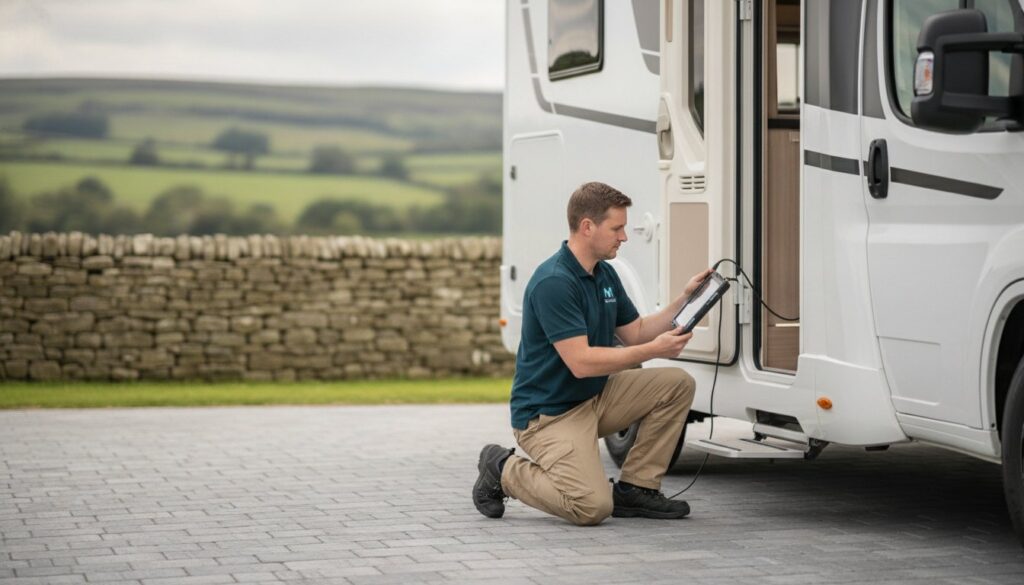
A DIY sensory check is an excellent first step. However, even the most observant buyer cannot see through wall panels or detect microscopic gas leaks. Whilst your own motorhome pre-purchase inspection checklist helps you filter out the obvious “lemons”, a professional assessment provides the technical certainty required for a five-figure investment. Professional engineers use calibrated damp meters that measure moisture levels deep within the structural timber, finding issues long before they become visible to the naked eye. Electronic gas “sniffers” can also identify tiny leaks in the manifold or appliance joints that haven’t yet produced a noticeable smell.
There is also the matter of the seller’s transparency. If a private seller or a dealer refuses to allow a professional, independent inspection, you should view this as a major red flag. A confident seller with nothing to hide will welcome a third-party report as it validates their asking price. If they block the process, it’s usually best to walk away. Your safety and financial security are the priority.
The Mobile Advantage in South Yorkshire
One of the biggest hurdles in buying a motorhome is the logistics of moving it. Our mobile service removes this friction entirely. We travel directly to the vehicle’s location, whether it’s parked on a driveway in Sheffield, a storage facility in Rotherham, or a dealership in Doncaster. We also provide extensive coverage across Barnsley, Chesterfield, and Wakefield for your convenience. The seller doesn’t need to worry about insurance or fuel to move the van to a workshop. This ease of engagement often makes sellers more cooperative. A professional Damp Inspection and Report delivered on-site provides immediate clarity for both parties.
Using the Report to Negotiate
The final report is more than just a health check; it’s a powerful negotiation tool. It provides a clear, itemised list of any required repairs and safety concerns. You can use these findings to justify a lower offer that reflects the true cost of bringing the vehicle up to standard. It’s important to distinguish between “easy fixes”, such as a perishing tyre or a weak leisure battery, and “walk-away” structural issues like widespread floor delamination. Having a professional document allows you to negotiate with facts rather than opinions. It ensures you don’t overpay for a vehicle that needs immediate, expensive work. To secure your peace of mind, book your Pre-Purchase Inspection with LeisureVan today.
Secure Your Freedom with Confidence
Your journey towards motorhome ownership should be filled with excitement, not anxiety about hidden costs. By following a structured motorhome pre-purchase inspection checklist, you’ve already taken the most important step in protecting your investment. You now know how to spot the early warning signs of water ingress and the critical importance of a verified habitation service history. These DIY checks act as your first line of defence, helping you filter out problematic vehicles before you commit your time and money.
However, true peace of mind comes from technical certainty. Our qualified mobile service engineer provides a “safe pair of hands” by conducting a thorough assessment at the vehicle’s location. We deliver detailed damp and gas safety reports that serve as vital evidence for your final price negotiations. Whether the van is in Sheffield, Rotherham, Doncaster, or beyond, we bring the expertise to you. Don’t leave your next adventure to chance. Book a Professional Pre-Purchase Inspection in South Yorkshire today and buy your next motorhome with absolute clarity. Your future travels deserve a solid foundation.
Frequently Asked Questions
How much does a motorhome pre-purchase inspection cost in the UK?
A professional inspection in the UK typically ranges from £75 for a basic visual check to over £330 for a comprehensive “Platinum” report. Many reputable mobile providers charge approximately £299 for a service that includes a damp survey and gas safety check. These costs vary based on the depth of the technical report and the location of the vehicle.
Can I do a pre-purchase inspection myself?
You can certainly perform a preliminary sensory check yourself using a motorhome pre-purchase inspection checklist to identify obvious deal-breakers. Look for musty odours, soft wall panels, and perished tyre sidewalls to filter out poor-quality vehicles. However, a DIY check cannot replace professional equipment like calibrated damp meters and gas leak detectors that find hidden structural or safety issues.
What is the most common problem found during a motorhome inspection?
Water ingress and structural damp are the most frequent issues uncovered during professional assessments. Moisture often seeps through degraded window seals or rooflight gaskets, causing the internal timber frame to rot without being visible to the naked eye. Other common findings include out-of-date tyres and failing leisure batteries that haven’t been maintained whilst the vehicle was in storage.
Does a PPI include a mechanical engine check?
A standard Pre-Purchase Inspection (PPI) focuses primarily on the habitation area and the safety of the living quarters. Whilst the engineer will conduct a visual check of the chassis, tyres, and external bodywork, it doesn’t typically involve a deep mechanical engine strip-down or diagnostic scan. For a full assessment of the engine and gearbox, you would usually need to book a separate mechanical inspection.
How long does a professional motorhome inspection take?
A thorough professional inspection usually takes between two and four hours to complete. This time allows the engineer to test every internal appliance, conduct a full damp survey, and verify the safety of the gas and electrical systems. The duration can vary based on the size of the vehicle and the complexity of its systems, such as Alde heating or solar installations.
Should I get a damp report even if the van looks dry?
You should always insist on a professional damp report because water ingress is often invisible until the structural damage is severe. Modern wallboards can hide significant moisture levels that only a calibrated meter can detect. Getting a definitive reading ensures you aren’t buying a vehicle that requires thousands of pounds in structural repairs just a few months after purchase.
What happens if the inspector finds damp in the motorhome?
If damp is discovered, you can use the professional report to either renegotiate the purchase price or request that the seller repairs the fault before you complete the sale. The findings provide a factual basis for your offer, allowing you to deduct the estimated cost of remediation. In cases of severe structural rot, the safest course of action is often to walk away entirely.
Will a PPI guarantee that the motorhome is 100% fault-free?
An inspection provides a comprehensive “snapshot” of the vehicle’s condition at that specific moment, but it isn’t a long-term warranty. It significantly reduces your risk by identifying current deal-breakers and safety hazards. Whilst it cannot predict future component failures, it ensures you start your ownership with a clear understanding of the vehicle’s health and any immediate maintenance requirements.